The Arizona Health Care Cost Containment System, Arizona's Medicaid agency, is launching an artificial intelligence-driven detection and prevention system to help fight Medicaid fraud.
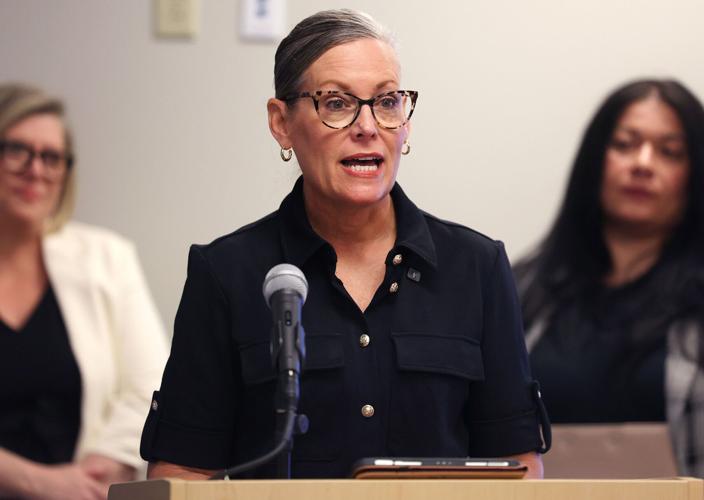
Gov. Katie Hobbs led a news conference Monday morning addressing progress made in combating health insurance fraud over her three years in office.
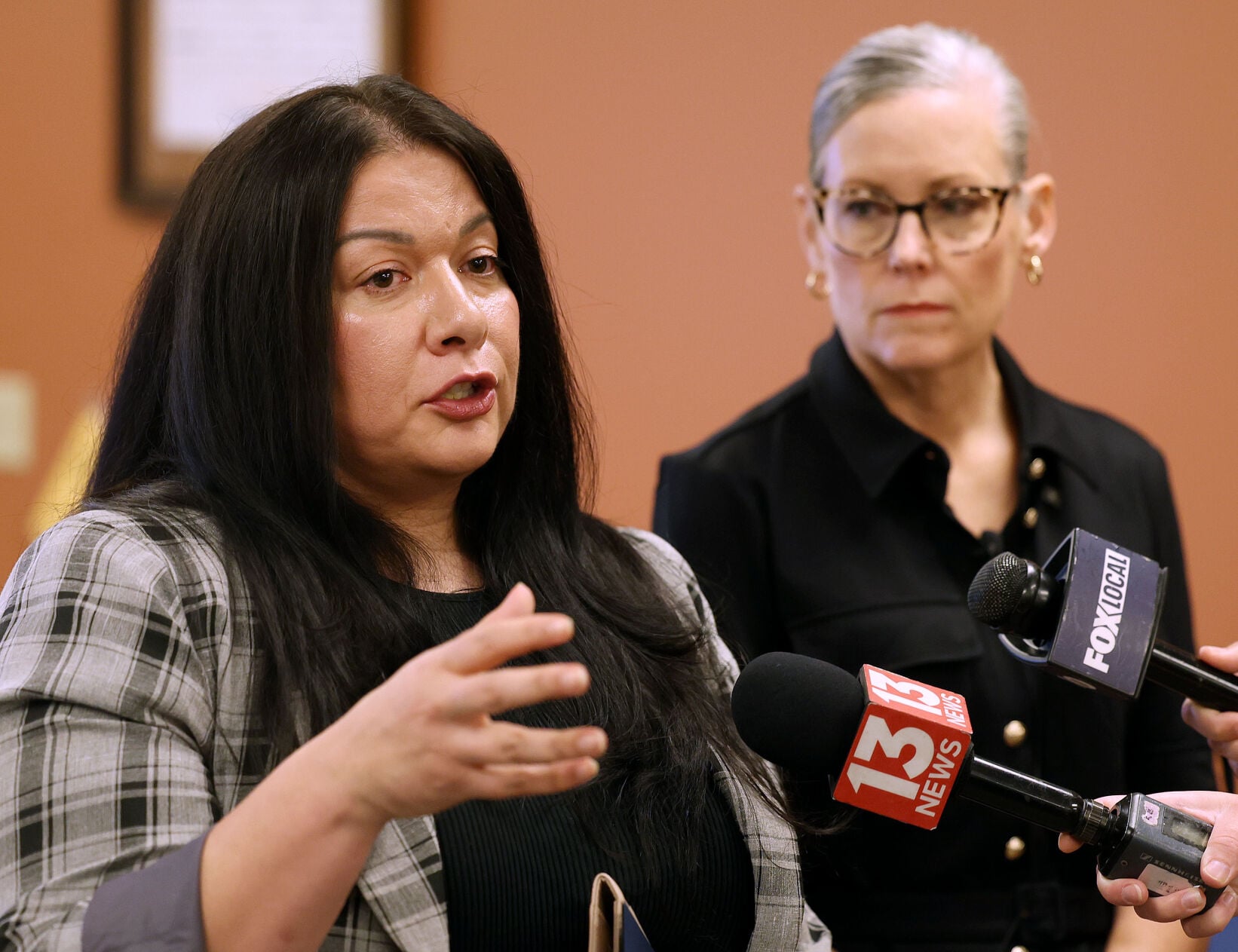
Vanessa Templeman, Arizona Health Care Cost Containment System inspector general, left, speaks to reporters about Medicaid fraud as Gov. Katie Hobbs listens following a news conference Monday in Tucson.
"One of my first days as governor-elect in 2022, I was approached by tribal leaders about a problem that had plagued Arizona for a lot of years," Hobbs said. She and Attorney General Kris Mayes revealed in 2023 a $2.5 billion Medicaid fraud scheme that targeted Native Americans seeking treatment for addictions.
"I can confidently report that we've made significant progress to crack down on waste, fraud and abuse," Hobbs said. "We've also deployed new tools to stay one step ahead of the fraudsters and ensure that this never happens again."
People are also reading…

Gov. Katie Hobbs speaks during a news conference Monday in Tucson about Medicaid fraud.
AHCCCS is implementing a new, first-of-its-kind artificial intelligence tool to help identify abnormal billing practices as a preventative approach to combating fraud, state officials said. The system will feature a pre-adjudication identification of potential fraud at the beginning of the application process, which will accept or decline an initial application, as well as a prepayment review.
"We put that (pre-adjudication identification) at the front end to say 'This is not a valid claim to come in, we're not even going to accept it,' and it provides that response back to the provider," said AHCCCS Inspector General Vanessa Templeman. "Then you have a prepayment review, which is where a claim does come in. It's initially accepted, but prior to paying, there is a purposeful intervention to look at the medical records, to lift items from other systems ... and take a look at if this claim makes sense to pay."
The state already has portions of the new fraud analytics infrastructure implemented, with post-payment investigative analytics and case management systems that launched earlier this year, Templeman said. Those systems analyze provider behavior, assign fraud-risk scores and help investigators identify emerging billing patterns.
Templeman said the AI system will not operate autonomously and that human investigators and analysts will remain involved in the decision-making.
"There are purposeful human elements interacting with the system, clinical insights, and additional modalities that are screened to ensure that the fraud schemes that are being identified are truly fraud," she said.
The technology is being developed in partnership with Health Tech Solutions and Olivia Analytics. The next phase, scheduled to go live in late June or early July, will activate the AI-assisted prepayment and pre-adjudication review functions.