PHOENIX — Gov. Katie Hobbs has vetoed legislation that supporters said would protect the Second Amendment rights of Arizonans by limiting the kind of information that credit card companies can collect, saying it would impair legitimate police work.
The proposal by Sen. Wendy Rogers addresses the fact that companies that process credit and debit card transactions uses "merchant codes'' to show the kind of retailer that made the sale. That's the process that allows credit card users when they get their bills to identify that a sale was made at a department store, a supermarket, a fast food restaurant or at a health care provider.
Where the Flagstaff Republican said that can lead to problems is when these companies create and use a special code to identify transactions made at a firearms retailer versus, say, listed as they can be now as sales occurring at a sporting goods store.
People are also reading…
"If you purchase a firearm, they can track you,'' Rogers told colleagues. "So this bill seeks to avert that.''
The measure met with skepticism from Rep. Lupe Contreras. The Avondale Democrat questioned whether there are legitimate uses for this kind of information by law enforcement, like being able to track down a shooter.
But Michael Infanzon responded that the question is irrelevant to what the legislation sought to do.

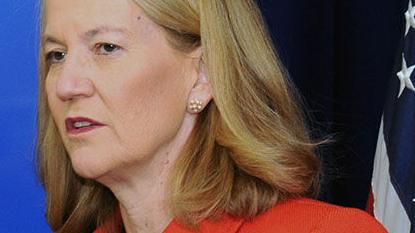
Hobbs
"That's not what merchant category codes are for,'' he said. "These are for financial institutions, not law enforcement.''
And Infanzon, whose s clients include the Arizona Firearms Industry Trade Association, and Arizona State Rifle and Pistol Association, and the Arizona Citizens Defense League, said none of that is legitimately needed by those finance companies.
"It's like you went and bought ammunition for your shotgun, and now the credit card company that you use to purchase your ammunition starts keeping track of how much ammunition you purchase,'' he said.
"You have a constitutional right to purchase as much shotgun ammo as you want to go out bird hunting or even trap shooting,'' Infanzon said. What the legislation is designed to do is be sure the credit card company, using the information gleaned from those merchant category codes, does not put you "on a list.''
It's that "list,'' Rogers said, that worries her, given the ability of computers to use certain data points to create a profile of people -- and use it to make other decisions.
"How does that augur for, say, a bank who might want to debank you because the bank finds out you're the purchaser of a firearm?'' she asked. And the problem, Rogers said, doesn't end there, what with "the interconnectivity of data'' that allows others to access credit card records and learn what any individual has been buying.
"This is our world,'' she said. "So this bill seeks to the privacy that we must shore up in terms of being a Second Amendment atmosphere and state where we should not be categorized, tracked, or identified, negatively possibly, for having purchased a firearm.''
Contreras, for his part, said he remained skeptical of the reality of the scenario that Rogers painted about gun buyers being targeted.
"We don't know,'' Rogers responded. "And that's the worrisome nature.''
Infanzon, however, told lawmakers there already are issues — at least elsewhere.
He said this all started under the Biden administration, which encouraged the credit card companies to create a new merchant category code to encourage a reduction in the purchase of firearms and ammunition. And Infanzon said those codes have been implemented in other states.
In New York, for example, Gov. Katy Hochul in 2024 signed legislation to mandate the use of a specific merchant code to identify firearm sales and, more to the point, allow the state to monitor the sales of guns and ammunition.
"So we know if someone's stockpiling ammo,'' she said. "Not a good sign.''
There was an Arizona angle to all that, with former Congresswoman Gabrielle Giffords at the New York signing event to praise the move. She survived an assassination attempt in 2011 as she was meeting with constituents at a Tucson grocery store.
"New Yorkers deserve to live free from the fear of gun violence,'' said Giffords, who co-founded an organization that bears her name that lobbies for what it calls responsible gun legislation.
New York is not alone. Bank of America put out a memo last year telling merchants not just there but also in California and Colorado to use the special code 5723 on transactions.
That, Infanzon said, is the need for the legislation to preclude something like that from happening here.
"We're just trying to get ahead of the game in Arizona,'' he said.
The governor, however, took a different view of the legislation in her veto message.
"Merchant category codes are vital tools that help law enforcement crack down on illegal gun trafficking to transnational criminal organizations,'' she wrote. And Hobbs noted this isn't the first time she has nixed the idea.
"This recycled proposal would make it harder for law enforcement to catch violent criminals,'' the governor said.
Hobbs isn't alone in that belief about impairing police.
Rep. Nancy Gutierrez attempted to sideline the legislation when it came to the House floor by removing the language on merchant codes and replacing it with a package of regulations ranging from state licensing of firearms dealers to receiving training to recognize and identify "straw purchasers,'' people who are buying up guns to be sold to others who cannot legally buy them.
And Gutierrez said there is ample reason to believe that is happening.
"We know from reporting that U.S.-sourced firearms are fueling the cartel violence in Mexico,'' she said during the debate.
"Weapons from gun stores in Arizona are arming those cartels,'' Gutierrez said. "And those same cartels traffic fentanyl back into our communities.''
But her effort to derail the bill failed when House Republicans refused to support it, resulting in the underlying bill on merchant codes being sent to Hobbs for her veto.
Howard Fischer is a veteran journalist who has been reporting since 1970 and covering state politics and the Legislature since 1982. Follow him on X, formerly known as Twitter, Bluesky, and Threads at @azcapmedia or email azcapmedia@gmail.com.