PHOENIX — The Trump administration wants a judge to preserve the right of Arizonans to bet right now on who will win the governor's race, whether incumbent Republican Juan Ciscomani will keep his seat in Congress and whether GOP voters will nominate Rodney Glassman or Warren Petersen for attorney general.
Ditto the right to try to make money by predicting who will be featured on Drake's new album, how high the unemployment rate will go and who will be the bridesmaid for Taylor Swift — and even whether she will actually tie the knot by the end of the year.
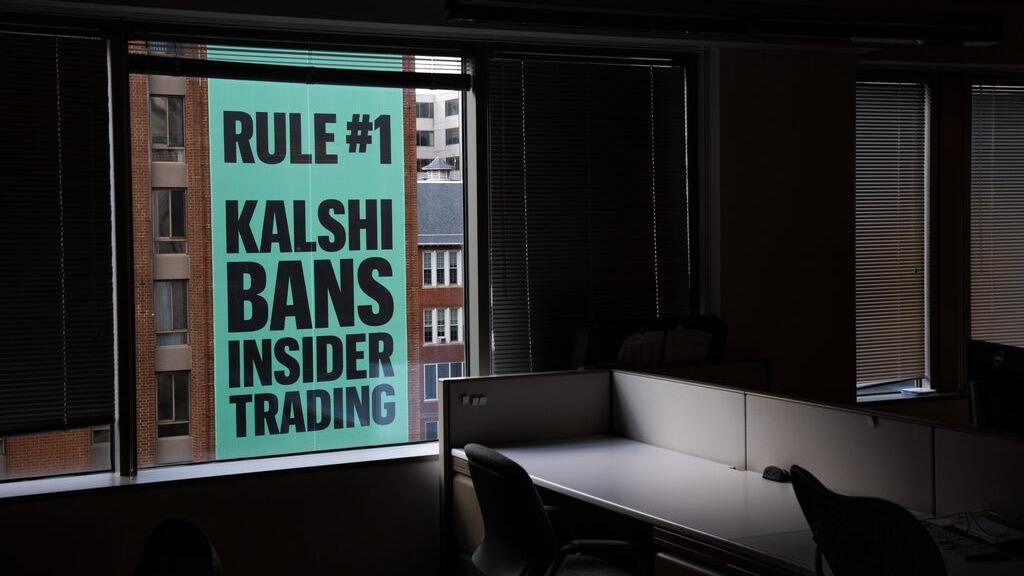
In a new court filing, Tiberius Davis, an assistant U.S. attorney general, contends Congress gave exclusive authority to the Commodity Futures Trading Commission to regulate wagering on future events that is done through federally regulated "designated contract makers.'' That, he says, includes companies like Kalshi.
People are also reading…
And that, Davis is telling U.S. District Court Judge Michael Liburdi, means Arizona can't enforce its section of law making it a Class 2 misdemeanor — with a possible four months in county jail and $750 fine — for those who make bets on such races, whether on Kalshi or what the CFTC calls other regulated financial exchanges.
It isn't just about betting on election matters.
Davis also wants the judge to void another Arizona statute that outlaws wagering on sports events unless Arizonans lay down their money with state-regulated entities. Here, too, he says, the state can't say only it gets to decide who gets to take the bets.
In fact, he says, wagers places through regulated financial exchanges like Kalshi are exempt from other laws, making it a crime to bet on any other future contingency — like actual "contracts'' now being offered on things like Swift's wedding details.
What has drawn the new attention of the federal agency and the Trump administration are criminal charges filed in Maricopa County Superior Court last month against Kalshi by state Attorney General Kris Mayes. Those came after undercover agents placed bets on 20 different contingencies listed on Kalshi.
And because Kalshi is a business and not an individual, the penalties are somewhat stiffer. The violations of wagering on elections carry a maximum fine of $10,000. The other incidents can result in $20,000 fines.
Kalshi, for its part, had already filed its own legal papers in federal court asking Liburdi to force Mayes to back off. It raises the same claim as the CFTC of federal preemption.
Liburdi has already decided that the new lawsuit filed this past week by the feds will be consolidated with the one filed by Kalshi.
But another crucial issue remains.
Mayes contends that federal courts lose their jurisdiction when there are criminal charges pending in state courts against the same parties. Liburdi has yet to rule on the issue.
It isn't only in Arizona where the Trump administration is moving to strip the state of its claimed regulatory powers. Similar lawsuits were also filed last week against Illinois and Connecticut.
At the heart of all three lawsuits is the federal Commodity Exchange Act.
That law allows only the federal government to regulate futures, options, and what the law calls "swaps,'' a type of financial transaction which can be used as a hedge against future risk. That generally allows producers of things like oil, metals or even corn, to lock in revenues, regardless of whether the market later goes up or down.
The administration contends that, under federal law, what Kalshi and other firms known as "designated contract markets'' are doing fits into those definitions.
Arizona disagrees, arguing that these are a form of wagering. And the only kind of wagering allowed in Arizona is what is regulated by the Arizona Department of Gaming.
Not true, said Davis in the new filing.
"Congress enacted the Commodities Exchange Act, granting the CFTC exclusive jurisdiction to regulate those markets and enacting a comprehensive federal regulatory framework that preempts state laws that attempt to regulate the operation of, or transactions on, CFTC-regulated exchanges,'' he told the judge.
And he contends the scope of what can be federally traded — and protected from state gaming laws — is quite broad.
"Events contracts are derivative instruments that enable parties to trade on their predictions about whether future events -- which may relate to economics, or elections, or climate, or sports, or anything else with a potential financial, economic, or commercial consequence -- will occur,'' Davis said.
All that goes to the bid by the administration to shut down not just the current Arizona lawsuit against Kalshi but any future attempts to enforce its gaming laws against similar platforms.
"The court should put an end to the ongoing efforts by defendants to undermine the uniform application of federal law by declaring that Arizona laws regarding event wagering, betting and wagering, and election wagering are preempted by federal law as applied to event contract swaps listed for trading on CFTC-regulated designated contract markets and are thus unlawful,'' Davis told the judge.
And he wants quick action.
"Unless restrained and enjoined by the court, defendants are likely to continue their attempts to subvert federal law and the exclusive jurisdiction to regulate event contracts conferred on the CFTC by Congress,'' Davis wrote.
There is also what could be considered a political component to all of this.
Kalshi last year named Donald Trump Jr. as a "strategic adviser'' to the firm.
"Don's bold business mindset and deep understanding of market dynamics perfectly align with Kalshi's mission to redefine how America engages with information,'' Tarek Mansour, the company's co-founder said in a statement. "His strategic guidance will help accelerate our growth, refine our market strategies, and open doors to new partnerships and audiences.''
All that followed Kalshi suing the Biden administration and winning a district court ruling in 2024, allowing it to take wagers on elections. That paved the way for betting on the 2024 presidential race.
The case disappeared after Trump was elected. And the president's son, in a post on social media, said it was that wagering on his father's race that convinced him to join Kalshi.
"On Election night at Mar-a-Lago, while biased outlets called the race a coin toss, my family and close friends used the prediction market Kalshi to know we won hours ahead of the fake news media,'' he wrote.
Howard Fischer is a veteran journalist who has been reporting since 1970 and covering state politics and the Legislature since 1982. Follow him on X, formerly known as Twitter, Bluesky, and Threads at @azcapmedia or email azcapmedia@gmail.com.