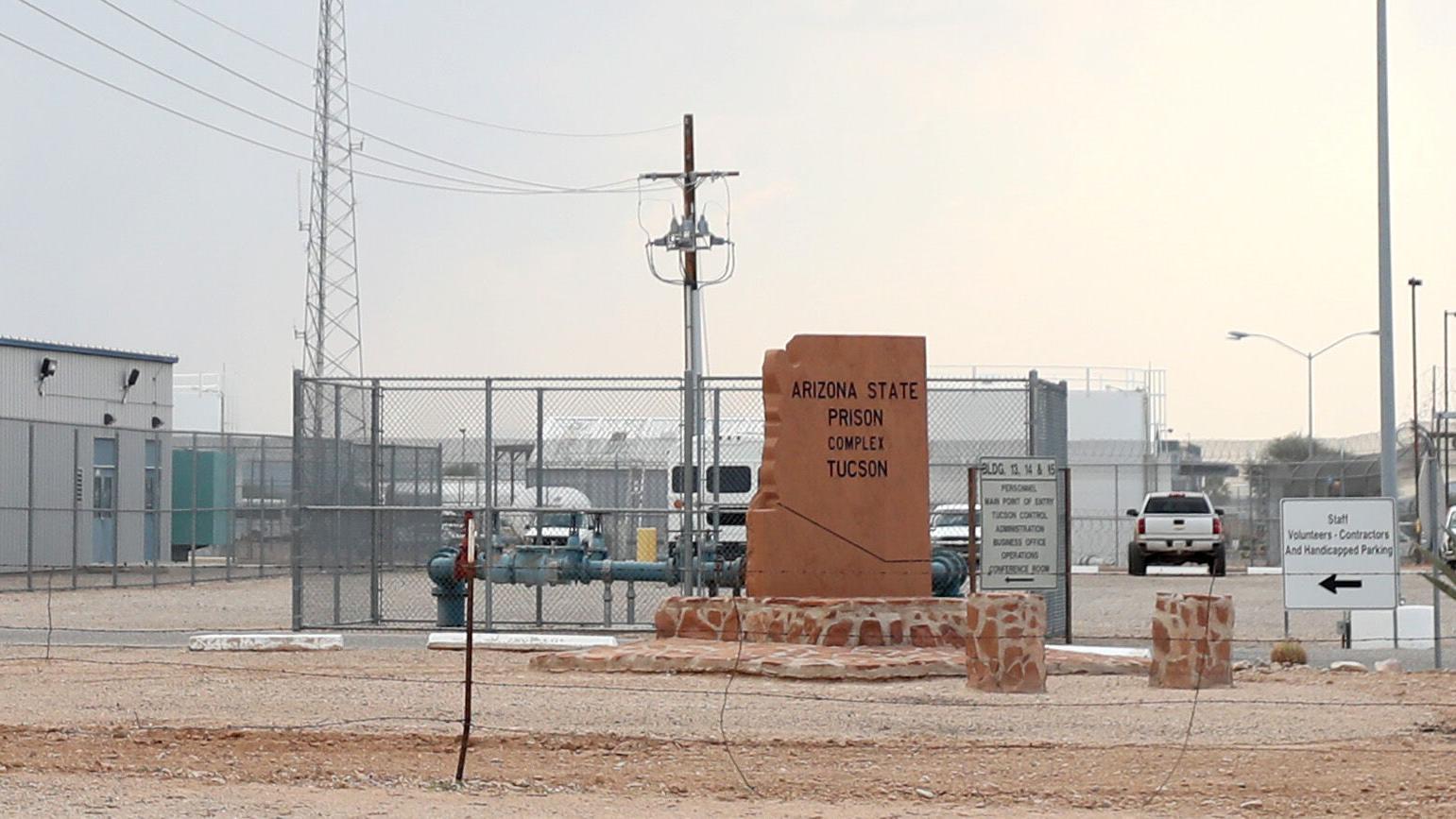
PHOENIX — Arizona officials are asking the U.S. Supreme Court to block the takeover of the state's prison health system by a court-appointed receiver — at least until they can argue that the trial judge acted improperly.
In a new filing Wednesday, attorneys for Ryan Thornell, director of the Arizona Department of Corrections, Rehabilitation and Reentry, said the prison system has made "tangible progress'' in improving physical and mental health care for inmates since U.S. District Court Judge Roslyn Silver ordered in 2023 that the system be overhauled to correct constitutional deficiencies.
They wrote that the improvements included doubling the amount spent providing care, adding staffers, improving facilities and increasing access to substance-use disorder treatment.
People are also reading…
The lawyers told the justices none of that convinced Silver not to conclude earlier this year that the system tasked with providing care for 25,000 inmates still is not meeting its legal obligations.
The judge at that time tapped Annette Chambers-Smith, former Ohio prisons chief, to take control of the system, with the right to hire and fire staffers, terminate contracts and, with court permission, order the state to spend more.
After a federal appeals court declined to set aside her order, Silver said last week that Chambers-Smith will take over on Oct. 19.
That leaves the nation's high court as the only entity that could keep that from happening.
It will be up to Justice Elena Kagan, who handles such special requests on the court's "shadow docket,'' to decide whether to ask lawyers for the inmates to respond or leave that question to the full court.

Last-ditch effort
Much in Wednesday's filing is a repeat of what attorneys for the state argued already, first to Silver and, more recently, to the 9th Circuit Court of Appeals.
The state's lawyers do not dispute that Arizona prisons are not yet meeting the legal standards for care. But they said Silver should impose some sanction short of wresting control of the prison healthcare system.
In this last-ditch effort, attorneys for the state retained Paul Clement, a specialist known for handling cases before the Supreme Court — and who, according to Reuters, bills at an hourly rate of $2,650 per hour.
Clement, in seeking high court review, urged the justices to consider the gravity of what Silver has ordered.
He said it is "far from clear'' that there is precedent for a federal judge to appoint a receiver over the objections of a state agency, particularly one tasked with running a key part of "a state correctional agency operating at the apex of state sovereign authority.''
At the very least, Clement told the court, the federal Prison Litigation Reform Act says judges should use the "least-intrusive mandates'' to ensure compliance with the law and that receivership is "a remedy of last resort.''
He claimed that Silver did not do that when she ordered that Chambers-Smith have full power over the prison health care system, allowing the receiver to wrest it from Thornell, who was appointed by Democratic Gov. Katie Hobbs and confirmed by the Republican-controlled Arizona Senate.
Clement told the justices that failure of the trial judge to use receivership only as a last resort eventually will be recognized and, he contends, overturned. He said that could be within months when the 9th Circuit Court of Appeals hears the state's claim.
If the state prevails as he contends it will, Clement said that would lead to "chaos,'' putting a receiver in place on Oct. 19 to start running the prison health system, only to potentially have all of those powers transferred back to Thornell within months.
'Grossly inadequate care'
Silver has pointed out that the case has been going on since 2012, with state officials repeatedly promising to do better.
After various promises by state officials to make the necessary changes, Silver issued a 200-page ruling in 2022, saying care remained "plainly grossly inadequate'' and that state officials were acting "with deliberate indifference'' to the substantial risk of harm to inmates. That was followed by the injunction in 2023 telling state officials what needs to be fixed, complete with specific staffing and care requirements — which Silver said the state has yet to meet.
No date has been set for further action on the state's petition.
Howard Fischer is a veteran journalist who has been reporting since 1970 and covering state politics and the Legislature since 1982. Follow him on X, Bluesky and Threads at @azcapmedia or email azcapmedia@gmail.com.