A new multistate outbreak of cyclosporiasis is putting health officials on alert as cases of the foodborne illness continue to be investigated across the United States. The illness is caused by the microscopic parasite, which can contaminate fresh produce and cause days, or even weeks, of severe gastrointestinal illness.
Unlike many foodborne illnesses, cyclospora is most often linked to fresh fruits and vegetables that are eaten raw, including leafy greens, herbs and berries. Investigators are working to determine the exact source of the current outbreak while tracing where contaminated food may have been distributed.
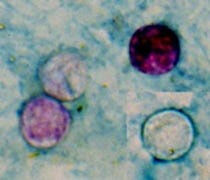
Four Cyclospora oocysts from fresh stool stained using a modified acid-fast stain.
Although several states have reported illnesses tied to the current outbreak, Arizona has not been identified as one of the states with a significant number of outbreak-related cases as of now.
Here’s everything to know about cyclosporiasis and how to avoid it.
People are also reading…
What is cyclosporiasis?
Cyclosporiasis is an illness caused by a tiny, single-celled parasite called cyclospora cayetanensis, according to the U.S. Food and Drug Administration.
It is a protozoan parasite that is so small, it can only be seen with a microscope. It can infect humans when they eat food or drink water that's been contaminated with fecal matter.
What foods can carry cyclosporiasis?
Fresh produce is the food most commonly linked to cyclosporiasis outbreaks. Foods associated with infections include bagged salad mixes, romaine lettuce, spinach, basil, cilantro, parsley, raspberries, blackberries, snow peas, sugar snap peas, and other fresh fruits and vegetables eaten raw. Contaminated water used to irrigate crops or wash produce is often the source of contamination, according to the FDA.
How to prepare food to avoid cyclosporiasis
The safest option is to cook leafy greens, cilantro, basil, green onions, snow peas and raspberries after carefully washing them under clean, running water. Heating food to 158 degrees or higher kills the parasite.
If you must eat raw, fresh produce, the Centers for Disease Control suggests:
• Washing hands with soap and water before and after handling or preparing food.
• Avoiding prewashed bagged lettuce or salad mixes. Instead, buy a whole head of lettuce. Throw away the outer two or three layers of leaves and thoroughly wash the inner leaves under running water.
• Thoroughly washing herbs, such as cilantro and basil, under running water. Separate the leaves as you wash them.
• Trimming the root end and removing the outer layer of green onions, which also are known as scallions. Once that's done, wash them thoroughly under running water.
• Considering using frozen raspberries, rather than fresh, to reduce risk. The fruit's bumpy surface makes raspberries especially difficult to clean. The parasite can hide in its tiny crevices. Freezing may reduce the risk, but the health department warns it does not guarantee the fruit won't be contaminated.
• Rubbing the surface of snow peas while washing them under running water.
• Washing all fresh produce under clean running water, even if you plan to peel it. Scrub firm fruits and vegetables, such as melons and cucumbers, with a clean produce brush and cut away any damaged or bruised areas before preparing and eating.
• Refrigerating cut, peeled or cooked fruits and vegetables as soon as possible.
• Washing and sanitizing utensils and surfaces before and after handling food. Wash and sanitize display cases and refrigerators where fresh produce is stored along with cutting boards, surfaces and utensils used to prepare, serve or store fresh produce.
What caused previous cyclosporiasis outbreaks?
In the past, outbreaks in the United States and Canada have been tied to bagged salad mixes and kits, such as pre-cut lettuce blends with romaine, iceberg, red cabbage and carrots; fresh cilantro, basil, raspberries, snow peas and green onions.
Among them were outbreaks identified:
• In 1997, when more than 1,000 people in the U.S. and Canada were sickened by contaminated raspberries imported from Guatemala.
• In 2005, when people got sick after eating basil imported from Brazil, Peru, Mexico and Costa Rica.
• In 2018, when lettuce served at McDonald's restaurants was the source of a multistate outbreak of cyclosporiasis infections.
• In 2019, when more than 2,400 people in 37 states and the District of Columbia became ill after eating imported basil from Mexico.
How many cyclosporiasis cases in Arizona?
According to the Pima County Health Department, Arizona health officials have confirmed at least 10 cases of cyclosporiasis. The largest outbreaks have been reported in states such as Michigan, New York, Texas, Louisiana and Connecticut. The CDC has confirmed cases in multiple states, but Arizona has not been identified as an outbreak hotspot.