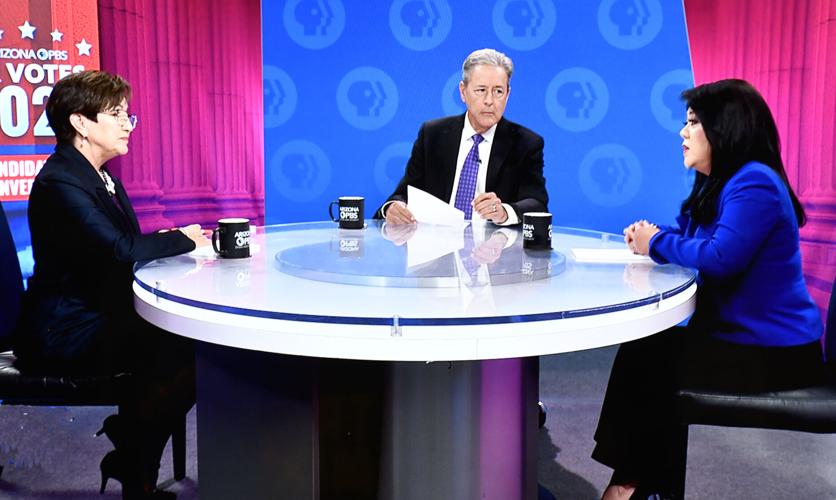
PHOENIX — Candidate Teresa Leyba Ruiz said if private and parochial schools want to accept state dollars for tuition, they should be required to prove through academic testing that the students are learning.
"That's part of accountability,'' the Democratic candidate for state superintendent of public schools said during a televised face-off Monday with Kimberly Yee, her Republican opponent in the November election.
Ruiz said since Republican lawmakers decided in 2022 to create a system where any student can get what's called an Empowerment Scholarship Account of state dollars, there is an obligation to ensure the money is being properly used.
But Yee said there's no need. "I'm a strong supporter of private schools and home schools,'' Yee said. Arizona parents are eligible to get ESA money which amounts to "vouchers'' of state dollars starting at around $7,500 per student a year, with no academic testing requirements.
People are also reading…
"These parents know best how to educate their child,'' Yee said. "If they aren't satisfied with the home education programs or the private school entities, or even a private service that helps with the needs of tutoring, they will leave. They will walk with their feet.''

Democrat Teresa Leyba Ruiz, left, debates education issues Monday with Republican KImberly Yee, her opponent in the race for Arizona superintendent of public instruction. In the center is host Ted Simons at KAET-TV.
Ruiz said that ignores the fact the government is involved and does have a role given that public dollars are being used for these programs.
"What's the return on investment?'' she asked. "How do Arizona taxpayers know how these dollars are being spent?''
Monday's discussion, televised on KAET-TV, the Phoenix PBS outlet, comes amid rising costs to Arizona taxpayers of the ESA program.
As of last month, there were about 104,000 students getting the aid. But a new report from the Arizona Department of Education says the numbers should top 117,000 by the end of this school year and nearly 130,000 by the following school year — with the price tag hitting more than $1.4 billion.
While the elected superintendent of public instruction has no oversight of academics, that person is in charge of administering the ESA program. The program has been beset by charges that money — particularly that given to parents who are schooling their children at home — has been misspent on items with no educational value.
Ruiz said part of the fault lies with Yee, who for the past eight years has been the state treasurer, in charge of the agency that handles financial administration of the program.
Yee countered that the treasurer role does not include any day-to-day operation of the ESA program, which she said belongs to whoever is the superintendent of public instruction. Currently, that is Republican Tom Horne. He sought reelection but was defeated by Yee in the primary election this summer.
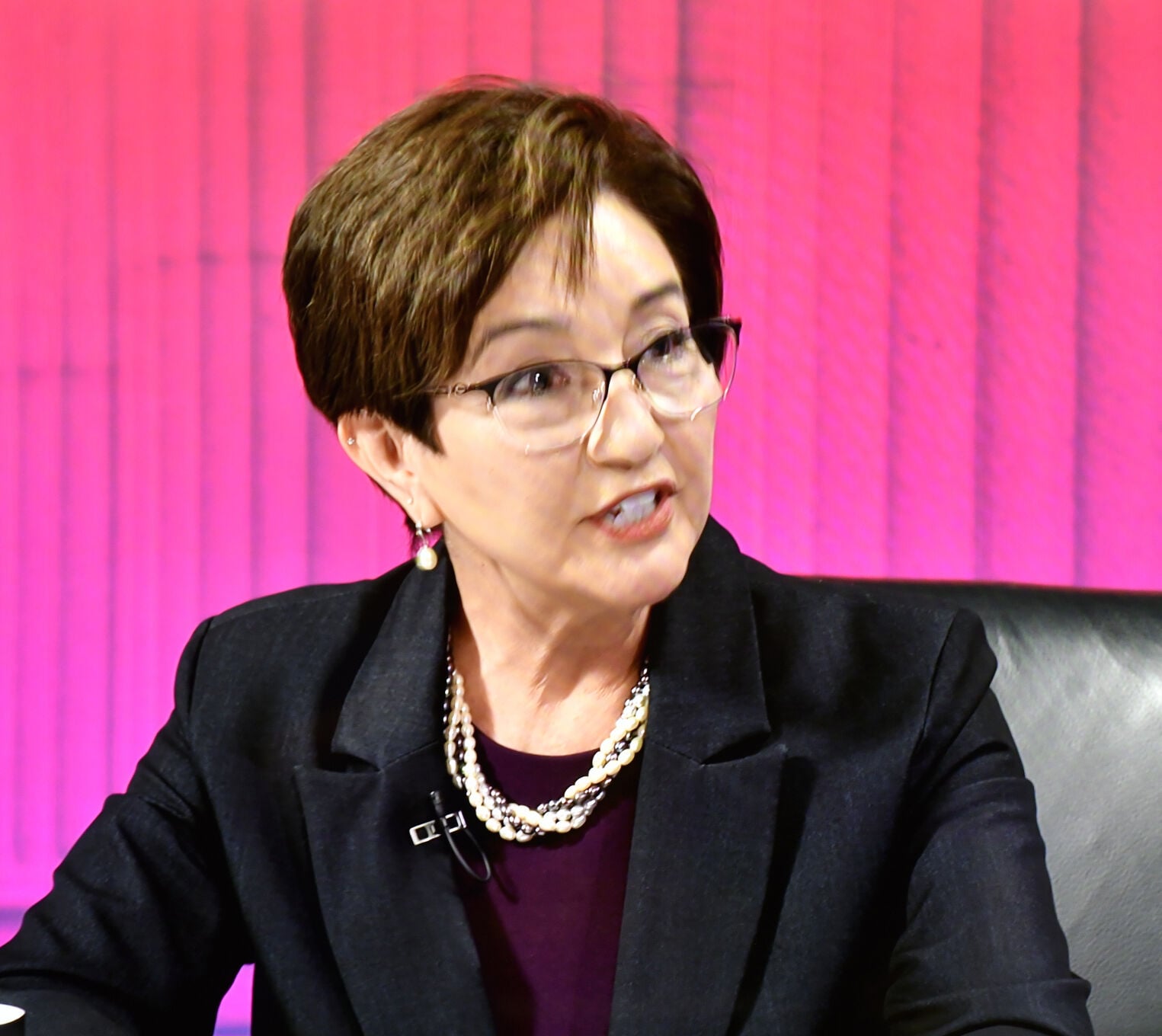
Teresa Leyba Ruiz, Democratic candidate for Arizona superintendent of public instruction.
Ruiz said that distinction is irrelevant. "You knew this was happening,'' she said to Yee. "You should have been shouting from the rooftops and protecting taxpayer dollars. And instead you stayed silent until it was time to run for office.''
When Yee announced her candidacy in 2025 — amid separate news reports of purchases of items as diverse as a $5,000 Rolex watch, a $24,000 golf simulator and a vasectomy kit with ESA dollars — she said the law that created ESAs limits the authority of whoever is state school’s chief to overrule what a parent concludes is or is not an appropriate need for a child.
Only this year has Yee said she wants to create some sort of technology-based accountability system where an attempt to purchase a non-educational item would immediately trigger a "red flag'' at the time of purchase, rather than state officials having to try to recoup the money later.
Purchase issues aside, Ruiz and Yee also discussed whether the universal ESA program — with no requirement for parents to prove financial need — is good public policy.

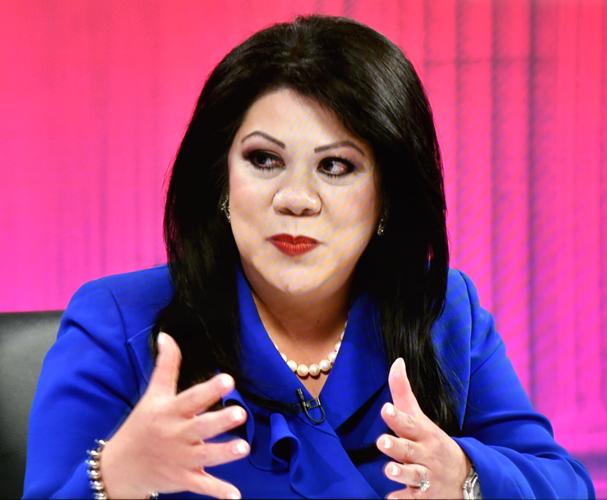
Kimberly Yee, Republican candidate for Arizona superintendent of public instruction.
"I do believe that when (then) Gov. Doug Ducey and the Legislature made ESAs universal they wanted to ensure that every child has an opportunity to go to the school of their choice,'' said Yee of the 2022 legislation. "Parents know best what is the right setting for their child and their unique needs.''
Ruiz said she, too, supports "school choice'' — but with some sort of income cap.
"I'm just saying that everyday Arizonans should not have to pay for millionaires' education decisions,'' Ruiz said. But she would not put a number on a cap she would support.
Earlier this year, the groups Arizona Education Association and Save Our Schools had proposed a ballot measure which, among other things, would have put a $150,000 cap on parental income to receive ESA dollars. That proposal didn't make it to the ballot because courts found it failed to gather enough valid signatures.
But Ruiz said that initiative drive should never have been necessary.
She noted that the Republican-controlled Legislature approved universal ESAs in 2017. But foes then came back and put the issue on the 2018 ballot, where voters rejected it by a margin of nearly 2-1. None of that, however, legally prevented the 2022 legislation.
The two contenders both agreed they want more money put into public schools, something within the purview of the Legislature.
Yee said there was nothing she could do about that for the past eight years while she was the state treasurer.
Ruiz said that ignores the fact that Yee previously served for eight years in the Legislature — she was Senate majority leader — which Ruiz said had put her in a position to improve school finances.
Yee countered that she did support more K-12 funding during her time in the House and Senate.
She also took a shot at Ruiz' tenure as president of Glendale Community College for five years, saying she earned more than $315,000 a year and yet the school had a graduation rate of just 18%.
Ruiz disputed the salary figure, though she never said how much she earned. She told reporters after the debate that figures about graduation rates at community colleges are misleading because they ignore the fact that students come and go, take a few courses or transfer.
The most recent financial disclosure report shows Ruiz has raised more than $311,000 in her campaign, in which she won the Democratic primary against Brett Newby and now faces Yee. She listed nearly $139,000 in cash on hand.
Yee's latest report shows donations of nearly $424,000 — she had the primary battle with Horne — and about $244,000 in the bank.
Yee faced financial headwinds during that GOP primary when Arizonans for Election Integrity spent nearly $200,000 in opposition to her candidacy against Horne. Campaign finance reports show that Arizonans for Election Integrity got all of its funds from another group, Citizens for Effective Government. But there is no record in the Secretary of State's Office of any such registration.
Howard Fischer is a veteran journalist who has been reporting since 1970 and covering state politics and the Legislature since 1982. Follow him on X, Bluesky and Threads at @azcapmedia or email azcapmedia@gmail.com.