

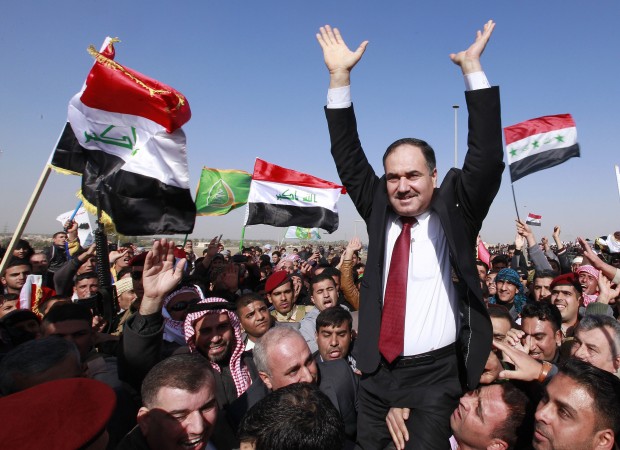
BAGHDAD - The political party loyal to radical Shiite cleric Muqtada al-Sadr called Monday for the dissolution of Iraq's parliament and new elections in another move that could escalate the country's growing sectarian crisis.
The anti-American Sadrist bloc is a partner in the Shiite-dominated government of Prime Minister Nouri al-Maliki. Bahaa al-Aaraji, the head of the Sadrists' bloc in parliament,pa said the elections are needed because of instability in the country and problems that threaten Iraq's sovereignty.
"The political partners cannot find solutions for the problems that threaten to divide Iraq," he said.
Iraq plunged into a new sectarian crisis last week, just days after the last American troops withdrew.
The crisis has been accompanied by a new wave of attacks on the Iraqi capital by suspected Sunni insurgents linked to al-Qaida. A suicide bomber set off a car bomb Monday at a checkpoint at the Interior Ministry, killing seven people and injuring 32, officials said.
People are also reading…
Al-Maliki is in a political showdown with the country's top Sunni political figure, Vice President Tariq al-Hashemi, after the government issued an arrest warrant for al-Hashemi on allegations his bodyguards ran hit squads targeting government officials.
The prime minister threatened to form a government without al-Hashemi's Sunni-backed political party, Iraqiya, which is boycotting parliament and mulling whether to pull out of the ruling coalition.
Iraq was dominated by the minority Sunnis under Saddam Hussein until he was ousted by the U.S.-led war that began in 2003. Majority Shiites have dominated the government ever since, though Americans pushed hard for the inclusion of Sunnis with a meaningful role in the current coalition.
Bitter sectarian rivalries played out in 2006-07 in violence that took Iraq to the brink of civil war. The latest tensions have raised fears of a resurgence of that violence.
The political crisis taps into resentments that are still raw despite years of efforts to overcome them. The Sunnis fear the Shiite majority is squeezing them out of their already limited political role. Shiites suspect Sunnis of links to militants and of plotting to topple the Shiite leadership.
The Sadrists have played an important role in maintaining Shiite domination over government - their support last year returned al-Maliki to the prime minister's office.
The proposal to dissolve parliament would take the consent of at least one-third of parliament, the president and the prime minister or a simple majority of lawmakers. Al-Maliki, who only secured his position after nearly nine months of political wrangling after the last elections, would likely be loath to go through the process again.
Kamil al-Dulaimi, a Sunni lawmaker with Iraqiya, the Sunni-backed bloc of the wanted vice president, said new elections would only bring the same people to office.
"We need to sit around the same negotiating table, and that is the only path to salvation from this current crisis," he said.


