

WASHINGTON - Through months of military stalemate in Libya, it was an open secret among NATO allies that countries inside and outside the alliance were quietly but crucially helping rebels gain their footing against the much stronger forces loyal to longtime dictator Moammar Gadhafi.
Covert forces, private contractors and U.S. intelligence assets were thrown into the fight in an undercover campaign operating separately from the NATO command structure. Targeted bombings methodically took out Gadhafi's key communications facilities and weapons caches. And an increasing number of American hunter-killer drones provided round-the-clock surveillance as the rebels advanced.
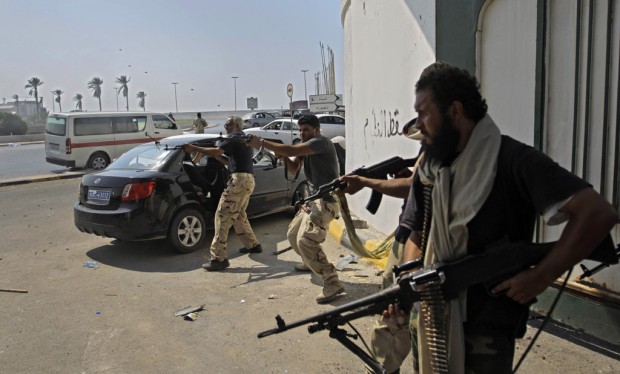
These largely unseen hands helped to transform the ragtag rebel army into the force storming Tripoli.
Diplomats acknowledge that covert teams from France, Britain and some East European states provided critical assistance, without - they contend - compromising NATO's mandate from the United Nations to restrict its operations to protecting civilians.
People are also reading…
The aid included logisticians, security advisers and forward air controllers for the rebel army, as well as intelligence operatives, damage assessment analysts and other experts.
The CIA and other U.S. intelligence agencies have been gathering information throughout the conflict from contacts they'd developed when they were working closely with Gadhafi's government on counterterrorism against al-Qaida-related Islamic militant groups operating in Libya. This thawing of relations between two longtime adversaries, lasting only a few years, paid unexpected dividends later.
Foreign advisers on the ground were key to getting real-time intelligence to the rebels, helping them accurately concentrate their limited firepower on the enemy. One U.S. official said the Qatari military led the way, augmented later by French, Italian and British military advisers. This effort had a multiple purpose, not only assisting the rebels but monitoring their ranks and watching for any al-Qaida elements trying to infiltrate.
Bolstering the intelligence on the ground was an escalating surveillance and targeting campaign in the skies above. Armed U.S. Predator drones helped to clear a path for the rebels to advance.
The addition of U.S. drone aircraft into the Libyan theater was important to the rebels, in giving them access to constant surveillance of the terrain, said Gen. Jean-Paul Palomeros, the French Air Force chief of staff.
"The better the intel is, the more valuable it is," Palomeros said.
In recent weeks, as the U.S. added more drones to the fight, they were able to do precision strikes closer to the cities, shadowing the rebels as they advanced through Zawiya and roared into Tripoli.
Over that time, Britain's National Security Council noted that cooperation had grown between NATO and the rebel groups, particularly in the coordination of airstrikes.
Combined with increasingly precise airstrikes by allied forces, the rebels gradually wore down Gadhafi's forces, ruptured supply lines and allowed more money and resources to flow to the opposition. In short, NATO bought them time.


