
Jorge Lemus Encalada
Diesel prices are at record levels nationwide, and farmers have been hit especially hard.
According to a July estimate by the Democratic staff of Congress’s Joint Economic Committee, diesel for planting major crops in Illinois, for example, cost $163 million more in 2026 than it did last year — an increase of nearly 80%. Now harvest time is here, and prices are even higher than they were in the spring.
The price surge has prompted calls for an embargo on American diesel exports. President Donald Trump said he supports considering the idea.
There’s a certain logic to it: Restricting exports leaves more diesel available domestically, and greater supply relative to demand can lower prices. But where that diesel ends up matters. Regional diesel markets are connected, but transportation costs matter.
The Gulf Coast, where most of our refining capacity is concentrated, produces far more than it consumes, but cannot freely transport all the excess fuel to other regions. That’s why the Gulf Coast exports diesel while parts of the Northeast rely on imports.
People are also reading…
An export ban could lower prices on the Gulf Coast and in connected markets, potentially including other parts of the country. It also could raise prices in markets that rely on those exports. If Gulf Coast refineries cannot sell or store their surplus, they may cut production, reducing some of the initial price relief. How much farmers would save, and for how long, remains uncertain.
Diesel is only one pressure on farm finances. Policymakers also should focus on other solutions that improve farm finances.

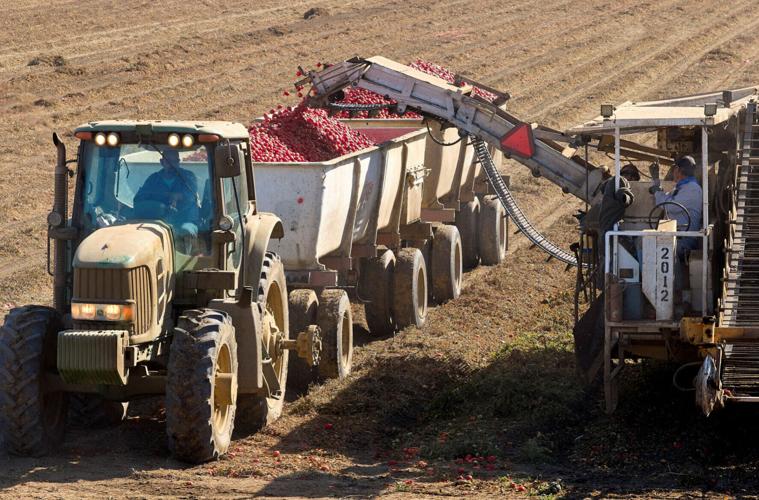
Farming equipment powered by diesel fuel helps harvest tomatoes recently near Davis, California. An embargo to keep more diesel in America might not lower prices as intended.
First, consider targeted estate-tax relief. Illinois, for example, is now considering the Family Farm Preservation Act, which would raise the estate tax threshold for qualifying farm estates from $4 million to $6 million (with future adjustments for inflation) and tax only value beyond that threshold. That could ease a liquidity problem for some land-rich, cash-poor farm families. Easing that burden could help some families keep farms across generations, but lawmakers should weigh those benefits against reduction in revenue.
Second, let farmers repair their own equipment. A tractor sitting idle during planting or harvest can be costly, especially if a farmer must wait for a manufacturer-authorized technician. In July, John Deere reached a settlement with the Federal Trade Commission, resolving an antitrust lawsuit over alleged repair restrictions. The settlement requires access, on fair and reasonable terms, to manuals, diagnostic software and other repair resources equivalent to those available to authorized dealers. That could mean shorter delays and lower repair costs as competition among repair shops increases.
Separately, following a request from John Deere, the Environmental Protection Agency clarified in February that the law permits temporary emissions-control overrides when needed to repair equipment. Now, state lawmakers should ensure other equipment manufacturers get on the same page.
Third, access to export markets affects farm income as well. Illinois Gov. JB Pritzker announced a cooperation agreement with the Indonesian government intended to expand trade, including soybeans. Its value will depend on whether it leads to additional sales.
On the national level, the Trump administration should pursue lower trade barriers and more opportunities for American exports, including agricultural products. Using tariffs as a bargaining tool carries risks, including retaliation against farmers and higher input costs, that must be weighed against any concessions gained. The goal should be lasting access to foreign markets.
Farmers face real costs from high diesel prices. An export ban might provide some relief, but its effect offers no guarantee of lasting relief. Before restricting exports, policymakers should establish how the measure would affect prices and refinery output, and whether any savings would outweigh the costs imposed elsewhere.
Encalada is a professor at the Department of Economics and affiliated professor of law at the University of Illinois at Urbana-Champaign. He wrote this for the Peoria Journal Star in Illinois and USA TODAY Network via Reuters Connect.