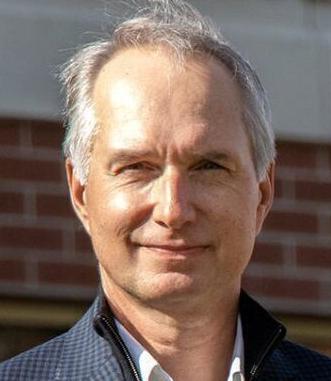
Richard Kyte is director of the D.B. Reinhart Institute for Ethics in Leadership at Viterbo University in La Crosse, Wis., and co-host of "The Ethical Life" podcast.
The great temptation of growing older is settling into a relatively comfortable life.
Our ancestors did not have to struggle against that particular temptation. Life was short, and for the majority, at least, comforts were few and short-lived. But over the past century, growing prosperity and technological advancements have reduced many of the daily challenges human beings have always faced.
Now we have an entirely different problem. Life can become too comfortable. And without challenges, one loses all zest for life.
I watched as comfort claimed my dad’s life. It didn’t kill him, it just ate away at all his enthusiasms so that he became gradually less interested and less interesting.
He would get up in the morning, drink his coffee, smoke a few cigarettes, read the paper and do a crossword puzzle or two. He had his favorite chair, his favorite TV shows and his favorite beer.
People are also reading…
In the end, it wasn’t the TV, or the beer, or the cigarettes that killed him. It was the inactivity — the sheer repetitive boredom his life had become. He had stopped doing anything hard or challenging. I would call him at the end of the week, and he would have nothing to say.
It was so unlike the active person he had been for most of his life. He was no longer hunting, fishing, painting or woodworking. He just sat alone in the house that was falling apart around him, watching TV in his big, comfortable chair. A La-Z-Boy. Sometimes, I suspect, he slept there all night.
The National Institutes of Health reports that the average American spends 6½ to 8 hours sitting each day. We sit at work, we sit at home, we sit in our cars. And prolonged sitting, according to Harvard Medical School, “raises risks for obesity, diabetes, cardiovascular disease, deep-vein thrombosis, and metabolic syndrome.”
As I approach the age when my dad started slowing down, I’m beginning to understand him better. Cold days feel even colder now. I’m not as eager to get up before dawn on a weekend morning and go out fishing, especially when the wind is blowing and the thermometer drops. The arthritis in my knees and thumbs gives me a good excuse to stay inside over a hot cup of coffee. Read the paper; listen to the radio or a podcast. I can always go fishing tomorrow.
That’s what comfort whispers in my ear: “There’s always tomorrow.” Tomorrow to go fishing, tomorrow to paint the porch, tomorrow to write that column. But it’s all lies.
Comfort is the great deceiver. It promises happiness and contentment; instead, it brings lethargy, boredom and eventually death.
“The days are gods,” writes Emerson, and never were truer words penned. Every day is holy. We should bow before each day as it comes, never turning our back, never saying, “No, thank you. I’ll wait for the next day. That one will be better.”
Epictetus puts it this way: “Whenever you encounter anything that is difficult or pleasurable … remember that the contest is now; you are at the Olympic games, you cannot wait any longer, and your progress is wrecked or preserved by a single day and a single event.”
Challenges are never easy. That’s what makes them challenges. They don’t have to be painful, but they have to be hard. The effort it takes to overcome them is what adds interest and meaning to life.
Learning a new language, playing an instrument, planting a garden, reading a book, joining a group, writing a poem, building a bird house, taking a trip, making a new friend: the list of possible challenges is endless, and endlessly fascinating.
We have reached a point in human history where we must deliberately impose challenges upon ourselves because it is just too easy to settle for the familiar, the comfortable.
“Get behind me, Comfort,” could be a new slogan for our age.
Richard Kyte is the director of the D.B. Reinhart Institute for Ethics in Leadership at Viterbo University in La Crosse, Wisconsin. His new book, “Finding Your Third Place: Building Happier Communities (and Making Great Friends Along the Way),” is available from Fulcrum Books. He also cohosts “The Ethical Life” podcast.