

The following column is the opinion and analysis of the writer.
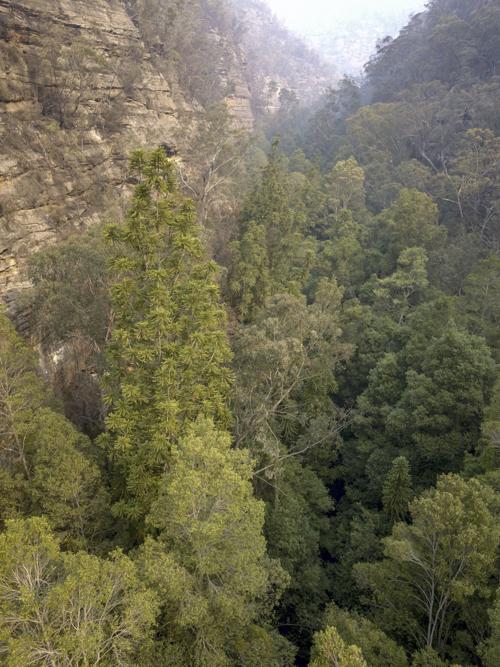
Thank you for reporting the heroic effort that saved the only wild population of the critically endangered Wollemi pine from wildfires that have ravaged more than 12 million acres of Australia, including 90% of Wollemi National Park. There’s more to the story.
Until a small grove of living trees was discovered in 1994, the Wollemi pine was known only from the fossil record and believed to have gone extinct 65 million years ago. Hailed as the find of the 20th century, the discovery of living Wollemi pines was the botanical equivalent of living dinosaurs.
The location of the grove in a remote region of Wollemi National Park remains a closely guarded secret. News of the discovery was delayed to allow enough time to collect enough seeds and cuttings for large scale propagation by botanical gardens and commercial nurserymen.
People are also reading…
Rugged terrain required collectors to rappell down from helicopters. When the discovery was finally announced, thousands of trees were available for sale. Australians were encouraged to plant their own Wollemi pines to support the conservation effort.
Even if the wild population had been destroyed, the species would not have gone extinct. Nursery-grown Wollemi pines may now be found in botanical gardens throughout the world, and thousands of private gardens in countries where the trees are offered for sale. Wide geographic dispersal of the species insures that no single catastrophic event will lead to extinction. Nursery-grown trees can be reintroduced into the natural habitat should it prove necessary. At present, Wollemis are not available for sale in the U.S.
The Wollemi pine survives today, in cultivation and the wild, thanks to a cooperative effort by botanical gardens, commercial nurserymen, and most of all, the valiant action of Australian firefighters.
The public/private partnership that helped save the Wollemi pine is an example of the kind of effort it will take to save hundreds of other species of endangered plants. Closer to home, the Tennessee coneflower offers a similar example. Because of habitat loss, the plant was widely believed to have gone extinct in the wild until a few were discovered in a remote area. A similar partnership between a botanical garden and a commercial nursery propagated plants for reintroduction into the wild. The Nature Conservancy purchased six parcels of suitable habitat. Reintroduced plants have thrived and the Tennessee Coneflower was removed from the endangered species list.
Something good can come from the Australian conflagration, if the gut wrenching reports of loss of human life, thousands of homes, and at least a billion animals dead, motivate enough of us to demand action from the climate-change deniers who, to date, have stymied meaningful coordinated action to address the crisis. It’s up to us. Elected officials know how to count, and even the most intransigent will take notice when enough of us make our voices heard.
William Thornton is a second-generation Arizona native and lifelong conservationist. He is a member of the board of directors of the Arizona Heritage Alliance and the Friends of Ironwood Forest.
