

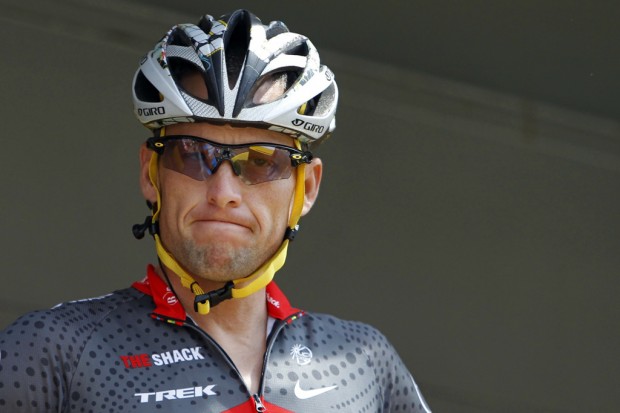
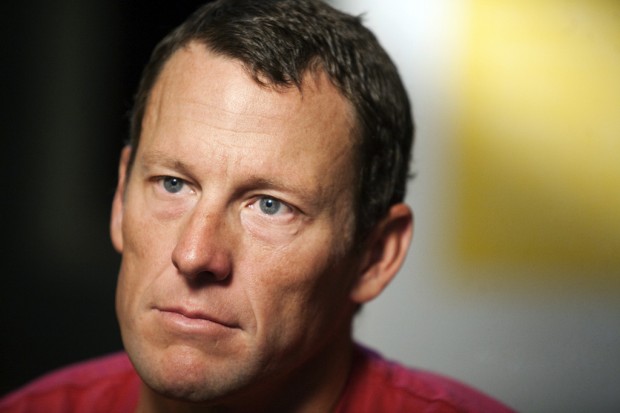
AUSTIN, Texas - The U.S. Anti-Doping Agency said Thursday night that it will strip Lance Armstrong of his unprecedented seven Tour de France titles after he declared he was finished fighting the drug charges that threaten his legacy as one of the greatest cyclists of all time.
Travis Tygart, USADA's chief executive, said Armstrong would also be hit with a lifetime ban today.
Still to be heard from was the sport's governing body, the International Cycling Union, or UCI, which had backed Armstrong's legal challenge to USADA's authority.
Armstrong, who retired last year, declined to enter USADA's arbitration process - his last option - because he said he was weary of fighting accusations that have dogged him for years. He has consistently pointed to the hundreds of drug tests that he has passed as proof of his innocence during his extraordinary run of Tour titles stretching from 1999-2005.
People are also reading…
"There comes a point in every man's life when he has to say, 'Enough is enough.' For me, that time is now," Armstrong said in a statement sent to The Associated Press. He called the USADA investigation an "unconstitutional witch hunt."
"I have been dealing with claims that I cheated and had an unfair advantage in winning my seven Tours since 1999," he said. "The toll this has taken on my family and my work for our foundation and on me leads me to where I am today - finished with this nonsense."
USADA reacted quickly and treated Armstrong's decision as an admission of guilt, hanging the label of drug cheat on an athlete who was a hero to thousands for overcoming life-threatening testicular cancer and for his foundation's support for cancer research.
"It is a sad day for all of us who love sport and athletes," Tygart said. "It's a heartbreaking example of win at all costs overtaking the fair and safe option. There's no success in cheating to win."
Tygart said the agency can strip the Tour titles, though Armstrong disputed that as he insisted his decision is not an admission of drug use, but a refusal to enter an arbitration process he believes is unfair.
"USADA cannot assert control of a professional international sport and attempt to strip my seven Tour de France titles," he said. "I know who won those seven Tours, my teammates know who won those seven Tours, and everyone I competed against knows who won those seven Tours."
USADA maintains that Armstrong has used banned substances as far back as 1996, including the blood-booster EPO and steroids as well as blood transfusions - all to boost his performance.
Armstrong, 40, walked away from the sport in 2011 without being charged following a two-year federal criminal investigation into many of the same accusations he faces from USADA. The federal probe was closed in February, but USADA announced in June that it had evidence Armstrong used banned substances and methods - and encouraged their use by teammates. The agency also said it had blood tests from 2009 and 2010 that were "fully consistent" with blood doping.
Included in USADA's evidence were emails written by Armstrong's former U.S. Postal Service teammate Floyd Landis, who was stripped of his 2006 Tour de France title after a positive drug test. Landis' emails to a USA Cycling official detailed allegations of a complex doping program on the team.
USADA said it had 10 former Armstrong teammates ready to testify against him. Other than suggesting they include Landis and Tyler Hamilton, both of whom have admitted to doping offenses, the agency has refused to say who they are or specifically what they would say.
"There is zero physical evidence to support (the) outlandish and heinous claims. The only physical evidence here is the hundreds of (doping) controls I have passed with flying colors," Armstrong said.
Armstrong sued USADA in Austin, where he lives, in an attempt to block the case and was supported by the International Cycling Union. A judge threw out the case on Monday despite questioning USADA's pursuit of Armstrong in his retirement.
In his statement Friday, Armstrong sounded resigned.
"Today I turn the page. I will no longer address this issue, regardless of the circumstances. I will commit myself to the work I began before ever winning a single Tour de France title: serving people and families affected by cancer, especially those in underserved communities," Armstrong said.
He could have pressed his innocence in USADA's arbitration process, but has said he believes most people have already made up their minds about whether he's a fraud or a persecuted hero.
It was a stunning move for an athlete who built his reputation on not only beating cancer, but forcing himself through grueling offseason workouts no one else could match, then crushing his rivals in the Alps and the Pyrenees.
Although he had already been crowned a world champion and won individual stages at the Tour de France, Armstrong was still relatively unknown in the U.S. until he won the epic race for the first time in 1999. It was the ultimate comeback tale: When he was diagnosed with cancer, doctors had given him less than a 50 percent chance of survival before surgery and brutal cycles of chemotherapy saved his life.
Armstrong's riveting victories, his work for cancer awareness and his gossip-page romances with rocker Sheryl Crow, fashion designer Tory Burch and actress Kate Hudson made him a figure who transcended sports.
His dominance of the Tour de France elevated the sport's popularity in America to unprecedented levels. His story and success helped sell millions of the "Livestrong" plastic yellow wrist bracelets, and enabled him to enlist lawmakers and global policymakers to promote cancer awareness and research. His Lance Armstrong Foundation has raised nearly $500 million since its founding in 1997.
Others close to Armstrong were caught up in the charges: Johan Bruyneel, the coach of Armstrong's teams, and three members of the medical staff and a consultant were also charged. Bruyneel is taking his case to arbitration, while two medical team staffers and consulting doctor Michele Ferrari didn't formally contest the charges and were issued lifetime ban by USADA. Ferrari later said he was innocent.
In a sport rife with cheaters, Armstrong has been under constant suspicion since the 1990s from those who refused to believe he was a clean rider winning cycling's premier event against a field of doped-up competition.
He had tense public disputes with USADA, the World Anti-Doping Agency, some former teammates and assistants and even Greg LeMond, the first American to win the Tour de France.
Through it all, Armstrong vigorously denied any and all hints, rumors and direct accusations he was cheating.
Armstrong won his first Tour at a time when doping scandals had rocked the race. He was leading the race when a trace amount of a banned anti-inflammatory corticosteroid was found in his urine; cycling officials said he was authorized to use a small amount of a cream to treat saddle sores.
After Armstrong's second victory in 2000, French judicial officials investigated his Postal Service team for drug use. That investigation ended with no charges, but further allegations kept coming.
Armstrong fought every accusation with denials and, in some cases, lawsuits against European media outlets that reported them.
Did you know?
Before he won seven Tour de France titles, Lance Armstrong competed in El Tour de Tucson. In the 1997 El Tour, which was dedicated to him, he got a flat tire shortly after the first wash crossing and did not figure in the overall outcome of the race.
Armstrong also trained in the Tucson area at times, including in 2001 and 2009.
"There comes a point in every man's life when he has to say, 'Enough is enough.' For me, that time is now."
Lance Armstrong
in declining hearing

 Ex-Arizona Wildcats Greg Byrne, Sean Miller reunite in Tucson. Here’s why


