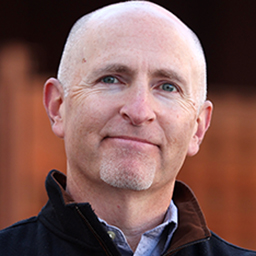
Steve Stricker couldn’t have picked a more appropriate locale to launch the next phase of his golfing career.
The 12-time winner on the PGA Tour is about to make his PGA Tour Champions debut at the Tucson Conquistadores Classic, which begins Friday at Omni Tucson National Resort.
In a way, he’s returning to where it all began.
After toiling on the Canadian and Web.com tours for four years, Stricker joined the PGA Tour in 1994. His second event as a Tour member? The Northern Telecom Open, played at Starr Pass Golf Club and what was then known as Tucson National Golf Club.
Stricker finished in a tie for second. In a recent phone conversation, he correctly recalled that Andrew Magee was the winner. Stricker hasn’t forgotten the significance of Tucson in an illustrious pro career that’s almost three decades long.
People are also reading…
“I got my PGA Tour career started, basically, in Tucson,” Stricker said. “It brings back a lot of great memories. I had a chance to win that event. I look forward to coming back there.”
Stricker turned 50 on Feb. 23. He’s still a contender on the PGA Tour.
Stricker had three top-10 finishes in 15 events last year, including a tie for second at the FedEx St. Jude Classic. He finished in a tie for 23rd at last month’s AT&T Pebble Beach Pro-Am and spoke to the Star from Palm Harbor, Florida, near Tampa, where he was about to participate in the PGA Tour’s Valspar Championship.
Stricker plans to play on both tours this year. He’s also in the field for The Masters and The Open Championship. Additionally, he will host the Champions Tour’s American Family Insurance Championship from June 23-25 in his hometown of Madison, Wisconsin.
Oh, and did we mention that he’s the captain of the 2017 U.S. Presidents Cup squad?
These are busy times for Stricker, who’s also a family man: He and wife Nicki have two daughters, Bobbi, 18, and Izzi, 10.
All will be on hand at the Tucson Conquistadores Classic for Stricker’s Champions Tour debut. That’s where our conversation with the world’s 106th-ranked golfer begins:
Does this feel like a full-circle moment for you — essentially launching two tour careers in Tucson?
A: “It really does. I don’t feel like I should be turning 50 and going out on the Champions Tour yet. So it’s kind of a strange feeling, but one I’m looking forward to. It has come full circle. It’s pretty surreal.”
You’re going to try to qualify for the U.S. Open, which is at Erin Hills in your home state. What would it mean to you to be able to pull that off?
A: “It’d be a lot of fun. It’s an hour and 15 minutes down the road. This is the first time a U.S. Open has come to Wisconsin. I’ve got my work cut out trying to qualify for it. Hopefully I can make that happen. If not, I’ll still be a fan for the week and watch it and see how Wisconsin comes across. I’m sure the players will love it. It’s a great course. The Wisconsin people — from the PGA (Championships) we’ve had at Whistling Straits — they’ve always been first-class in how they show up and how they respect the game and the players.”
You’ve won more than $40 million on the PGA Tour. You’ve played in Ryder and Presidents cups. But you’ve never won a major. Does that leave you feeling less than satisfied with your career?
A: “There’s an empty feeling there. It’s a hard thing to do. It takes a special player and a special talent to do that. I felt like my game was good enough at times; I just never really put it all together. I had a couple of opportunities (13 career top-10s, including one runner-up) and never got it done. It’s disappointing. It’s something I look back at and wish I could have done. But I’m not done yet – that’s the way I’m thinking about it. I’m in the Masters this year. I’m in the British Open this year. So you never know. Lightning could strike if everything falls into place. I’ll keep giving it a try and see what happens.”
You enjoyed something of a revival about halfway through your career. You hit a slump in the early 2000s before turning things around. What sparked that turnaround?
A: “Just a rededication. I just wasn’t having fun with the game. I didn’t know if I really wanted to continue to play. I came to the realization that there probably wasn’t anything else for me to do. So I just went to work a little bit harder. Got some things straight. Worked on my swing. Worked on my mental side. And slowly got out of it. It took a little bit of time — maybe a half or three-quarters of a year. But I kept seeing good, positive signs, and I kept rolling with it. I kept believing that what I was doing was the right thing. I put the work in, and it paid off.”
Was there any particular person who helped you through that time, giving you advice on or off the course?
A: “My family. My teacher, who is my father-in-law (Dennis Tiziani, the former golf coach at Wisconsin). Everybody was really supportive of me and what I wanted to do. But it was up to me. It was up to me to do it. You can have people telling you all the things in the world, but it really comes down to you the player taking control and setting your mind to do things. My persistence paid off.”
You won the Payne Stewart Award in 2012. What did that mean to you?
A: “That was probably the biggest award that I’ve won as a player, as a professional. I was an acquaintance of his. I didn’t really know him that well. I played a few rounds with him here or there – we were separated by a generation, 10 years or so – but somebody that I looked up to as a player and how he conducted himself. He went through some down times. He changed his game around – changed his whole life around. So there’s a lot of parallels there. It meant a lot. There’s a lot of great names on that award. To be associated with all those people, and Payne Stewart, is pretty special.”
Your tournament raises money for charity through the Steve Stricker American Family Insurance Foundation. How involved are you with that on a daily basis, and why is that important to you?
A: “We’re involved with it a lot. We want to make it successful. We want to give away a lot of money. We want to support our community. Half of the money has been going to a children’s hospital (at the University of Wisconsin). It means a lot. We feel lucky that we’re able to do this — to use what I do for a living as a platform to try to raise more money. We did that very nicely last year (about $1.2 million), and we look forward to doing more of it.”
What do you take from your playing and assistant-captain experiences that you can use as Presidents Cup captain this year?
A: “It’s basically taking what we did at last year’s Ryder Cup (a 17-11 U.S. victory) and applying that to this year’s team – trying to keep that momentum going. It’s about listening to your players, which all captains have done (on teams) I’ve been a part of. Trying to make good choices and pairings. Just making an environment that your players are relaxed in, having fun with, so they can play their best. That’s the biggest thing I’ve learned — to have a good environment to be able to compete at a high level. These guys are so good at what they do. You just want them to perform at their highest (level). That’s the goal — to let them do their thing.”