

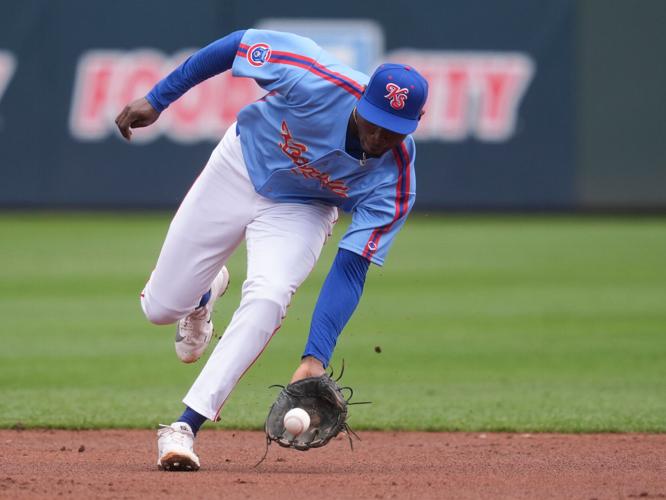
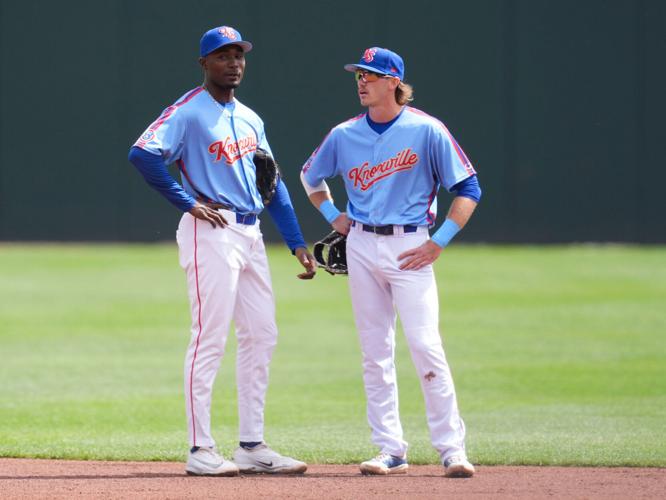
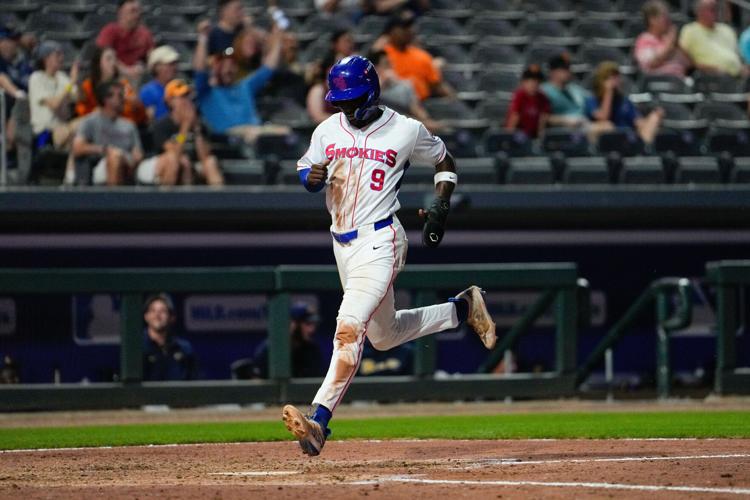
Ed Howard knows what people see when they look at his career: a hometown kid from the South Side of Chicago, selected 16th overall by the Cubs, and once destined for an infield spot at Wrigley Field.
They also see the injuries that followed.
What many don't see is why the Knoxville Smokies infielder keeps playing the sport he dedicated his life to at five years old, even as the odds grew longer.
"I probably could have walked away from the game, and nobody probably would have got mad at me," Howard told Knox News. "But that never occurred. I never even thought of that because I wanted to reach my dream."
Somewhere along the way − in a career defined by surgeries, setbacks and nearly four years of rebuilding − Howard stopped worrying about whether baseball had treated him fairly and instead focused on where it could still take him.
People are also reading…
Acceptance is something he never expected to learn. And after a two-month stint in a hospital bed, he came to understand a lesson many athletes learn much earlier: Talent alone is not enough to shield a career from adversity.
"I just always wanted to write my own story," he said. "I don't want the injury to define it."
The night baseball changed forever
Howard remembers all too well.
The South Bend Cubs had erased a five-run deficit against the Fort Wayne TinCaps on May 10, 2022, when Howard hit a grounder to shortstop. With one out in the ninth inning, he collided with the first baseman, fell to the ground and tried to stand back up. He couldn't move.
Trainers helped him to the clubhouse, where his mother and grandmother found him distraught in a ripped jersey.
"I was just angry, upset," Howard said. "Who was I upset at? I was just upset at the world. I didn't know."
Howard tore the labrum in his left hip, dislocated the joint and fractured the posterior wall in his pelvis. Eight days later, a titanium plate was inserted with screws.
He spent two months glued to a hospital bed, receiving blood-thinner injections in his stomach and watching his left leg shrink from not being used. He had to re-learn how to walk.
The physical recovery was measurable. The mental recovery was not.
Lesson learned from slowing down
Howard spent the first 18 years of his life believing hard work could solve almost anything. Baseball wasn't part of his family, but he was always taught that "if you really want something, just put in the work."
That's what carried him through the 2014 Little League World Series and later helped him become one of the top prep players in the 2020 MLB Draft as a shortstop from Mount Carmel High School in Chicago.
But the injury wasn't something Howard could overcome with effort. When you're out of action as a baseball player, he said, that's "all that's running through your mind."
His mind was ready to rehab and never talk about the injury again. But recovery doesn't follow a definite timeline.
"I wanted to come out like a rocket and just be the same 18-year-old kid that I was," Howard said. "But it doesn't work like that."
When he returned ahead of schedule roughly 10 months later, he collected two doubles as part of a three-hit night. Though it seemed like Howard had returned from the outside, the underlying challenges persisted.
"I'm limping," he said. "I'm struggling in my apartment. I got to get up and use the restroom in the middle of the night and I can't get there."
Patience a virtue as a minor leaguer
Patience was the biggest lesson Howard took away from his injury. Prior to getting hurt, everything with baseball was always moving forward.
"At 18," Howard said, "you want everything when you want it."
Rather than dwelling on why the injury happened, Howard began asking what could still become of it. He hit his first home run at Covenant Health Park in Knoxville on July 9, proving to himself that he could still play the game at a high level.
Faith deepened during the years away from the field, Howard said, and his family became the foundation. The internal belief never left.
"Nobody knows you more than you know yourself," he said.
Howard stopped worrying about outside opinions. He believes in who he was. The work ethic, mindset and drive remained consistent, he said: "I'm still the same guy."
Aspiring for higher stakes as prospect
As the hometown kid with all the potential, the 24-year-old smiles when asked about pressure. He welcomes the feeling.
"Pressure is a privilege," Howard said.
Once a high-profile shortstop, Howard hopes to play in games where expectations are high again. Expectations mean people still believe in him.
"I pray that one day there are more pressure moments in my career," he said.
Howard still believes he can make it to Wrigley Field. Though injuries changed his body and altered his timeline, his performance is meant to satisfy an audience of one.
"At the end of the day," he said, "I'm really doing this to prove it to myself."
His present-day self looks back at the young Howard − angry at the world in the Four Winds Field locker room in South Bend, Indiana. On the winding road back from his 2022 injury, he has discovered everything happens when it's supposed to happen. He just had to accept it first.
"I just want to keep going," he said, "until I can look up and almost smile and laugh at him."


