History tells us a lot about the Founding Fathers of the U.S., but it's also worth recognizing some of the women who had a huge contribution to our nation. Here are some of the "Founding Mothers" of America's past 250 years:
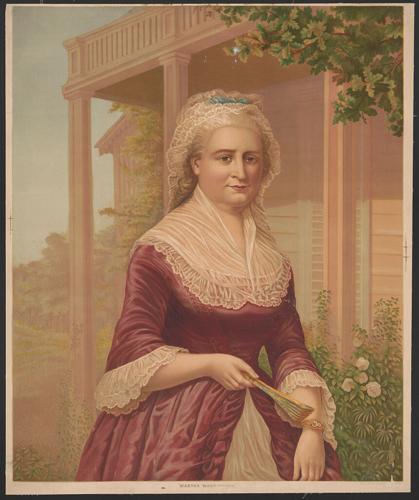
Martha Washington, the first first lady

Martha Washington
If George Washington was the father of our country, Martha was the mother. She ran the family business — the plantation — when he was gone, first during the French and Indian wars and then during the Revolution, and she helped set a standard of simple elegance, presiding over receptions in the presidential residences first in New York, then in Philadelphia. But because Martha opposed her husband accepting the presidency, she did not attend his inauguration.
Martha Dandridge was born June 2, 1731, at Chestnut Grove, a plantation in New Kent County, Virginia. She married Daniel Parke Custis on May 15, 1750, and they had four children together. Only two lived to age 5, and Martha outlived all of her children.
People are also reading…
Daniel Custis died in July 1757 and Martha, at age 26, became a wealthy widow with two young children, a 17,500-acre plantation to manage, and responsible for almost 300 enslaved people.
In the spring of 1758, a number of men attempted to court Martha, including George Washington, and the two married on Jan. 6, 1759, at the bride’s home in New Kent. They moved to Mount Vernon in April 1759.
George and Martha Washington never had any children together, but they raised Martha’s children and grandchildren together.
Martha spent about half of the Revolutionary War with her husband in camp or nearby. She organized a group of women who would wash clothes and blankets and care for sick and dying soldiers; she also knitted for soldiers, visited hospitals, and helped raise money to buy soldiers shirts and other supplies.
Martha was too heartbroken to attend her husband’s funeral on Dec. 18, 1799. In total, she had 21 great-grandchildren, but most did not survive childhood.
Martha died on May 22, 1802.
Wives of Declaration of Independence signees
Delegates from all of the colonies were present in Philadelphia for the signing of the Declaration of Independence in 1776. Fifty-six men left their homes, businesses and families to make the case for the country. Here are some of the woman who supported the signers.

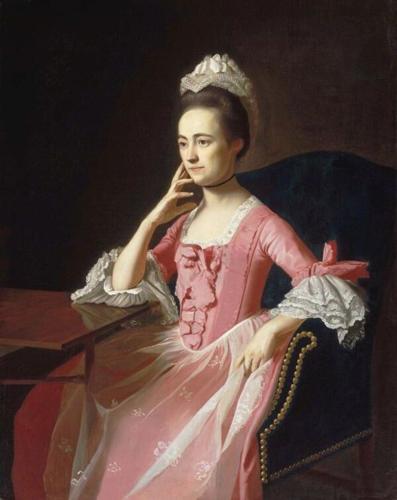
Dorothy "Dolly" Quincy Hancock
Dolly Hancock
John Hancock signed his name the biggest. He married Dorothy “Dolly” Quincy in 1775 and they had two children, neither of whom survived to adulthood. When John died, Dolly married again to a sea captain. According to legend, Dolly was present while the Battle of Lexington was being fought in Massachusetts.

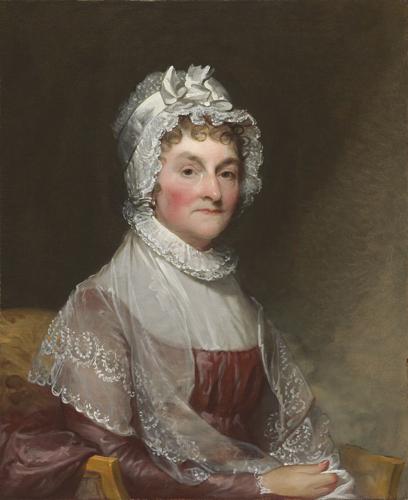
Abigail Adams
Abigail Adams
Signer and future president John Adams married Abigail Smith on Oct. 25, 1764. Abigail was well-versed in politics, philosophy, art and many other topics, and thus was a great friend and adviser to John throughout his career. Together they had six children, only four of whom made it to adulthood. Abigail died of typhoid fever eight years before John Adams died. Of note: John Adams died July 4, 1826, the same date that Thomas Jefferson died.
Martha Jefferson
Signer and future president Thomas Jefferson married Martha Wayles Skelton, a widow, on Jan. 1, 1772. She was previously married to Bathurst Skelton, a Virginia attorney. Martha was an accomplished pianist, and it is said that she and Thomas found each other through their mutual love of music. The couple had six children together, only two of whom made to adulthood. Martha died in September 1782, shortly after the birth of her last child.

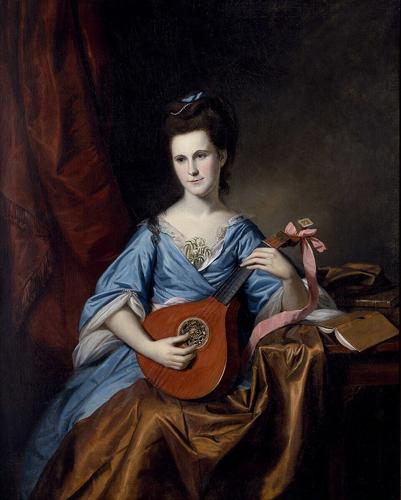
Julia Rush
Julia Rush
Signer Benjamin Rush married Julia Stockton and the couple had 13 children, nine of whom would survive infancy. She was the daughter of Richard Stockton, another signer of the Declaration of Independence. Julia, who lived to be 89, is remembered for her efforts to raise money for the Continental Army with a group called the “wives of Philadelphia.”
Anne Morton
Signer John Morton married Anne Justice in 1745, and together they had nine children. After John’s death in 1777, the British ransacked the Morton residence and Ann was forced to flee with her family across the Delaware River. Much of the documentation about their private lives was lost as a result of the destruction from the Revolution. Anne died in 1818.
Elizabeth Lewis
Signer Francis Lewis was married to Elizabeth Annesley. She was a woman of high character, noted due to her calm reaction to the British opening fire on her home and then taking her captive. As a result of her imprisonment, however, her health declined rapidly. She died in June 1779 in New York.
Margaret Corbin, Revolutionary War veteran
Margaret Corbin’s husband, John, was killed firing artillery from Fort Washington, New York. Margaret moved into his battle station and fought bravely, sustaining three gunshot wounds, until the British captured the post.
Because her wounds disabled her, the Continental Congress awarded Margaret half the pay of a soldier and a complete outfit of clothing, or its value in cash; eventually she also received an annual clothing allowance. Not willing to leave it at that, as a member of what was called the Invalid Regiment, Margaret Corbin petitioned and won a full ration, including rum or whiskey.
Many years after her death, the Daughters of the American Revolution were granted their request to rebury Margaret Corbin at West Point, making her the only Revolutionary veteran to receive that honor.
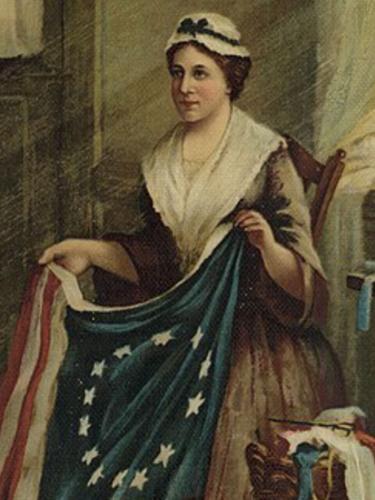
Flag maker Betsy Ross

Betsy Ross
Betsy Ross had the honor of sewing the first United States flag. A symbol of patriotism, Ross is often celebrated as the woman who helped George Washington finish the design. Though there is no historical evidence that she created this flag, her story has made her a national icon.
Ross had a successful seamstress and upholstery business in Philadelphia. George Washington and two members of the Continental Congress brought a rough sketch of a flag with 13 red and white stripes and 13 six-pointed stars. Ross suggested that the stars be changed to five-pointed stars because they were easier to make. Allegedly, she showed them how to make the new stars by folding a piece of paper into triangles, and with a single snip of the scissors she made a perfect star. The men agreed to change the design.


Sources: Mount Vernon National Park, Constitutionfacts.org, “Founding Mothers” by Cokie Roberts, womenshistory.org