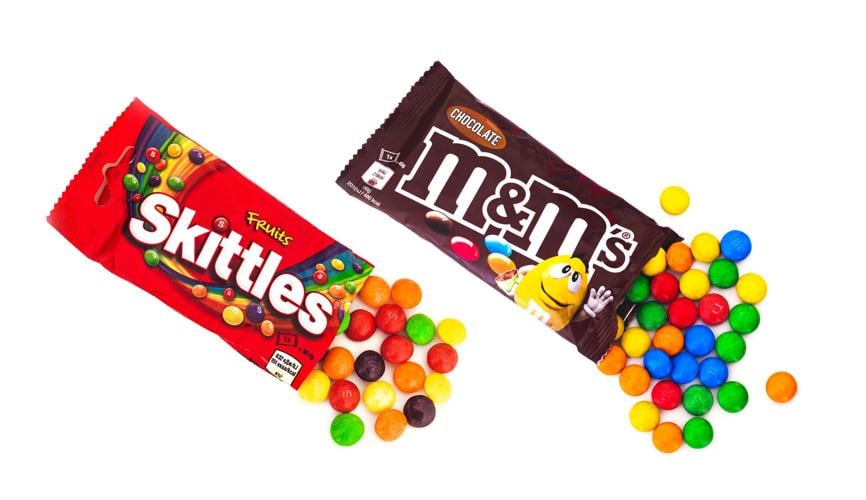

Your candy — like your Cheetos and cereal — may soon be less colorful.
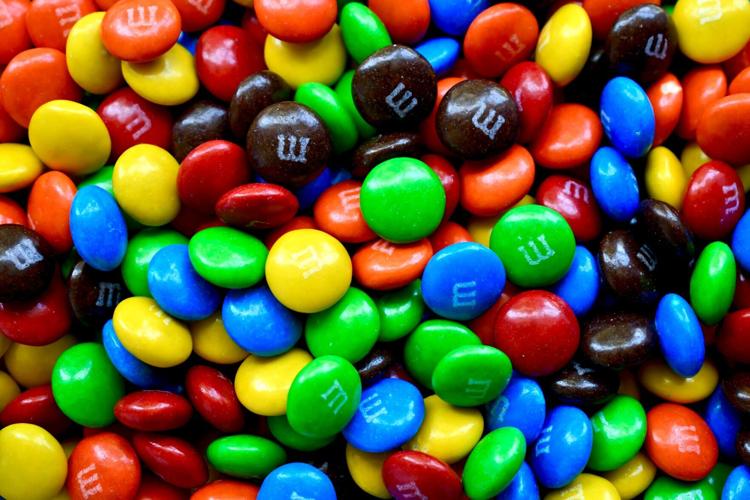
Mars, the company that makes the vibrant, candy-coated chocolate morsels that are M&Ms, is removing two colors — blue and brown — from some of its candy mixes. Some new bags of the treats will be without the colors, at least for a time, as the company works to transition to a synthetic-dye-free product.
Mars will introduce four products — M&Ms, Skittles, Starburst and Extra gum — made without FD&C dyes — synthetic dyes regulated by the U.S. Food and Drug Administration, such as Red No. 40 — that initially will be available for purchase exclusively on Amazon this summer, the company told USA Today.
These naturally colored bags will be the only ones without the full M&M rainbow, Mars said, and traditional bags and other existing products still will be available in stores and online, with no change to the color mix. The company is working toward offering naturally colored M&Ms in all shades by 2028.
People are also reading…
Why will some M&Ms be missing blue and brown?
The Wall Street Journal first reported the development, describing the challenges Mars faced in finding natural alternatives to achieve something similar to its traditional blue and brown hues.
Colors like red and yellow were easy to replicate with ingredients like beetroot and turmeric, but the brand's signature brown and cerulean blue are a little harder to get right. Mars' choice of spirulina, a type of algae, produced a desirable look but "gummed up" factory machines and caused issues with consistency and texture, the Wall Street Journal reported.
The brand is working on alternative means of matching the blue it first produced in 1995 and will share more "when we have identified fully effective, scalable solutions across the entire portfolio," the company said.

Why are big food brand phasing out synthetic dyes?
The move is part of a larger push initiated by Health Secretary Robert F. Kennedy Jr. and the FDA as part of the Make America Healthy Again movement.
At an April 2025 news conference, during which Kennedy called the additives "poison," the FDA shared intentions to "phase out" petroleum-based synthetic dyes by the end of this year. The dyes previously were allowed under FDA regulations and oversight.
The targeted additives include Red Dye 40, Yellow Dye 5, Yellow Dye 6, Blue Dye 1, Blue Dye 2, Green Dye 3, Citrus Red 2 and Orange B. Kennedy said the dyes cause "behavioral issues in children," among a litany of other health issues, but there is limited research linking dyes and direct health consequences in humans.
Studies were done on the effects of commonly used synthetic food dyes, some of which found links to conditions like cancer, attention-deficit/hyperactivity disorder and organ damage in mice. Some experts believe more definitive research is necessary, however, which USA Today previously reported.
"The totality of scientific evidence indicates that most children have no adverse effects when consuming foods containing color additives, but some evidence suggests that certain children may be sensitive to them," said an FDA page on food dyes, last updated in 2023. "The FDA will continue to evaluate emerging science to ensure the safety of color additives approved for use."

Big brands began to remove certain dyes
While the FDA said last year that it would authorize four new natural color additives and expedite the approval of more, no agreement or legislation was passed officially banning the synthetic substances. Instead, the Department of Health and Human Services and the FDA have a "mutual understanding" with the food industry that the dyes will be progressively removed, Kennedy said at the time.
Even without enforceable regulations, many brands bowed to public pressure for more "natural" food ingredients. PepsiCo, Kraft Heinz, General Mills, Tyson Foods, Kellogg's, Campbell's, Coca-Cola, Nestle and Hershey are among other big-name companies that pledged to or already phased out certain dyes, in some cases giving us the more muted versions of snacks like Doritos, Cheetos and Trix cereal.