

MUNICH, Germany — A ban on champagne showers is one of several new measures Munich has introduced ahead of this year's Oktoberfest, as organizers seek to improve safety and rein in unruly behavior.
It is a beer festival, after all.
More specifically, visitors will no longer be allowed to shake bottles of sparkling wine and spray the contents over fellow revelers inside the festival tents.
Oktoberfest may be famous for its drinking culture, officials say, but excessive rowdiness is not part of the tradition they want to promote.
Oktoberfest is the world's largest Volksfest - a combination of folk festival and funfair. It draws millions of people to Munich every year for the outsize beer tents, traditional Bavarian costume and cuisine, plus the carnival rides.
It runs for 18 beer-soaked days and though it's called Oktoberfest, it was moved to September thanks to longer, warmer days.
People are also reading…
Its origins date back to 1810 to mark a royal wedding. The marriage between Crown Prince Ludwig of Bavaria and Princess Therese of Saxe-Hildburghausen was held that October.
Champagne shower, nein danke!
Six historic Munich breweries, Augustiner, Hacker-Pschorr, Hofbräu, Löwenbräu, Paulaner, and Spaten serve beer, typically accompanied by pretzels, roasted chicken, pork knuckles and sausages.
But fountains of sparkling wine will not be welcome in 2026. Munich city officials have banned the practice of shaking and spraying champagne inside the tents, saying it is wasteful and does not fit the character of the traditional folk festival.
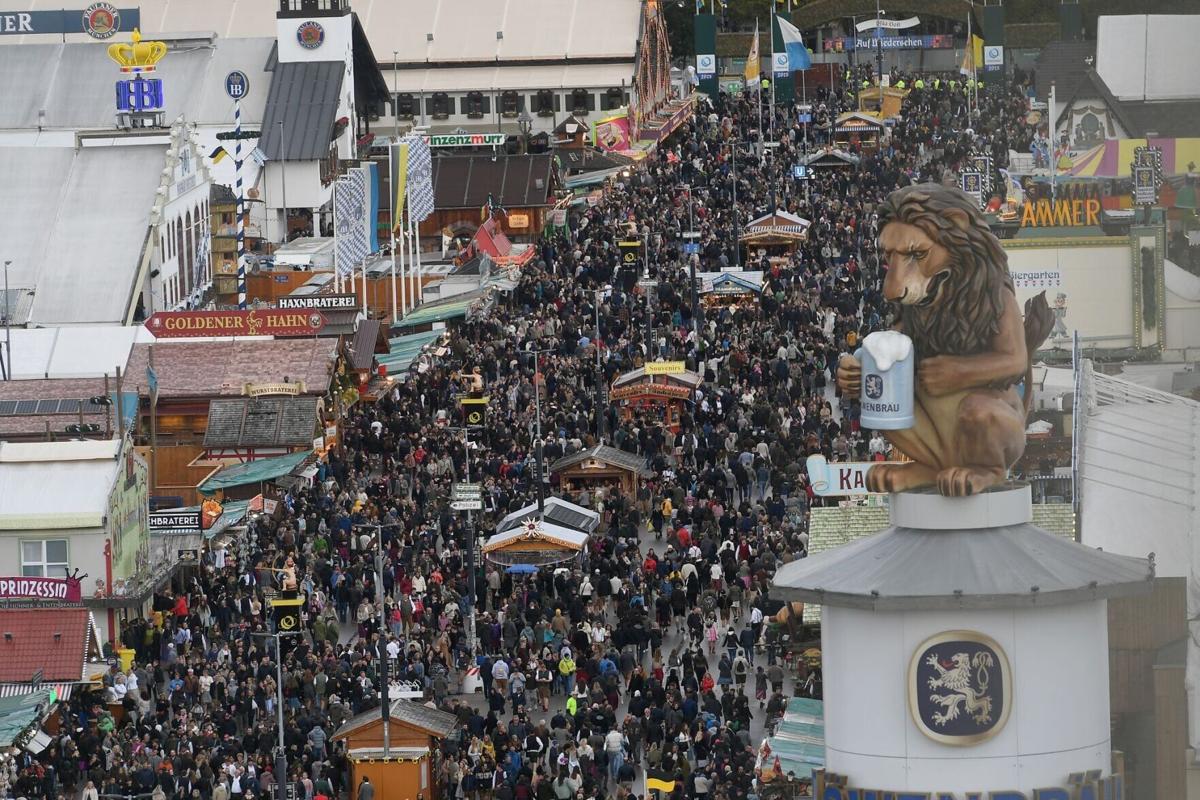
Ahead of this year's event, Bavarians are engaged in a lively debate over a series of changes after overcrowding in 2025 raised concerns about safety and prompted fears that the festival could be heading towards a crisis.
A festival tune-up after a turbulent year
Looking back, last year's event was a "roller coaster," Munich's economic adviser Christian Scharpf told dpa at the time. Scharpf's first year as Oktoberfest chief was been turbulent, from record temperatures to a bomb threat.
That's why 2026 will bring "real-time measurement of visitor numbers" and "crowd-spotting," he vowed at the time.
The biggest test came during the festival's so-called "Italian Weekend," the second weekend of Oktoberfest when large numbers of visitors from Italy traditionally arrive in Munich. At peak times, the crowds became so dense that thousands of people were unable to move either forward or backward.
Announcements that the festival grounds were being temporarily closed for safety reasons - without initially explaining why - caused alarm among some visitors
Even during last year's fest, targeted crowd monitoring and multilingual public address announcements were among the immediate improvements.
But further changes this year include a new coordination and monitoring center plus CCTV surveillance to spot issues before they become critical.
The traditional brass bands are affected by the new safety features this year.
More "oompah" music - the iconic, upbeat traditional music played by bands, is to creatively make Oktoberfest safer by encouraging more tourists to come during the week.
Officials seek to slash weekend overcrowding by allowing music in the tents to start an hour earlier.
Thumbs up for sparklers but with limits
The potential for disaster remains in the minds of many, not only given last year's overcrowding, but also a fatal fire in Switzerland that looms large in the public consciousness.
In the early hours of New Year's Day, a fire tore through a popular bar and nightclub in the Swiss ski resort of Crans-Montana. The blaze killed 41 people, including several minors, and injured 115 others, making it one of the deadliest tragedies in Switzerland's recent history.
Investigators and prosecutors concluded that the rapidly spreading fire was caused by sparklers attached to champagne bottles, which had been lit indoors and held close to the ceiling.
The tragedy prompted Munich officials to consider banning the practice at Oktoberfest. In the end, however, they decided to allow sparklers - but only under strict conditions. Visitors may use them exclusively on the festival's final evening.
The city council also rejected a proposal to ban patio heaters, despite arguments citing climate concerns and the energy crisis linked to the conflict in Iran.
Yet as Munich debates Oktoberfest preparations during a summer marked by sweltering heatwaves, few people are likely to be wondering whether they will need extra warmth.


