
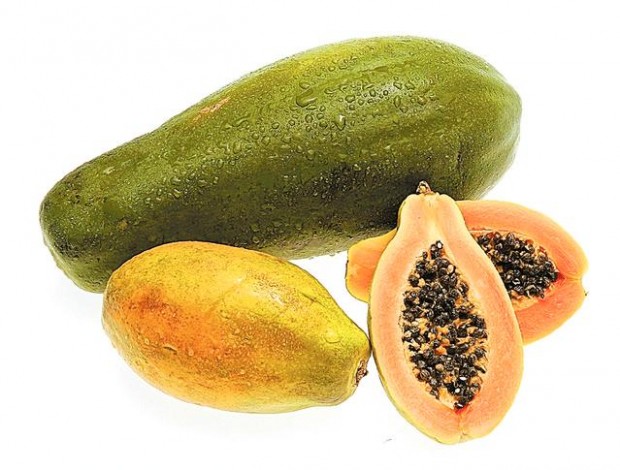
You shouldn't add raw papaya chunks to gelatin salads. The papain enzyme in this tropical fruit will prevent the gelatin from setting. But the enzyme also is used in meat tenderizers and thought to be a digestive aid, Dianne Onstad writes in "Whole Foods Companion."
Distinguished by tender yellow, salmon or orange flesh, papayas are divided into two major groups in markets: the large Mexican fruit, which can grow to the size of a small watermelon; and the much smaller pear-shaped fruit from Hawaii (and occasionally from the Caribbean and Brazil).
In "Chez Panisse Fruit," Alice Waters describes this smaller papaya as sweeter than the Mexican strain.
What to look for: Look for dry, unblemished fruits in various stages of ripeness.
A ripe papaya yields to pressure much like a ripe avocado. But don't worry if only hard ones are available.
People are also reading…
Papayas can be left alone on a kitchen counter or tucked in a paper bag; they'll turn ripe in a few days.
At home: Store them in a cool, dry place. "Papayas should never be refrigerated," Waters writes.
Cut the luscious fruit in half lengthwise, and you'll find a center with seeds that resemble caviar. Scoop them out with a spoon and discard (although there are those who appreciate the seed's spicy, peppery flavor). Then scoop out the flesh if the fruit is very ripe, or peel firmer papayas with a paring knife.
Papaya is delicious served as is, or with lime wedges to provide a complementary spritz.
Papaya chunks are delicious cooked in desserts and preserves or served fresh in salads and salsas.
Don't discount unripe, or green, papayas, Waters writes: "In the Thai dish sohm taam, a cooling snack offered by street vendors, green papaya is crushed in a mortar" with garlic, chiles, palm sugar, green beans and dried shrimp.