In memory's mind, she still sees and hears the Beijing dawn — roosters crowing, vendors hawking their wares, bicycles weaving across the streets, the high-pitched sounds of a Chinese opera somewhere in the background.
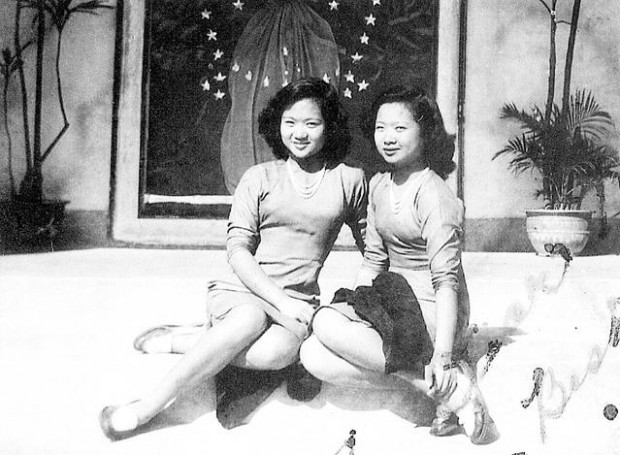
But it is the Beijing of almost 60 years ago, before Chi Newman and her twin sister, Lu, were forced as teenagers to flee Mao Tse-tung's communist forces.
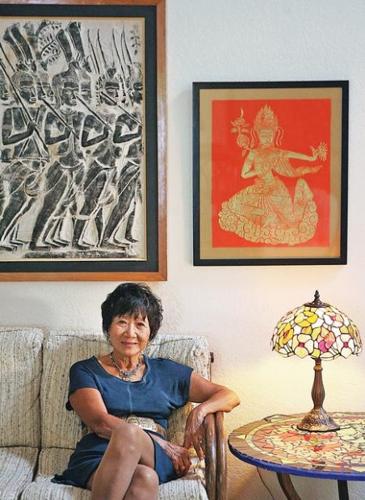
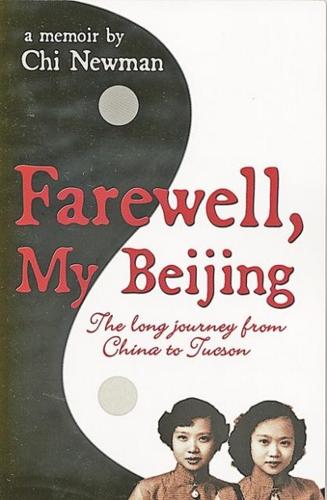
"We were scared to death. About 50 or 60 men took over the house," says Newman, who now lives in Tucson and has written a book about her life — before and after China.
"The first few years of our lives were wonderful," says Newman, whose father was a high-ranking government official.
The family lived in a large house with several courtyards. "We had swans swimming in an artificial lake."
Though she adored her father, she recalls that he had several concubines and occasionally indulged in opium.
People are also reading…
Her mother, she says, was beautiful but selfish and unloving. "She never combed our hair or did the little things for us," says Newman. "She rode horses, loved everything American and ordered things from all over the world."
When the twins were 5, they were chauffeured daily to Sacred Heart School to learn English and French. "My dad was educated at Cambridge and in Tokyo, and he wanted us to have those same advantages," says Newman.
She loved the school, even yearned for a time to become a nun. And then one day in 1949, the communists moved into Beijing. "My parents were traveling and Lu and I were playing ball when all these men took over the house."
Their parents returned and quickly arranged for the girls, then 13, to fly to an aunt's house in Nanjing, where it was considered safer. It was the last time the girls would ever see their father.
"He kept hoping things would change and he could bring us back," says Newman.
Instead, her parents were forced into hiding in the south of China.
Meanwhile, the girls were soon reunited with an older sister, Amy, and her husband, living in Taiwan. There, they studied for another three years, then lied about their ages and got jobs — Lu with China Airlines, Chi working in the French Embassy in Taipei, the capital of Taiwan.
"It was wonderful. They hired me on the spot. I had chauffeur-driven cars and they paid me in U.S. dollars."
She had a steady succession of beaus, including a young American named Richard Newman, who worked for Western Enterprises, a front for the CIA.
A year later they married in Greece, where Chi had gone to work for the Chinese ambassador for the Republic of China, governing Taiwan.
The two briefly settled in Washington, D.C., where Chi became an American citizen and Richard joined the State Department.
For the next three decades, the couple would travel — often with their two children, Jeffrey and Leslie — to posts from Paraguay to Uganda, Chile to Barbados. Along the way, Chi met everyone from then Vice President Richard Nixon to astronaut Neil Armstrong.
In the late 1960s, Richard was sent to Vietnam for 21/2 years. Chi and the children went to Taiwan, which Richard visited about every six weeks. Here, she reconnected with her Chinese roots, refreshing her language and learning the art of Chinese cooking.
In 1979, the couple moved to Guatemala City, where Richard, retired from the State Department, had taken a job with the World Health Organization.
A year later, he was kidnapped by Marxist guerrillas and held for nine weeks. "I suspect a ransom was paid quietly," he says.
After taking some down time in Tucson with their children, who were attending the University of Arizona, the couple wound up at another post in Barbados.
While there, Chi learned that her sister, Amy, had found their mother in China and brought her back to California, where Amy was living.
Chi quickly flew there, only to learn that her mother had taken a fall and was dying. "All I did was hold her hand. She came here with a little suitcase, just like the ones we had when we left Beijing."
In 1989, she and Richard and three other couples traveled to China, which was opening up to the West.
Even so, the line to Mao's tomb was two miles long, says Chi. While there, she refused to revisit her old home. "I was afraid it had been taken over by the communists."
As for the China of today on the eve of the Olympics: "I think what they've accomplished is unbelievable. I'm very proud of what the Chinese are doing. It's all about saving face. That is what is most important to the Chinese."
She fled Mao's forces
DID YOU KNOW
Almost 3,000 Chinese lived in Tucson in the year 2000, according to the U.S. Census Bureau.