

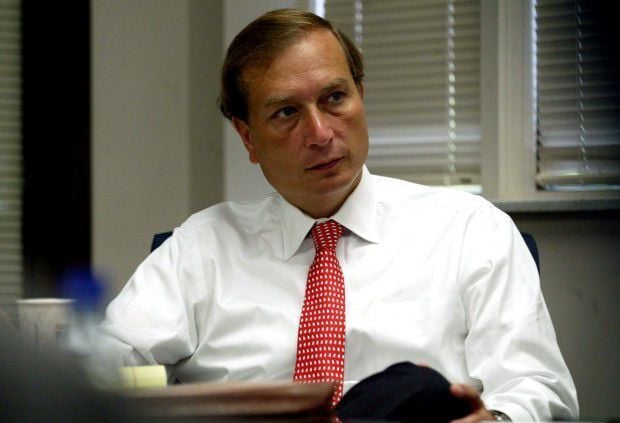
Shaun Hayes once was a local banking hero who built a tiny bank into a big one and made his shareholders rich.
If bankers talk about him these days, though, it’s about his failures: Three Missouri banks with which Hayes was associated have closed in a little over a year, costing the Federal Deposit Insurance Corp. an estimated $193.2 million. The latest to fail, Excel Bank of Sedalia, Mo., also owed the Treasury $4 million from a TARP bailout.
Hayes also has been involved in a series of failed nonbanking investments, including real estate and a Lion’s Choice fast-food franchise. Bank of America obtained a $10.2 million judgment against Hayes in 2010 in connection with a development in Gulf Shores, Ala.
None of those problems was public knowledge in 2008, when Hayes left National City Bank and began looking for his next act in banking.
People are also reading…
Hayes was famous locally for buying a tiny bank in northern Missouri, moving its headquarters to St. Louis and building it into Allegiant Bancorp, with more than $2 billion in assets. When he sold Allegiant to Cleveland-based National City in 2004, his bank’s value had quintupled in eight years.
If Hayes was going to try to do it again, plenty of people were willing to ride on that bandwagon.
“I didn’t know him that well,” says Elmer Austermann Jr., a longtime banker who ran Sun Security Bank in St. Charles County. “But he was a wunderkind for years. I was reading about him in your paper and others.”
Austermann, now 81, needed new capital for Sun Security, which had been hurt by problem real-estate loans. He was also looking for an eventual buyer. Hayes invested $3 million, and Austermann named him president.
Truman Bank was looking for capital at about the same time. Richard Miller, Truman’s former chairman, says Hayes invested $2 million and brought in $3 million from other shareholders. Hayes never became an officer or director of Truman, but the board hired him as a consultant.
Meanwhile, Hayes had acquired control of Excel Bank and became president there.
Austermann and Miller both say Hayes brought in new borrowers, and that a high percentage of them defaulted on their loans.
“At that point, who is going to question his sincerity with regard to the bank?” Miller recounted. “Five million dollars was coin of the realm, and when he brought in loans, it appeared that they were OK.”
Hayes’ relationship with all three banks eventually soured. Austermann fired him, Truman ended his consulting arrangement and Louis Ahlmeyer, the banker who sold Hayes his Excel shares, sued for nonpayment on a promissory note and obtained a $1.2 million judgment.
One by one, regulators closed the banks — Sun Security a year ago, Truman last month and Excel on Oct. 19. The FDIC’s loss estimates — 33 percent of assets at Sun Security, 20 percent at Truman and 12 percent at Excel — show how troubled the banks’ loan portfolios were.
Vincent Vogler, Hayes’ attorney, says it’s unfair to blame his client for the failures. All three banks had elevated levels of problem loans before Hayes came on the scene, and bank regulators had put Sun Security and Truman under cease-and-desist orders.
“It’s not like he went into a healthy bank,” Vogler says. “No one could have predicted that the real estate market would be down as long as it has.”
Vogler added that Hayes poured his own money into the banks, making him “a seven-figure or eight-figure loser in these deals.”
Austermann, though, doesn’t see Hayes as a victim. He admits that Sun Security had a lot of bad loans in 2008, but says Hayes’ aggressive lending made things worse.
“One of the examiners told me, ‘Shaun put the nail in your coffin,’ and I guess he was right,” Austermann said.
David Nicklaus is business columnist at the St. Louis Post-Dispatch. Subscribe to his Facebook page or follow him on Twitter @dnickbiz.


