Access to acres of Coronado National Forest land at the U.S.-Mexico border has been closed due to what forest officials described as hazards created by border-wall construction there.
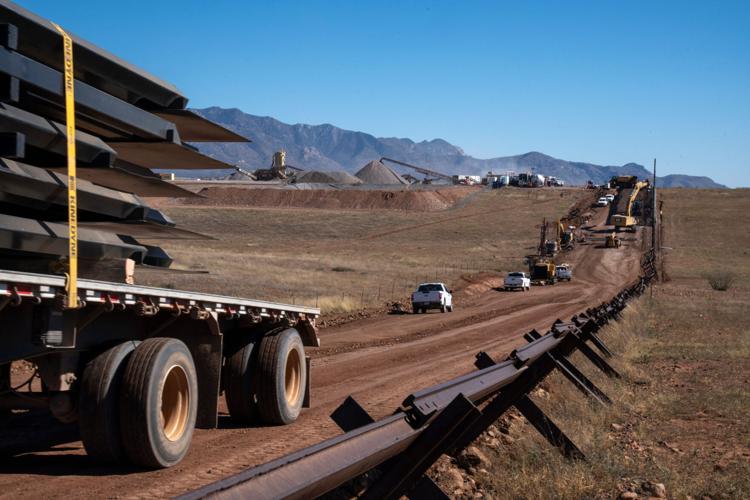
Construction on primary and secondary barriers at the southern border has added new roadways, causing vehicles to travel faster through work zones that include steep grades, open trenches and lots of equipment, said James Alford, special agent in charge for the Forest Service's southwestern region.
"There’s an inherent danger of the construction activity, and because they have opened that up, now the frequency of traffic has picked up and the speed of traffic has picked up, so that is the reason for the closure," Alford said Tuesday.
The closures are unrelated to confrontations between border-wall contractors and protesters along the southern border, he said.
People are also reading…

Border wall construction in Arizona's San Rafael Valley in November 2025.
But environmentalists and others seeking to bear witness to border wall construction, which has already partially destroyed an Arizona archaeological site, say the access restrictions are more about shielding federal border-wall projects from public oversight and accountability.
"This is an attempt to prevent documentation. That’s my take on it, honestly," said Erick Meza, borderlands coordinator for the Sierra Club. "As nobody is documenting, there is no transparency for a lot of the way the work is being done."
Meza said he's seen border-wall contractors, not private individuals, driving at a high rate of speed through the rugged terrain. He doesn't believe the changes are about protecting the public, but rather controlling their movements.
"It is sad that the Forest Service, which their main mission is to protect our natural and cultural resources, is now going to be policing people that are interested in protecting them, as well," he said.
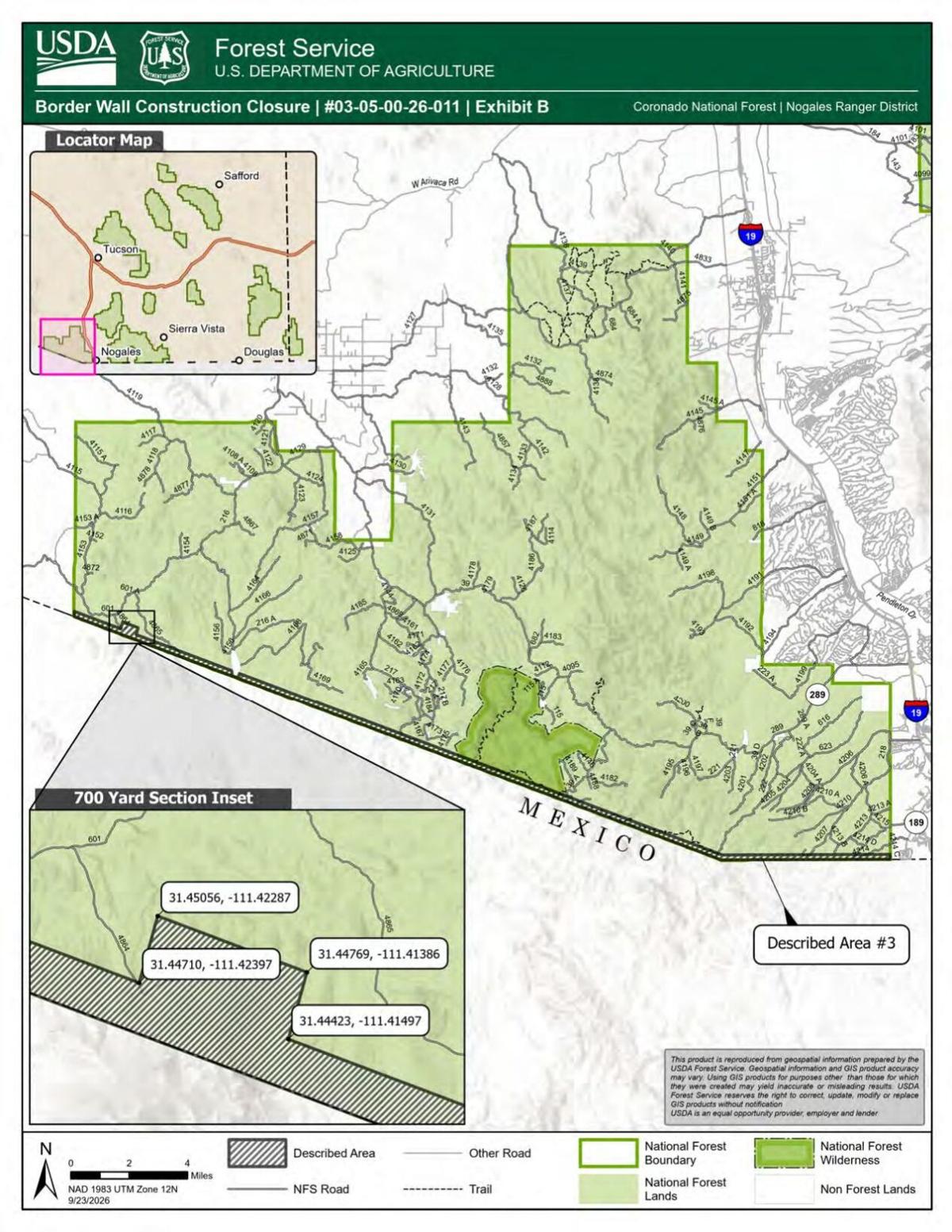
The "public health and safety" closure order, available on the Forest Service's website, said the closure began Tuesday and will remain in effect through Jan. 20, 2029 — the last day of President Donald Trump's term — unless rescinded.
The order describes three designated areas, including an area west of Nogales, stretching west to the eastern boundary of Buenos Aires National Wildlife Refuge. Two other segments of closed Forest Service land are located on either side of the state-managed San Rafael Valley State Natural Area.
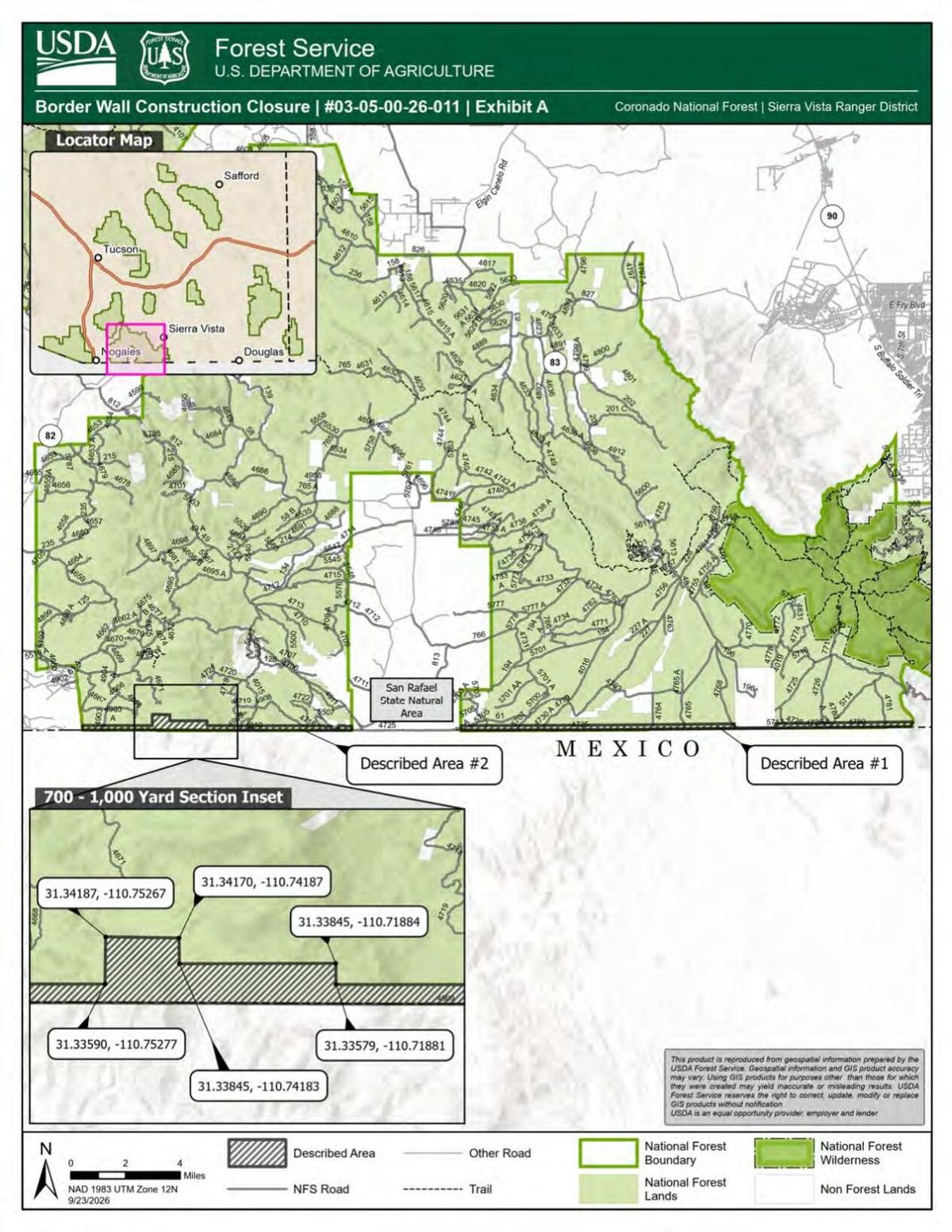
Much of the closed areas extend about 20 yards north of the border, but some areas extend hundreds of yards into the U.S. interior.
One two-mile-long segment of closed land extends between 700 yards and 1,000 yards north from the U.S.-Mexico border, west of the San Rafael Valley, the closure order said.

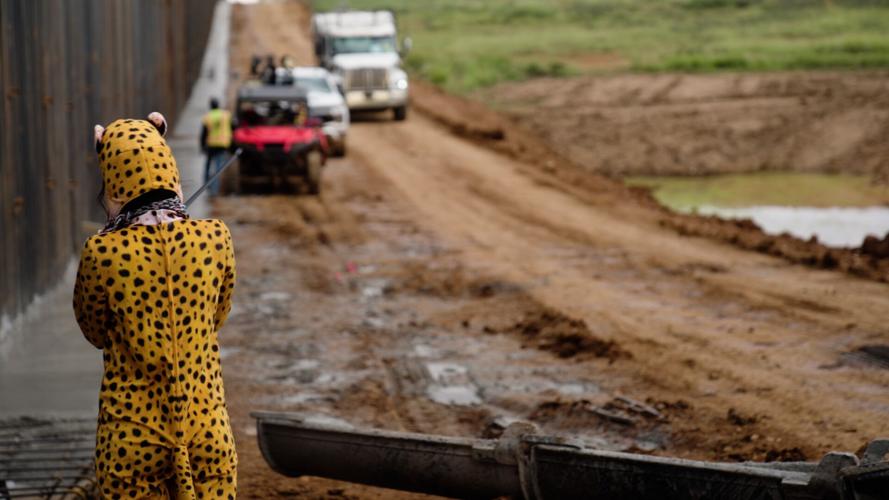
A protester in a jaguar costume tries to stop construction of the border wall in the San Rafael Valley, about 100 miles southeast of Tucson.
Protesters camped on private land in Lochiel, Arizona — where for months protesters have protected a large cottonwood tree from being destroyed by wall construction — shouldn't be affected by the closure. But protesters there have had run-ins with border wall contractors further from the main protest site, Meza said.
On Sept. 16, three protesters were arrested for disorderly conduct after crossing into Cochise County, and later were released on their own recognizance.
Violation of the closure order is a class-B misdemeanor, punishable by a $5,000 fine for individuals, or a $10,000 fine for an organization, or by imprisonment for not more than six months, or both, according to the order, signed by Kerwin Dewberry, supervisor of Coronado National Forest.
On Tuesday, U.S. Rep. Adelita Grijalva, D-Arizona, called the sudden closure "unnecessary and deeply troubling."
"Arizonans deserve transparency about what is happening on our public lands," Grijalva said in a statement. "We have a right to know why such a sweeping closure is necessary and what is being done to protect these areas — not be shut out from documenting the impacts of border wall construction."
Meza noted that it's likely these closed areas won't be well marked, which could be confusing for hikers or others traveling through the area.
But that could also mean it would be difficult to punish violators, Meza said, citing the government's unsuccessful attempts to prosecute migrants who unknowingly entered "National Defense Areas" established in Texas, New Mexico, Arizona and California. These areas are satellite U.S. military installations the Trump administration has been establishing along the southern border.
The new closures in Arizona could portend that another National Defense Area will be established in the state, covering more of Arizona's southern boundary with Mexico, Meza said. So far, just a portion of western Arizona has become a National Defense Area.
Contact reporter Emily Bregel at ebregel@tucson.com. On X, formerly Twitter: @EmilyBregel

Emily Bregel
Border reporter


 Organ Pipe monument closes roads to clear path for 2nd border wall construction