The drug trafficker who said he paid at least $250,000 in bribes to Drug Enforcement Administration Agent Joseph Bongiovanni between 2010 and 2017 was sentenced Friday to two years in prison on drug and weapons charges.
The sentencing of Ronald Serio follows an investigation into his large-scale marijuana trafficking that later branched into a federal bribery and corruption probe into the DEA’s Buffalo office. It was after Serio’s arrest in 2017, during his interview with a Homeland Security Investigations agent, that Serio uttered Bongiovanni’s name, sparking the DEA probe. Until then, not a single member of law enforcement was investigating Bongiovanni. Later, Bongiovanni would become the first DEA agent in Western New York convicted of public corruption charges.
People are also reading…
U.S. District Judge John L. Sinatra Jr. said he took into account Serio’s role in the public corruption.
“You created a mess for everybody,” Sinatra said.

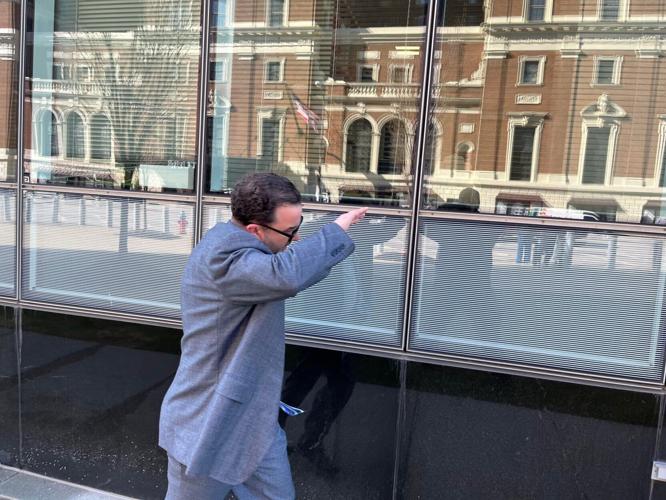
Ronald Serio, a marijuana and cocaine trafficker who said he paid bribes to onetime DEA agent Joseph Bongiovanni, leaves federal court on March 12, 2024, after testifying.
Serio’s drug-trafficking operation, which moved mostly marijuana, but also cocaine, “was significant, no small operation,” Sinatra said.
“It’s hard to understate the severity of the drug trafficking that occurred here,” Assistant U.S. Attorney Joseph Tripi said.
The judge also credited Serio for his efforts to overcome his drug and gambling addictions and encouraged him to continue his efforts to make amends to his family and the community.
“To his credit, his rehabilitation has been amazing,” said defense attorney Herbert Greenman, who has represented Serio since his April 2017 arrest.
“These addictions clouded my judgment and distorted my focus,” Serio said in court Friday, apologizing for his crimes. He said his family taught him about the importance of integrity and honesty. “I failed to live by those values.”
Serio’s cooperation in the Bongiovanni investigation and his testimony in the retired agent’s trials prompted the government to ask for a downward departure in the recommended sentence under federal guidelines, and that shaved almost three years from Serio’s sentence.
But, as a result of his cooperation, Serio has been ostracized and he has few friends, Greenman said.
“The publicity of the trial has impacted my life and highlighted all of my mistakes,” Serio wrote in a letter to the court. “I accept the fact that people will judge me for these things as well. For me, I have learned and grown from this.”
‘Rolling in dough’
Jurors in Bongiovanni’s retrial last year convicted the now-retired DEA agent on four counts related to the Serio drug-trafficking organization: conspiracy to defraud the United States; conspiracy to distribute controlled substances; and two counts of obstruction of justice. Bongiovanni’s three other convictions were related to Pharaoh’s Gentlemen’s Club owner Peter Gerace Jr.

Former DEA agent Joseph Bongiovanni arrives at the Robert H. Jackson U.S. Courthouse last June.
Jurors acquitted Bongiovanni on four counts, including one count of accepting bribes from the Serio organization.
Prosecutors looked to Serio and Louis Selva as two pivotal witnesses in Bongiovanni’s trial, and then his retrial. Serio and Selva both admitted roles in the drug-trafficking organization, which initially trafficked marijuana grown in Southern Tier fields and in home basements before expanding by bringing in truckloads from California and British Columbia.
Another key figure in the drug-trafficking organization – Michael Masecchia – did not testify in Bongiovanni’s trials, but acknowledged in his plea agreement that he received law enforcement-sensitive information from him.
“He just said Joe is willing to give information for money,” Serio testified of Masecchia’s pitch to him to pay the reported bribes.
Here’s how the scheme worked, according to testimony from Serio and Selva:
Selva, a childhood friend of Bongiovanni’s who acted as an intermediary, would meet with Bongiovanni to get sensitive law enforcement information, such as the identities of informants and the targets of drug investigations, and then relay that information to Masecchia, who passed it along to Serio. Masecchia took Serio’s money to give to Bongiovanni.
Serio testified that he never met Bongiovanni. But Tripi explained why that made sense.
“That would be silly,” Tripi told Bongiovanni jurors. “Prime drug dealer sitting down with a DEA agent, recipe for disaster. They’re both too smart for that.”
Tripi referred to Serio as “Greenie” during the Bongiovanni trials because he was the money-man in the operation.
Bongiovanni’s attorneys suggested Selva and Masecchia came up with a different scheme: collect money every month from Serio by falsely telling him that they would give the money to Bongiovanni for protection, but instead keep the money themselves without Serio or Bongiovanni knowing any better.
Tripi said Serio, even though addicted to painkillers, was too sharp of a businessman to be tricked by such a scheme.
Serio’s cooperation with the government extended beyond testifying against Bongiovanni. Serio named names. He identified or confirmed in open court the roles of more than two dozen people who he said helped him grow, buy, sell or transport illegal drugs.
Serio pleaded guilty in July 2020 to possession with intent to distribute cocaine and to being an unlawful user of controlled substances in possession of a firearm. Federal sentencing guidelines called for imprisonment of 57 to 71 months.
During the Bongiovanni trials, Tripi’s portrayal of Serio’s drug-trafficking organization far exceeded what Serio pleaded guilty to.
“Rolling in dough,” Tripi said of Serio’s organization. “Thousands and thousands of pounds of marijuana over time, 5 kilos or more of cocaine.”
Serio felt protected bringing the drugs into Western New York. He testified he initially paid $2,000 a month for information that Masecchia told him came from Bongiovanni. Later, the monthly amount increased to $4,000.
The protection Serio thought he was receiving from Bongiovanni left him blindsided in April 2017, when Erie County sheriff’s investigators and FBI agents arrested him.
Law enforcement officers uncovered pounds upon pounds of marijuana during their searches of Serio‘s properties in Amherst, Buffalo and Tonawanda on April 18, 2017.

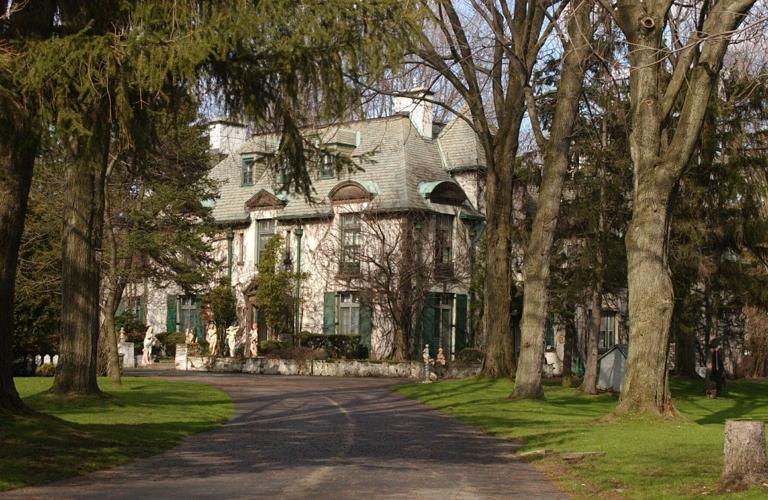
FBI agents raided Ronald Serio’s mansion at 697 Lebrun Road in 2017. They seized an AR-15 semiautomatic rifle and drugs. Serio later testified that Joseph Bongiovanni used his position as a DEA agent to shield the Serio drug organization from investigations.
Sheriff’s Office detectives had been investigating Serio for only a few weeks, and they did not access the DEA’s tracking database to submit or look at information about Serio before the arrest. So, Bongiovanni did not know about the Erie County Sheriff’s Narcotics and Intelligence Unit investigation, prosecutors said. A tip had come in that a group was looking to rob Serio of his marijuana and money in a home invasion at Serio’s 9,000-square-foot French Provincial mansion on 2.4 acres of land on Lebrun Road in Amherst, complete with a carriage house, tennis court and swimming pool. That was the first sheriff’s investigators had even heard of Serio.
‘A changed man’
Serio testified that he commingled his drug profits with his earnings from his collections agency, bill-processing business and development company that bought and sold homes.
His businesses helped him launder money, he testified last year. He would buy a house with his earnings from one of his legitimate businesses, and use drug money to remodel it, and then sell the house for a higher price than what he bought it for, thanks to the home improvements.
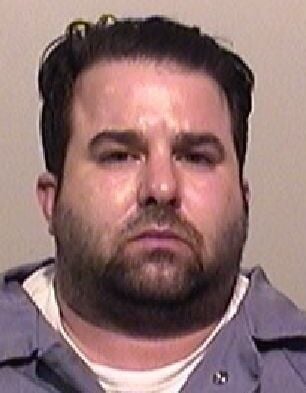
Ronald Serio, shown in a mug shot at the time of his arrest in 2017, was so addicted to painkillers that "I thought he was going to die, to tell you the truth," defense attorney Herbert Greenman said in court during Serio's sentencing hearing on June 6, 2025. "His life was completely out of control."
In 2011, Serio began gambling, drinking heavily and using prescription medication, according to court filing from Greenman.
After his arrest, Serio went to inpatient programs for substance abuse and mental health issues, Greenman said. Almost seven years since Serio’s last criminal act, “he has been fully rehabilitated,” Greenman said.
Greenman asked the judge to consider Serio’s “amazing and extraordinary successes while changing his life and being the person his family want him to be today.”
“He is no longer a risk to anyone in the community,” Greenman said. “His days of selling drugs are over. He has learned his lesson and, quite frankly, the community can learn from him, as well. It was never too late for him to change who he was, and he has accomplished that goal.”
Serio agreed to significant forfeitures in his plea agreement. They include:
- $100,000.
- The net proceeds from the sale of 697 Lebrun Road, Amherst, totaling $173,286.
- $275,000 in lieu of forfeiture of the premises at 626 Richmond Ave., Buffalo.
Patrick Lakamp can be reached at plakamp@buffnews.com