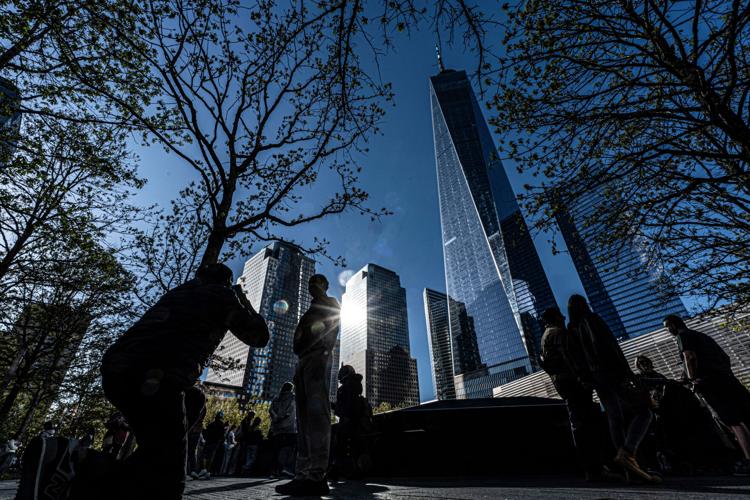
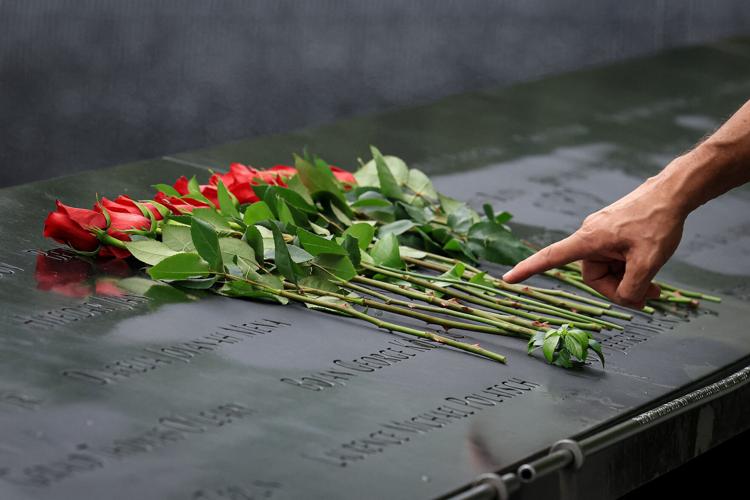
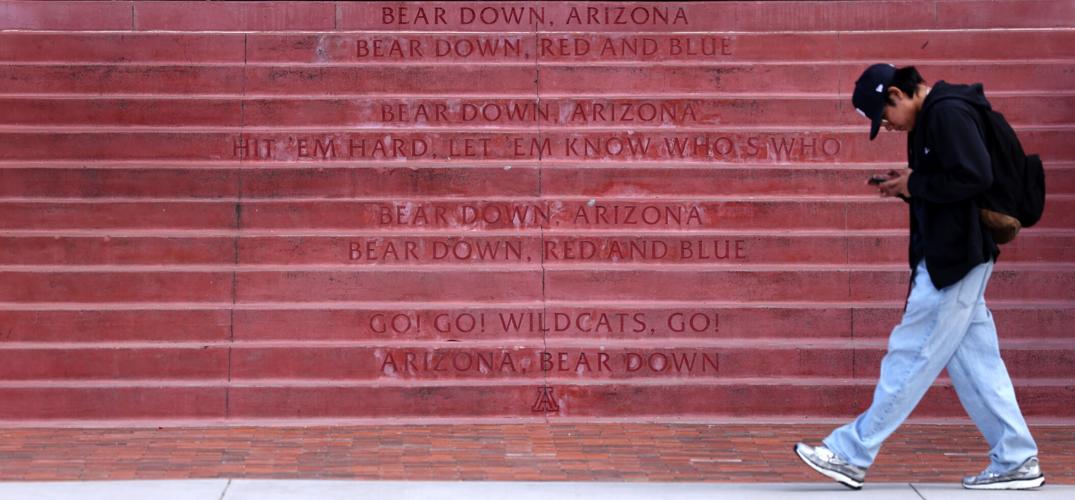
As the 25th anniversary of Sept. 11, 2001 nears, University of Arizona students who weren’t born at the time say they learned as kids about the terror attacks on the U.S. but don’t feel personally affected by that history.
However, as young adults today, some say the political events surrounding the U.S.’s ongoing war with Iran and its effects, including rising gas prices, are leading them to begin to factor Middle Eastern and other foreign relations into their voting decisions, though most say domestic issues remain at the top of their concerns when casting ballots.
UA scholars, meanwhile, speak of 9/11 as an extremely important historic event: The four coordinated suicide attacks by al-Qaeda killed nearly 3,000 people by destroying the Twin Towers of the World Trade Center in New York City, crashing a plane into the Pennsylvania ground and damaging the Pentagon.
People are also reading…
They say they can’t emphasize enough how much U.S. foreign policy changed in response to that day, with profound, lasting ramifications.
30% of today’s Americans weren’t yet born
About 30% of U.S. residents were born after 2001, according to Census Bureau data as of 2025, which means nearly a third of U.S. residents weren’t alive during the terrorist attacks, USA Today reported.
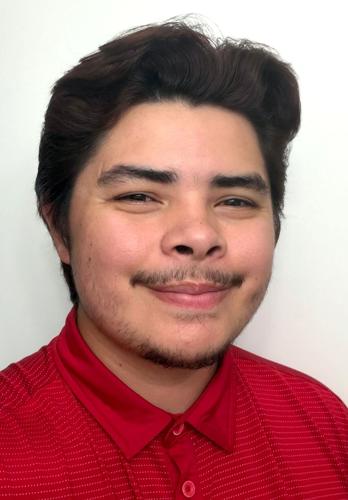
Among them are many of today's undergraduates at the University of Arizona who are of traditional college age, including Christopher Madrigal, a senior studying music education.

Christopher Madrigal, a UA senior studying music education.
Madrigal said that as a young kid, learning about the Sept. 11 attacks in school didn’t really affect him, but as he got older and started learning more about it, he started to understand the weight of that day and what it meant to those who went through it.
“You can ask any adult who was there, they’ll tell you exactly where they were, where, how they saw it. But for me, it’s more of a historic event since I wasn’t there to actually experience what happened,” he noted. “It’s just something that I read in history books or watched in documentaries. So, I feel like for people in my generation, that’s a very different way of viewing 9/11 versus the people who experienced it."
He realizes how traumatic it was, he added. Madrigal said his mom told him how she felt disbelief that something like this could ever happen. He said his curiosity compelled him to talk to a lot of adults about this, including his teachers, and he heard about overwhelming feelings of shock and disbelief from all of them.
“Those are still emotions that are very real to this day,” he said.
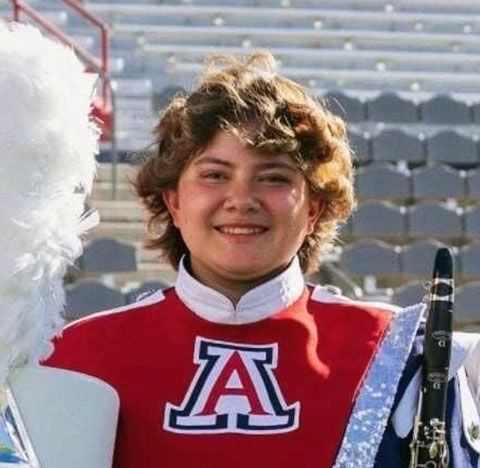
Isabella Branson, a University of Arizona junior studying music education.
Isabella Branson, a UA junior studying music education who also hadn’t been born by 2001, said she remembers learning about it in school first and then going to her parents and asking them about it, since they lived through the news of that day firsthand.
“My dad, my mom told me they were extremely shocked and it kind of left more of a toll on them, because they had my older brother. And at the same time, 9/11 was also my dad’s one-year anniversary at the job that he’s currently at right now, so he was celebrating that as he got the news,” Branson said.
Branson said she used to be scared of getting on planes after hearing about the attacks, but since it happened so long ago, she’s more at ease.
Now, she generally doesn’t think much about 9/11, and it’s not something that comes up in peer conversations unless there's a person who's really interested in history, she said.
Hannah Smith, a UA Ph.D. student studying linguistics, was about 9 months old when the attacks occurred.
She said that when she was growing up, it was very important for her mom, who was in Texas on Sept. 11, 2001, to watch special news coverage on the anniversary every year to commemorate and honor the day and discuss it with her.
Fear of visiting certain places after the attacks happened wasn’t a part of their discussions.
Madrigal, too, said 9/11 didn’t instill any fear in him about daily activities; he never really flew on airplanes as a kid or a teenager, he said.
He said 9/11 isn’t a common topic in peer conversations, but when he and people his age do get into it, they usually go pretty deep. “There’s usually some dark humor there, too,” Madrigal said, laughing lightly. “I think that’s a way that my generation copes with things — turning things into humor.”
He said an important aftereffect of the Sept. 11 attacks was the backlash towards the Muslim community in the U.S. Even though he doesn’t agree with it, he can see why certain people with those beliefs feel the way they did, he said.
“It’s wrong and when it comes down to not being educated enough to see there’s so many different cultures and races and religions in the Middle East, and to put them all under one label, I think it’s just wrong,” he said.
Al-Qaeda leaders and members were Muslims. Founder Osama bin Laden was a Saudi national, and the 9/11 hijackers were from the Middle Eastern countries of Saudi Arabia, United Arab Emirates, Egypt and Lebanon.
Smith studied Arabic during her undergraduate years, so she remembers talking about U.S. relations with the Middle East with other students.
She said some of the biggest impacts in the U.S. after the attacks that run rampant to this day are Islamophobia and the war on terror. “Terrorism” almost feels like an everyday word now, she said, while it's her understanding it wasn’t as prevalently talked about before the attacks.
Does that history shape views on U.S. policies?
There are clear linkages between 9/11 and U.S.’s relations to the Middle East, said Thomas Volgy, a UA emeritus professor of political science specializing in international politics.
“Without 9/11, we probably would not have gone into Afghanistan,” and it would have been very difficult to have waged “our second war with Iraq,” he said. “The consequences of those two wars have drifted down into the depths of Middle East politics, and they will be there for a long, long time, and historians can trace that pattern pretty clearly.”
But Volgy said that, to be frank, there’s so much going on both in terms of domestic and international politics that a lot of people are overwhelmed with current events and aren’t looking at politics and elections from a historical perspective.
“I think they’re trying desperately to cope with all this chaos that’s happening right now,” he said.
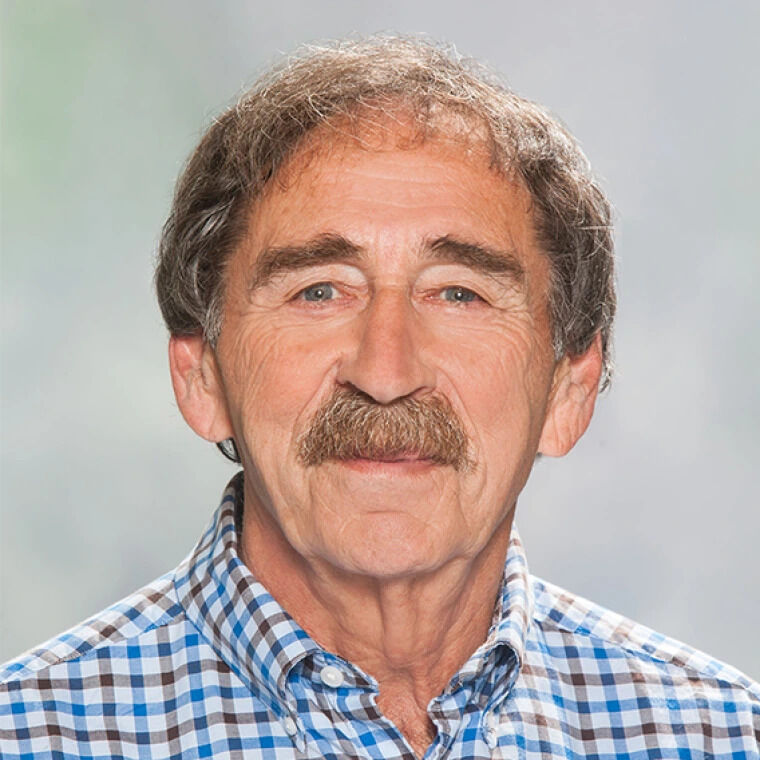
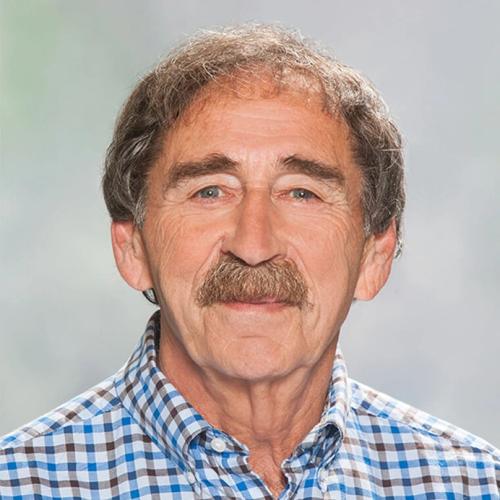
Thomas Volgy, a distinguished professor emeritus of political science at the University of Arizona.
Madrigal said he didn’t used to think about the U.S.’s relationships in the Middle East when he voted.
“I probably should, but a lot of my voting decisions (depend) more on gun laws and women’s rights. There’s a lot of issues, especially here in the U.S. that I’m more passionate about and I understand more,” he said.
“I don’t know a lot about what goes on with the Middle East right now,” he said. “I just know that because of what the Trump administration is doing right now, our gas prices are really high. This is when it’s affected me the most. So, I think going forward, I definitely am going to be looking into more of the views of the political candidates and how they feel about the relationship with the Middle East.”
Branson said the Sept. 11 attacks don’t weigh in on her voting decisions today. Pressing domestic issues including climate change, abortion rights and Medicaid cuts influence them more, she said.
Smith said 9/11’s “major impact” on U.S.’s relationship with the Middle East is important to her overall.
“The biggest things that shape my (voting) decisions are the relevant social issues at whatever level I’m voting at, whether that’s locally or nationally or at the state level,” she said. “So, I guess the most pressing social issues are important to me, as well as economic considerations and my personal values. (But) foreign policy is also pretty important to me. Having studied the Middle East a little bit and other parts of the world as well, it’s something that I’m interested in and I care about when it comes to voting."

Kirssa Ryckman, a University of Arizona assistant professor in the School of Government and Public Policy.
Kirssa Ryckman, a UA assistant professor in the School of Government and Public Policy, said the Sept. 11 attacks are such that whether somebody has them at the forefront of their mind or not, they influence everyone because they’ve changed things so dramatically. However, younger and older people react to them differently, she noted.
Students in the younger generation “view these big global problems like climate change or humanitarian rights,” Ryckman said. “Those are still really on the forefront of their mind, and so that’s how they’re viewing the world and how international politics works.
"Plus, (they have) this almost built-in skepticism about how you should do (intervention), how you should use certain types of intervention. I think that’s a really interesting dichotomy that college-age Gen Z people are often living with.”
Ryckman said the ongoing U.S.-Iran war is an event that would get young adults to factor foreign policy into their voting decisions, since economics is one of the best drivers of how people vote.
“One of the things that the Iran War has done is shown how a conflict like this can lead to really severe domestic economic points of pain, and it doesn’t seem like that’s going to go away anytime soon,” she said.

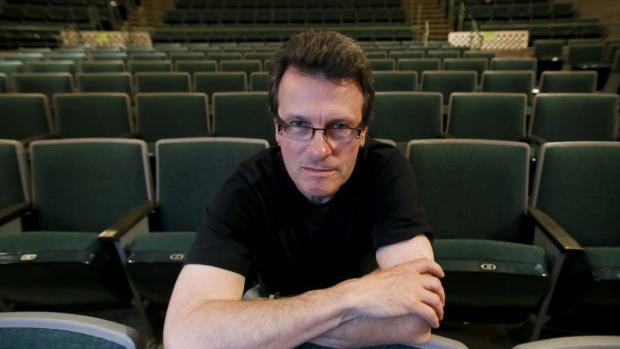
Alex Braithwaite, a University of Arizona professor in international relations.
Alex Braithwaite, a UA distinguished professor in the School of Government and Public Policy, said when he was growing up, the equivalent example for him of what current traditional-age college students feel about the Sept. 11 attacks was the falling of the Berlin Wall. He said even though it was a key moment in world events that occurred during his life, it wasn’t something that drove his thinking about politics.
“So I think, generationally, there’s always going to be events that feel like they should be the most important thing from a faculty’s perspective,” Braithwaite said, but “for a student, they’re familiar with them but they didn’t determine how they should think about a topic or a subject.”
He said populations on campus tend to be a bit more informed on what’s happening in the world, and so, their voting decisions might be more directly influenced by them. But the general trend in American political behavior is that people aren’t motivated by foreign policy, he said, adding that they’re influenced by their own economic positions.

Jeremy Vetter, a University of Arizona associate professor of history.
Jeremy Vetter, a UA associate professor of history, said that based on what he hears and reads in the media, he thinks there’s a lot of student interest in economic concerns, including cost of living, finding good jobs, as well as U.S. foreign interventions overseas.
He said he doesn’t know how much students understand that their knowledge of foreign relations, the spending of money and resources overseas, and people giving their lives or getting severely injured in wars, has its origins with historical events including the Sept. 11 attacks.
“Because I think in history, we maybe haven’t thought that as much as we ought to,” Vetter said. “We aren’t teaching enough about it. That would be my view … And we really should be incorporating it more into our history.”
How we see history that preceded us
Volgy noted there have been many momentous political shocks and gigantic events that impacted American society in the last hundred years, but said a lot of them recede in the background in the face of contemporary events.
“Vietnam War veterans and those of us who grew up during the Vietnam War era have had incredible, painful memories about that event, how it played out both overseas and in terms of domestic politics, but very few of us are actually thinking about that in the context of the next war and the war after that,” he said. “Most of (people’s) focus is not about the linkage between Vietnam and Iran; it’s about what’s going on in Iran. ...
“The longer these things draw out, the less people make the historical linkages. I don’t think that’s good or bad. I think that’s just the reality of how events affect people’s lives and how important current events are compared to historically based events,” he said.
Ryckman said students do understand the importance of the Sept. 11 attacks through education and taking specific classes on terrorism and international relations, but there’s lots of nuances and trickle-down effects like U.S.’s wars with Iraq and Afghanistan, for example, that students don’t know details about. These are “huge” consequences of the 2001 terrorist attacks, she said.
In order to make sure students get appropriate education on Sept. 11, she said the curriculum needs to include this as a point of focus and emphasis since this was “hugely transformative.”
Ryckman said that while she was teaching a class a few years ago, she asked her students what they thought was the main thing that came out of the attacks.
She said they didn’t talk about any of the traditional aftereffects like the threat of terrorism or the security threats. Instead, they talked about how the event influenced minority populations, and how their life got harder in the wake of it.
“They were, on the one hand, very aware of its impact on some civil liberties, but they really viewed it through the lens of a specific group and a specific group’s experience with it, which is a very important thing to view. I don’t mean to downplay that,” Ryckman said. “But there was less of a thought of what are the actual security ramifications and what’s the civil liberties-security trade-off for Americans in general.”
Other lasting effects
Braithwaite said the 2001 terrorist event led to Americans becoming anti-immigration towards specific countries or Muslim populations, and that sentiment stretched far beyond just them and to all immigrants. He said it especially forms a connection to Latino populations here in Southern Arizona.
Vetter said the attacks 25 years ago had a “really profound impact on U.S. foreign policy and to some extent on domestic as well."
He said after the post-World War II complications, followed by the Cold War aftermath, there was a shift beginning to happen towards a “globally integrated economy and I think 9/11 really threw a wrench into that” by reigniting a military posture towards fighting global adversaries.
Braithwaite said the terrorist attacks aren’t the reason behind why U.S. foreign policy has been obsessed with the Middle East, in his words, but it explains why it remains obsessed with it, up to the very recently launched war with Iran.
“The focus on the Middle East as a destination for American use of force overseas, we can trace to 9/11,” he said.
Nearly 15,000 Tucsonans came together on Sept. 15, 2001, to create a human flag to honor the Sept. 11 terrorist attacks first responders and victims. Video by Arizona Daily Star, 2021
Reporter Prerana Sannappanavar covers higher education for the Arizona Daily Star and Tucson.com. Contact her at psannappa1@tucson.com or DM her on Twitter.

Prerana Sannappanavar
Higher Education Reporter