

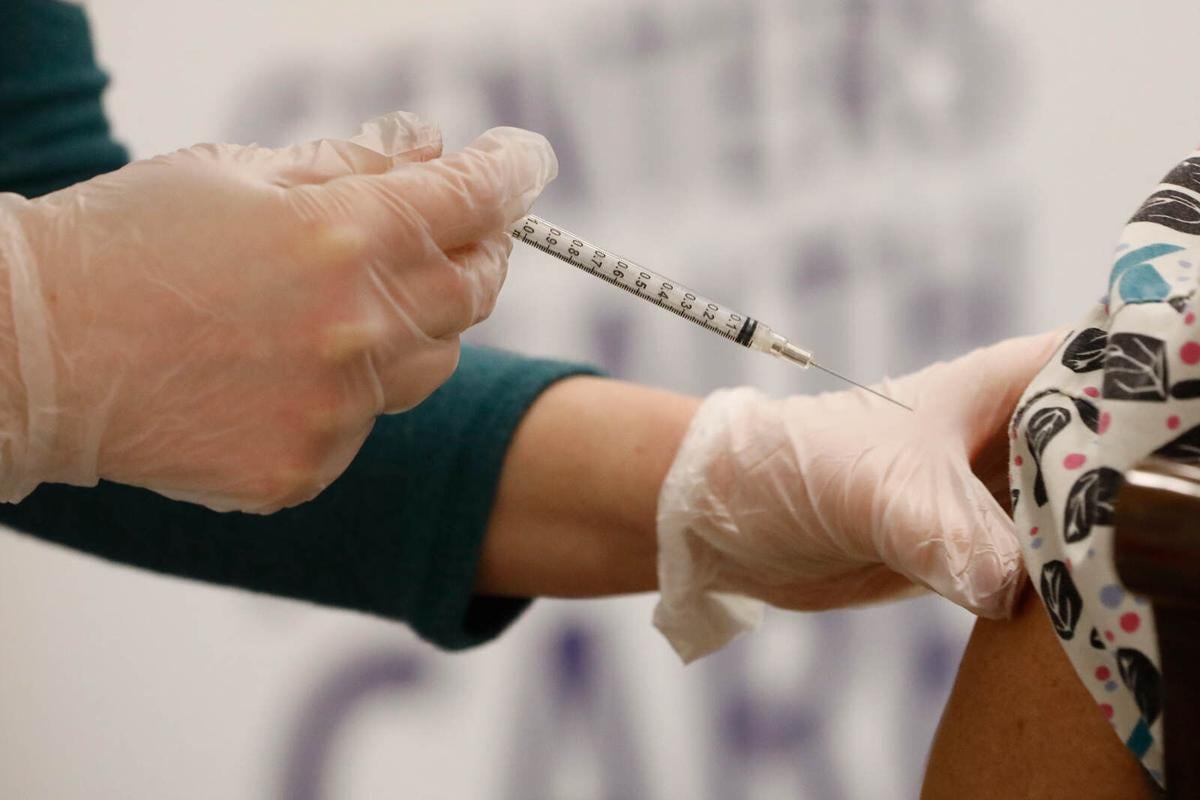
New York State will offer the Covid-19 vaccine to individuals 65 and older and "immunocompromised" persons, following a change in federal guidelines, Gov. Andrew Cuomo said Tuesday.
But that doesn't mean the newly eligible will receive the vaccinations anytime soon, as the state continues to receive a limited supply of the vaccine from the federal government, Cuomo said.
"I don't want New Yorkers to think that we are not doing everything we can to make them eligible for the vaccine," Cuomo said during a conference call with reporters, "because I want to keep people in New York as calm as we can keep people in these anxious times."
Even before the new groups were eligible, however, vaccine appointments for those already eligible in New York were probably at least weeks away, state officials have said. Making more people eligible when many of those already eligible have no concrete timetable for receiving a vaccine means the public will have to be patient, Cuomo said.
People are also reading…
"We still have a drip, drip, drip from the faucet of federal dosage availability," he said.
Read the full story from News Staff Reporter Aaron Besecker
New York gets about 300,000 doses of the vaccine every week, according to the governor.
With the new federal guidance, there are at least 7 million New Yorkers now eligible to receive the vaccine, Cuomo said, not counting those considered to be "immunocompromised."
The announcement followed an abrupt change in federal policy Tuesday morning, as the Trump administration unexpectedly shifted gears to speed the delivery of shots after a slow start that had triggered widespread concern from states and public health officials.
Health and Human Services Secretary Alex Azar announced two major changes. First, the government will no longer hold back required second doses of the Pfizer-BioNTech and Moderna vaccines, practically doubling supply. Second, states should immediately start vaccinating other groups lower down the priority scale, including people age 65 and older, and younger people with certain health problems.
The move better aligns the outgoing administration with the new Biden-Harris team. On Friday, President-elect Joe Biden said he will rapidly release most available vaccine doses to protect more people. He said he supported immediately releasing vaccines that health authorities were holding back out of caution, to guarantee they would be available for people needing their second dose.
"We had been holding back second doses as a safety stock," Azar said on ABC. "We now believe that our manufacturing is predictable enough that we can ensure second doses are available for people from ongoing production. So everything is now available to our states and our health care providers."
Simultaneously, he gave states the green light to dramatically expand the pool of people eligible to receive vaccines.
"We are calling on our governors to now vaccinate people aged 65 and over, and under age 65 with a (health condition) because we have got to expand the group," he said.
What the federal government means by "immunocompromised" has yet to be defined and can be defined in many ways, Cuomo said.
The state unveiled a vaccine registration system Monday meant to allow residents to schedule vaccine appointments. But with limited supply of the vaccine, those seeking appointments in many cases found pharmacies and other distribution sites unable or unwilling to schedule vaccinations.
Melissa DeRosa, secretary to the governor, said the state's website was updated Tuesday morning to allow those age 65 and up to register for vaccine appointments.
Health care workers have been eligible for the vaccine for about a month, while first responders, teachers, those age 75 and up and other groups only became eligible on Monday.
Still, distribution of the Covid-19 vaccine in New York and across the country has not met expectations.
Cuomo on Tuesday said the seeming constant change with federal vaccine policy is making things "extraordinarily difficult."
"The policy and the intelligence of the federal system eludes me," Cuomo said.
As of Monday morning, the government had distributed about 25.5 million doses to states, U.S. territories and major cities. But only about 9 million people had received their first shot. That means only about 35% of the available vaccines had been administered.
Some states, including Arizona, have or are planning to open up mass vaccination centers, aiming to inoculate thousands of people a day in a single location. In other states, local health authorities have started asking residents 65 and older to register, in anticipation the vaccination campaign would be expanded.
"We've got to get to more channels of administration," said Azar. "We've got to get it to pharmacies, get it to community health centers.
"We will deploy teams to support states doing mass vaccination efforts if they wish to do so," he added.
Although Azar said the shift was a natural evolution of the Trump administration's efforts, as recently as Friday he had raised questions about whether Biden's call to accelerate supplies was prudent. The Trump administration, which directed a crash effort to develop and manufacture vaccines, is hoping to avoid a repeat of earlier debacles with coronavirus testing. Dubbed "Operation Warp Speed," the effort has produced two highly effective vaccines, with more on the way.
But the slow pace of the vaccine rollout has frustrated many Americans at a time when the coronavirus death toll has continued to rise. More than 376,000 people have died, according to the Johns Hopkins database.
The Associated Press contributed to this story.


