Arizona Democrats have talked about this sort of opportunity for decades: holding the governor’s office and both houses of the state Legislature.
That kind of power is something Republicans have held regularly, but Democrats have generally been on the outs, cast as extras in Arizona’s annual lawmaking drama.

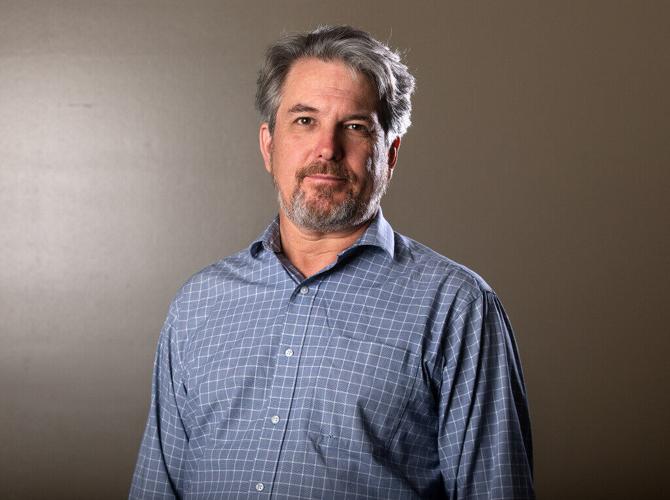
Arizona Daily Star columnist Tim Steller
Now it is almost certain they will have the coveted trifecta: Gov. Katie Hobbs has won, and the Democrats have hard-to-overcome leads in the state House and Senate.
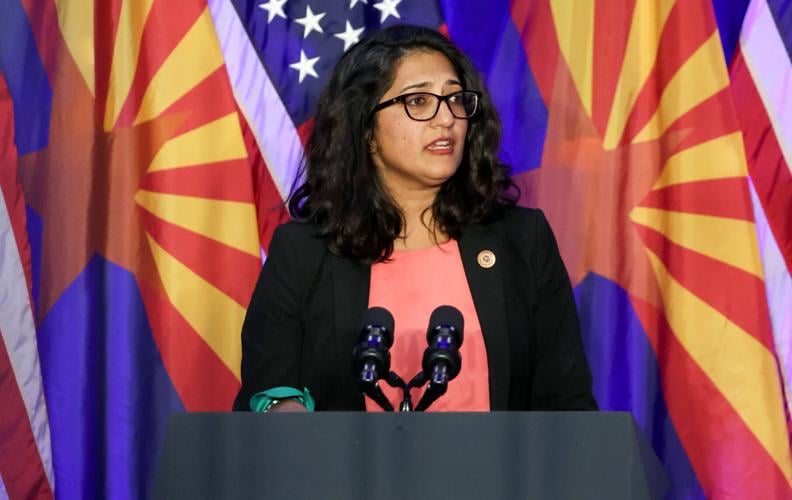
It’s possible that Sen. Priya Sundareshan, the Tucson Democrat who is currently that body’s minority leader, will become Senate president when Democrats choose leadership Tuesday. Rep. Nancy Gutierrez, also from Tucson’s Legislative District 18, could become House majority leader, one step down from speaker, when House Dems vote Tuesday.
People are also reading…
Already their approach is starting to take form.
“We do not want to give up this majority in two years,” Gutierrez said. “We’ll be moving forward with policy that helps the most amount of Arizonans.”
So, what will they do with this newfound power? What should they do with it? I asked a few current legislators, former legislators and experts and compiled my own thoughts, starting with how to run the chambers.
How to treat Republicans
The short answer is, Dems should avoid the temptation to turn the tables on Republicans after suffering decades of bullying by the GOP majority.
If you’ve talked to any Democratic legislators over the decades of Republican control, you know that serving there often feels like an exercise in futility for them. Since the majority controls the agenda, Republicans have been free to treat Democrats as mere annoyances, and their bills as wastepaper.
I asked Steve Farley, a veteran of 12 years in the state House and Senate, what he thought.
“The majority has all the power – setting all the rules, all the committe chairs, the vice chairs, the majority in each committee,” he said. “I wouldn’t want to do to them what they did to us.”
“You want to govern in a way that you’re open to everyone’s ideas,” he said.
Gutierrez is planning on that — to an extent.
“I hope we’ll treat them better than they treated us,” she said. “They’ve just been quite dismissive. Less than 10% of our bills got a hearing. Two percent got passed.”
“We’re there to govern for the people. I care less about the Republicans and how they feel about things than I do about passing really good policy.”

Tucson Democrat Priya Sundareshan, seen here at a 2024 Biden-Harris campaign event here, is set to become Arizona Senate president.
Top priority: ESA reform
Democrats’ top priority is reining in spending on Empowerment Scholarship Accounts, which has topped $1 billion in annual cost and which Gutierrez has described as a “grift.”
This kind of reform was expected to be in a ballot initiative, but Prop. 212 was challenged and thrown off the Nov. 3 ballot.
The Dems’ approach “will probably look very similar to the voucher initiative,” Gutierrez said.
The initiative included an income limit of $150,000 for eligibility to the program; a list of prohibited uses of ESA funds, including lingerie and furniture; and limits on who can be paid as a tutor, among other limitations.
Edgar Soto, a Democrat who is winning a Republican-controlled Senate seat in LD 17, said he came to an appreciation of ESAs during the campaign.
“When you talk to people who are using them in a responsible way, it’s really helping a lot of people. I don’t think they should go away. I think there needs to be some guardrails put on them.”
Guardrails, limits, protecting taxpayer interests — that’s something voters can support.
All about education
The Dems should go all-out on education in general, not just ESAs. Among the priorities they should push:
— Raising teacher pay to increase retention
— Improving oversight of charter school finances
— Increasing funding for early-childhood education
— Increasing funding for the universities
Closing tax loopholes
To do any of this stuff, the Legislature will have to find some new money. Fortunately, they know exactly where it is — starting on page 54 of the 2025 Tax Expenditure Report by the Arizona Department of Revenue.
The annual report is somewhere Farley used to look obsessively when he was in the Legislature. He was known, in those years, for talking about the four-inch pipe exemption to the state sales tax. It was an example of billions of dollars in loopholes written into the tax code on behalf of interests wealthy enough to hire lobbyists.
The four-inch pipe loophole benefits Southwest Gas and those who pipe oil, water and coal slurry.
“Anything primarily supported by a lobbyist rather than the general public is something that should be on the chopping block,” Farley said.
Groundwater regulations
Session after session, one legislator has stood in the way of new proposals to regulate groundwater in rural areas, even as the water table sank in many basins. Rep. Gail Griffin just won re-election to the Legislature, this time in the state Senate again, but she won’t be able to block water bills anymore, because, as a member of the minority party, she won’t be a committee chair.
It’s more urgent than ever to have a new way of monitoring and regulating groundwater pumping in certain basins where agricultural pumping is driving the water level downward, beyond the reach of old wells.
Sundareshan and Rep. Chris Mathis, also a LD 18 Democrat, have previously authored a new Rural Groundwater Management Act, but it didn’t pass under Republican control. Rather than relying on the existing active management area system, it sets up a new system of local councils in groundwater basins to make water-use decisions.
Pre-emption laws
For years, when liberal city governments did something that the conservative Legislature didn’t like, the legislators have had a go-to solution: Pre-empt the cities from making that sort of law.
As a result, Arizona’s statutes are replete with examples of things that cities are not allowed to do: Destroy seized guns, establish rent-control policies, even regulate plastic bags.
The mother of all pre-emption laws, passed in 2016, allows any individual legislator to challenge any local ordinance as violating the state constitution or law. That forces an investigation by the attorney general and threatens the city’s or county’s state-shared revenue — millions of essential dollars.
A Democratic Arizona Legislature could repeal any of these laws, including that big one, though it should do so mindfully. The one I would target first: The state law prohibiting cities from regulating short-term rentals.
The impacts of AirBnB and VRBO rentals are extremely variable from place to place around the state. A city like Sedona, where housing prices have soared in part because there are so many short-term rentals, should have the right to come up with its own local solution.
Pragmatism first
Farley warned fellow Dems that Arizona’s electorate hasn’t radically changed.
“We have an opportunity here that we can’t squander by just going it alone,” he said. “We need to demonstrate that we know how to govern in the majority, because we haven’t had that chance in so long.”
Soto said his approach will be “best idea wins, whether it’s Republican or Democrat or Independent, or a custodian who’s hanging out there.”
That concept isn’t lost on the incoming leadership.
“In order to lead, we have to have some discernment,” Gutierrez said. “We can’t go so incredibly far left that we leave half the voters behind.”
Contact columnist Tim Steller at tsteller@tucson.com or 520-807-7789. On Bluesky: @timsteller.bsky.social

Tim Steller
Columnist


 Tim Steller’s column: Tucson’s Halloween flood produced stories, not tragedies