If you eliminate cars, you’ll bring in more cars.
That’s the paradoxical upshot of eliminating traffic on Congress Street downtown on Halloween night.
Turning Congress into a pedestrian street for three blocks is intended to attract more people downtown and make it safer for those who come to walk around, people-watch and visit the restaurants, theaters and bars.
If Tucson’s pattern holds, most of these people will come in cars, just to walk around without cars.
It may seem contradictory but it makes some sense in a western city like Tucson. The city happened to boom in the postwar period when cars were king, and the city sprawled outward to accommodate an auto-centered way of living. Now, most Tucsonans are used to getting around everywhere by car, even when going somewhere to walk.
People are also reading…
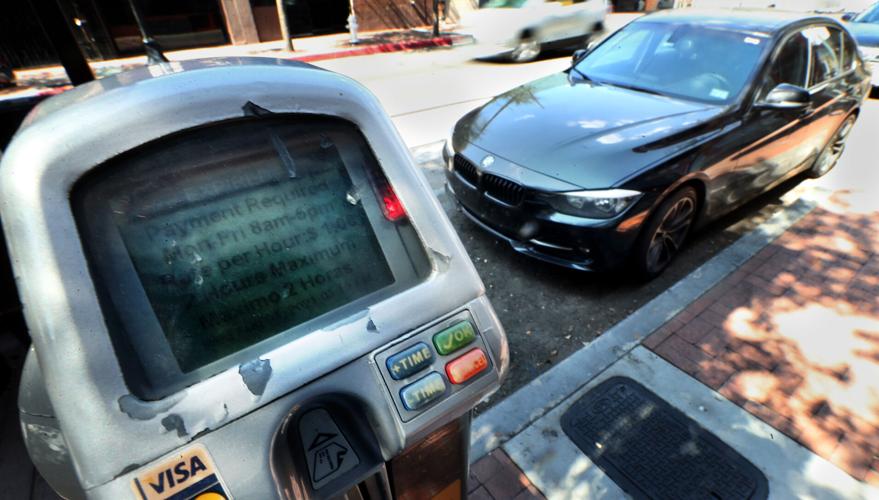
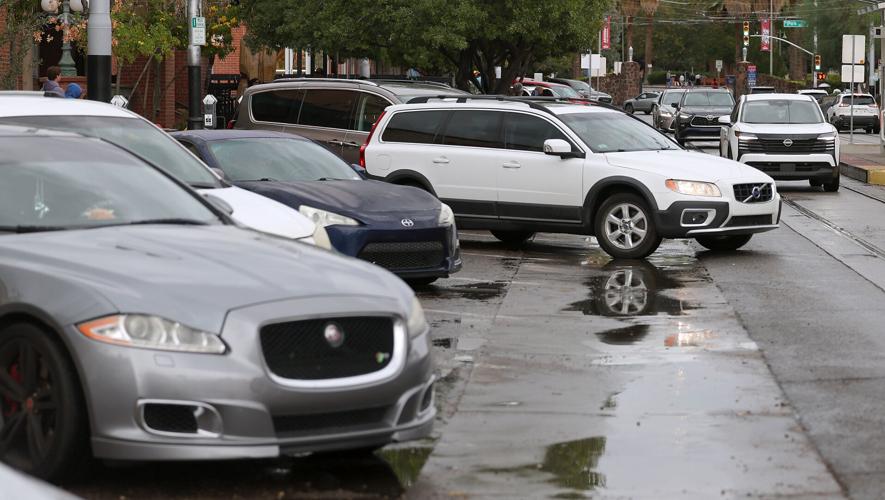
But the center of the city, from the U of A to the West Side, Speedway to 22nd, is slowly growing more crowded. It’s becoming a place where it costs a lot to park and getting around the area in a car can be awkward for those not used to it, even as its attractions draw people.
Andy Bemis, the city’s deputy director of transportation and mobility, told me “I think Tucson is still and probably will be for a while, in some growing pains of becoming a bigger city.”
That includes the conflict of needing a car in most of the city, but finding a car to be a costly burden near the university and downtown. Bemis noted something I too have found to be true: “If you are willing to walk two blocks, you will always find a spot to park downtown.”
But the cost is going up, which puts pressure on the area to have adequate attractions to make the cost worth it. Or, eventually, people will either quit going or be pushed into alternate modes of transportation — rideshares, buses, the streetcar, bicycles and scooters.
Parking controversy
The latest chapter in the downtown parking drama blew up this week when Zeke Gebrekidane purchased 139 Toole Avenue. For now, it’s a surface parking lot with 148 spaces, along the railroad tracks between the nightclub called 191 Toole and Playformance.
The plan is for it to become a mixed-use development some day, including a significant parking garage. But Gebrekidane shocked some longtime downtown workers when he sent a letter informing them the price of monthly parking would go up from a cheap $60 to $109.
Desiree Navarro, executive vice president of the Communications Workers of America local 7000, which represents city of Tucson white-collar workers, protested the increase on social media. It wasn’t just the amount, but the suddenness, as the change was to take effect in a few days.
“We know a private entity can’t be forced to lower their rates,” Navarro said. “We need an alternative solution that allows city workers to come to work and provide a public service.”
She’s calling on the city to offer parking to workers at city facilities like the courthouse, where she works, and other places where parking is not offered to city workers.
“A lot of the people (working) in the court are priced out of living in the city,” she said. “They’re outside of the transportation system to catch a bus.”
In an office above the pizza place he owns, Gebrekidane told me, “I’m not here to push these customers away. They’re my customers.”
But he said of the new lot, one of two he now owns near North Sixth Avenue and East Alameda Street, “This cost $4 million. It has a mortgage. The rate has to go up.”
After receiving pushback online, Gebrekidane offered a month’s complimentary parking to the existing monthly customers. He is planning to charge flat rates of $12 per day with no hourly rates, or the monthly $109.
'It needs to be more simplified'
It’s not the only parking controversy downtown. The owners of the lot and garage at 31 and 41 E. Congress recently boosted their price to well over a flat rate of $20, which worried Ray Flores, owner of The Monica across the street. His customers were used to paying $6 to $10.
While the private owners are pushing their prices ever higher, the city of Tucson has kept prices at a flat rate of between $5 and $7 for evenings and weekends at its five garages and lots. By December, Pima County is also planning to open its garages on weekend night at a rate of $5, with shuttle service to more distant lots.
The publicly owned parking system could be made more uniform, said Crystal Moore, who has spearheaded the Halloween night experiment as director of the Downtown Tucson Partnership.
“It needs to be more simplified, and we need to educate people about how to use the system,” she said. “Tucsonans in particular are not multi-modal. The average Tucsonan doesn’t understand garages or living vertically, so we have to educate them.”
She’s also encouraging the use of designated drivers and ride-share apps like Uber and Lyft. For Halloween night, they established four designated Uber and Lyft pickup spots downtown, and two others on North Fourth Avenue. Signs at each stop offer a discount code for the rides.
At some point, alternatives like ride sharing, buses, the streetcar, bicycles and scooters may by necessity become the more common modes into downtown and the broader city center.
“Our city isn’t there yet, where not driving is a realistic option for many of our residents,” Bemis said. “We don’t have the density or infrastructure to support a car-free lifestyle for most of the city. If you live downtown, absolutely.”
'Demand supports their current pricing'
That possible future is most visible near the university. In certain neighborhoods there, Bemis said, 20 to 30% of the population commutes by bike. The high cost of parking near the university is no doubt one of the reasons.
But driving is likely to remain the primary way people get to downtown and the adjacent neighborhoods. In the daytimes, I find it so simple to find parking that there is no discouragement against driving.
To spend some time reporting this column Friday, I found a convenient space on North Fifth Avenue, used the city app to get two hours of parking and wandered to a coffee shop, a restaurant and Gebrekidane’s two parking lots. It was simple, but I’m used to it.
Fletcher McCusker, the longtime chair of the Rio Nuevo district, said even after an early-morning mass shooting occurred on Congress in late July, crowds are pouring into downtown for events and nightlife. He expects 200,000 visits between Tucson Meet Yourself and New Year’s Eve.
Those people generally drive and park, many in the private lots, even as they become more expensive.
“Their demand supports their current pricing,” he said.
My question is whether the prices will ever get high enough that people won’t pay them. And if they won’t, will they decide to take a different mode of transportation, or just stay away?
Contact columnist Tim Steller at tsteller@tucson.com or 520-807-7789. On Bluesky: @timsteller.bsky.social

Tim Steller
Columnist
 Tim Steller’s column: Tucson judge must act as ICE stalls