It’s just a $122,000 contract, one of dozens that Pima County has with nonprofit entities, totaling more than $4 million this year alone.
But this contract has become the subject of memo after memo, email after email, and ongoing intrigue as it returns to the Pima County Board of Supervisors’ agenda Tuesday.
The discussion is opening a window into Tucson-area politics as it exists in the year 2026: The dividing lines among Democrats, the shifting alliances and the way public money and local politics work together.

Arizona Daily Star columnist Tim Steller
The proposed grant is for the Southern Arizona Education Council, which is the new name for the Metropolitan Education Commission, a group formed in 1990 by then-Mayor Tom Volgy and then-supervisor, the late Raúl Grijalva. It’s been funded by Pima County and the city of Tucson ever since.
People are also reading…
The central work done by the group has been helping high school students across the Tucson area get ready for college and careers, especially by assisting them with the Free Application for Federal Student Aid, or FAFSA. It has also hosted annual events such as the Teen Town Hall, held career fairs and other events.
It’s even played a role in the early training of some public officials in their youth. Both Mayor Regina Romero and Supervisor Andres Cano told me their involvement with the Metropolitan Education Commission was among their earliest involvements in Tucson’s civic life.
But this year the group has gotten intense scrutiny for reasons both strong and questionable. On the one hand, critics are raising issues over the compensation for the director, Rocque Perez, which is about $91,000 per year and has been set as a percentage, 95%, of a Pima County supervisor’s pay.

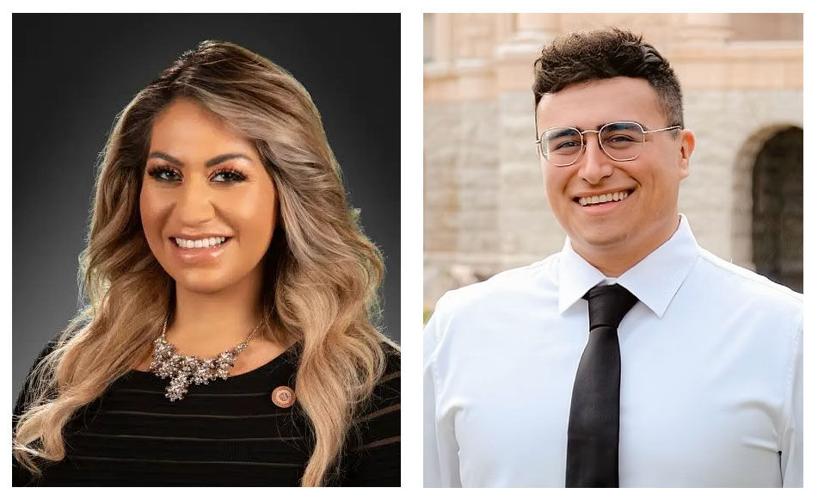
Alma Hernandez defeated Rocque Perez in the Democratic primary race for a seat in the state Senate. Now she's in a politically-linked effort that could oust Perez from his job.
They also say the organization has not performed as needed under the directorship of Perez, who ran unsuccessfully for the Democratic nomination for state Senate in July. And they allege he’s being rewarded for his political connections.
Douglas Levy put his objections this way at an Aug. 11 Pima County board meeting: “My focus is about whether taxpayers can look at this arrangement and believe that decisions are being made because they serve the mission and public interest, not because they benefit a particular individual or political network.”
Here, the person referred to was Perez and the group was the Grijalva network, in recent years the dominant political group in Tucson and Pima County.
Unstated, though, was that Levy has close ties with a different key individual and network: Rep. Alma Hernandez, who beat Perez in the Senate race and has her own increasingly powerful alliances.
'They didn’t want it to be political'
The person who led the Metropolitan Education Commission for 27 years, from its inception to 2017, was June Webb-Vignery.
“It was a stellar group that put it together,” Webb-Vignery told me Thursday. “They didn’t want it to be political. It was a city-county commission.”
The concept, groundbreaking at the time, was to bring together representatives of all the local school districts, the University of Arizona, Pima Community College and other elected officials to advocate for education and help local youth get into college and careers.
The Teen Town Hall, organized by the commission and sponsored for years by the Tucson Citizen, was an annual staple of the local public calendar, at which teens aired their priorities and grievances. Members of the Tucson Teen Congress/Youth Advisory Council have helped lead the town hall. Some even went to the state Legislature to share their views.
Cano told me “I got my first preview into civic engagement” through the Teen Town Hall.
“It helped me find my voice early on,” he said. “Those were days the commission bussed people up to Phoenix to discuss the findings of the youth town hall.”
Mayor Romero told me the Metropolitan Education Commission “was the first commission I sat in as a young person.”
“I was appointed by the late congressman Grijalva when he was on the supervisors,” she said.
Is contract scrutiny election fallout?
It is this aspect of the commission that I think Levy and other allies of Rep. Hernandez are talking about when they criticize the commission — that it has been a cog in the local political system.
Sen. Sally Ann Gonzales, an ally of Rep. Hernandez and her sister, fellow Rep. Consuelo Hernandez, wrote a letter to the Pima County Board of Supervisors objecting to what she sees as a sort of insider dealing in the hiring and paying of Perez by elected officials in the same political network.
“The public deserves to know whether this contract is being renewed because SAEC is delivering measurable results or because longstanding political and institutional relationships make renewal easier,” Gonzales said.
Perez highlighted a series of accomplishments in a letter to the board of supervisors, notably a 20% increase in FAFSA completions last year.
Another Hernandez supporter, Andy Kunsberg, wrote to the board, “Elected officials should be especially sensitive to the appearance that political connections can lead to cushy jobs or taxpayer-funded opportunities after someone loses an election.”
They are right in this sense, I think: We shouldn’t have a system that guarantees political allies of the governing majorities a publicly funded job either in government or a nonprofit. That’s patronage, a waste of taxpayer money.
There is a flip side though. Alma Hernandez narrowly defeated Perez by 600 votes in their nasty Democratic primary.
Although Perez is thought of as part of the Grijalva network, he did not benefit from the public support of Rep. Adelita Grijalva or Romero until a month before the election. Hernandez outraised him by about $285,000 to $49,000 and also benefited from more than $100,000 in outside spending.
Was it not enough to beat him? Must allies of a sitting state representative, who is about to become a state senator, use all their powers to get her vanquished challenger fired from his job, too?
Perez told me that he learned Thursday Hernandez has inquired of the Arizona Board of Regents about their support of the Southern Arizona Education Council’s effort to get more students to fill out the FAFSA.
It’s as if any entity that supports this 36-year-old body is now under suspicion, even if they’re contributing to its core function: Helping local high-school students get financial aid and go to college.
“The level of scrutiny to this contract is a carry-over from the primary, and that’s unfortunate,” said Jen Allen, chair of the Pima County Board of Supervisors.
Sign of political shift
I interviewed three members of the board of supervisors, Tucson’s mayor and the Pima County superintendent of public instruction before writing this column. What I came away with is a sense that the Southern Arizona Economic Council has not performed up to its standards, but that it still performs some key functions in Tucson outside the political realm.
That is, it’s not just a Grijalva-founded program that should be tossed away now that Raúl Grijalva is no longer alive and other political powers are challenging his network’s dominance.
Supervisor Rex Scott, who raised some of the important questions about the education council in recent weeks, used to be on its board in an era when it was more active.
He acknowledged, “there has been an admirable expansion of the peer coaching program.” But he added that, “I thought it was a much more active and engaged organization not just in the schools but in the community. I think there’s been a diminution of that.”
Members of the county board are also bothered that they contribute much more money than the city of Tucson to the council, but they want the council’s functions to continue. They and the mayor told me their support of it isn’t about Perez as director so much as the peer-support program, the Teen Town Hall, and career- and college-readiness efforts.
As long as those are happening, they’ll support it, whether Perez is in charge or they’re supporting the programs alone, not his salary specifically.
But the controversy over the council tells us something else. Times are changing, political power is shifting, old institutions are being challenged as newer powers flex their muscle.
Contact columnist Tim Steller at tsteller@tucson.com or 520-807-7789. On Bluesky: @timsteller.bsky.social

Tim Steller
Columnist


 Tim Steller's column: Slain UA student needed local intervention