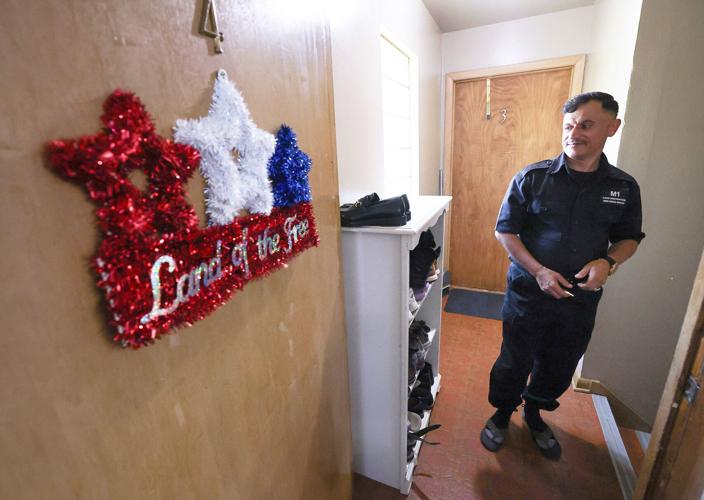
Durani smiled with pride as he showed a red, white and blue sign made of tinsel hanging on the front door of his South Milwaukee apartment. The shiny letters spelled out: “Land of the free.”
Keeping people safe and free has always been important to him, Durani said.
He was born in Afghanistan in 1981 in the midst of civil war.

Durani, an Afghan immigrant who served alongside the United States military as a high-ranking member of the Afghan air force, now lives alone in Milwaukee, as his wife and four young children have been unable to join him.
Durani’s father was a unit commander in the Afghan Army, which put his family at risk when he was a child. Durani said two warlords were fighting inside the capital city of Kabul, and members of different ethnic groups were killing each other. His family had to flee to Pakistan on foot in the middle of the night.
“From the day I was born, I have seen nothing but war and instability in my country,” Durani wrote in his asylum application to the U.S.
People are also reading…
He spent most of his childhood in Pakistan, but “we never really felt welcome or like we were home.”
Durani said “one of the happiest days” of his life was when he was finally able to return to Afghanistan in the early 2000s, after the United States invaded the country and overthrew the Taliban government.
“We returned to our home to see it had been damaged by rockets and bombs,” Durani said. “There was no longer a roof on our home. We had to live in tents inside our house. We had to start our lives from scratch, but it still felt like home sweet home.”

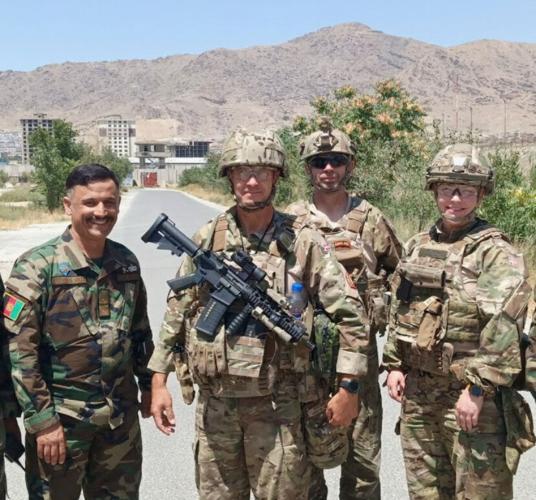
Durani, left, a former member of the Afghan air force, worked with U.S. soldiers in Afghanistan before his country fell to Taliban rule. Durani was deputy commander of the Kabul Air Base, which he helped defend against Taliban attacks. The base was surrendered to the Taliban in 2021.
In 2010, Durani joined the Afghan Air Force. He said he always looked up to his father and “wanted to serve my country just as he did.”
Durani spent 12 years fighting the Taliban alongside U.S. troops. He asked to be identified by his first name only because his military history makes him a Taliban target. As Deputy Commander of the Kabul Air Base, Durani helped defend the base from Taliban rocket launchers, grenades and machine gun attacks.
But then came Aug. 15, 2021.
“That black day, that is day of fallen, I never get away from my mind. Never,” Durani said through a Dari interpreter.
Durani was working at the air base in Kabul, north of the international airport. He said the day started off normal and peaceful. But then he got a text from a friend that Taliban forces had entered the city with their flags. He said he didn’t believe it.
By 10 a.m., most of the base had been evacuated, but Durani had to stay to help fortify the towers, aircraft and front gate.
At 2 p.m., he saw armed Taliban forces at the gate. He said U.S. military leaders told him to lay down his weapons and not engage.
“This was the worst day of my life,” Durani said. “To see the Taliban, whom we had been fighting for so long, take over the base that I was in charge of protecting was unimaginable.”
A few hours later, Durani was evacuated from the base on a military plane with only his Air Force uniform. He didn’t have time to grab any of his belongings from his office, even his wedding ring. He couldn’t get through on the phone lines to call his family and tell them he was safe.
“I never had the chance to say goodbye to my wife and children,” Durani said.

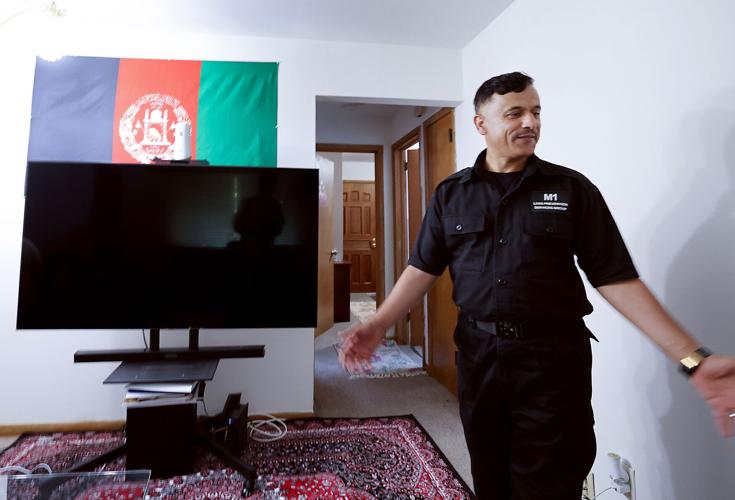
An Afghan national flag hangs in Durani’s Milwaukee apartment. The Afghan immigrant served alongside the United States military as a high-ranking member of the Afghan air force.
Now, four years later, Durani has resettled in Milwaukee. He works as a security guard for a local grocery store and has been taking English classes at Milwaukee Area Technical College. He hopes to get his green card so he can join the U.S. military and continue fighting for freedom.
He has a two-bedroom apartment with a guest room, kitchen and living room. An Afghanistan flag hangs on the wall.
But five of the six seats at his kitchen table remain empty.
Durani’s wife and four young children have been unable to join him in Wisconsin because of problems with the U.S. family reunification process. The process was slow under President Joe Biden and has stalled under President Donald Trump due to his immigration restrictions, particularly the June travel ban.
Durani has been granted asylum, an immigration status that allows him to stay legally in the U.S. and eventually get a green card.
U.S. Citizenship and Immigration Services approved Durani’s request to have his family join him in the U.S. under asylum. But the travel ban overrides that and prevents his family from entering the U.S.
“When my case got approved, I felt very happy, and I hope to see my family,” Durani said. “But then the travel ban came out, and it changed everything.”

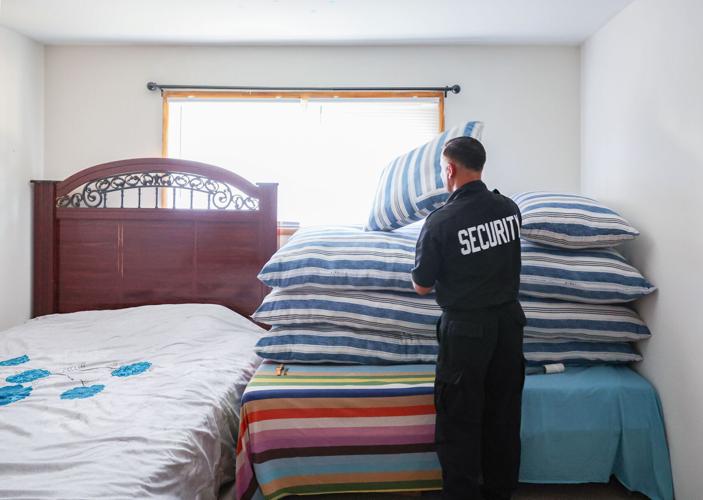
Durani, an Afghan immigrant who served alongside the United States military as a high-ranking member of the Afghan Air Force, tends to surplus bedding in a bedroom of his Milwaukee. Durani wishes his wife and four young children could join him in Wisconsin, but they are stuck in Pakistan. He worries they could be deported back to Taliban rule.
Durani’s family fled to Pakistan shortly after Afghanistan’s fall because the Taliban was threatening and harassing his family members while looking for him. His wife and children remain there, waiting for an interview at the U.S. Embassy — the last step before they can come to the U.S.
Since the travel ban went into effect in June, Afghan families have been denied during that final interview.
Durani said he wanted to share his story in the hope that it might help him reunite with his family.
“I have too much worry and concern about my children’s future life,” Durani said. “I don't want to live all my life far away from them.”