For the first time in decades, a radio-collared endangered Mexican wolf crossed from the U.S. into Mexico last month in New Mexico, a federal official said, but environmental groups warn the animal may never return because of U.S. border wall construction.
The male wolf crossed into Chihuahua, Mexico, from a remote area of the New Mexico Bootheel, according to Aislinn Maestas, a spokesperson for the U.S. Fish and Wildlife Service, which tracks members of the smallest and rarest subspecies of North American gray wolf, also known by its Spanish name "lobo."
Once common in the Southwestern U.S. and Mexico, the wolf came close to extinction in the 1970s, exterminated by government agencies and ranchers who claimed targeting the species would protect livestock.
For millennia, the wolves have roamed the Bootheel's grasslands, desert and wooded mountains, traversing the migration corridor in search of prey and mates in what is now Mexico and the U.S.
People are also reading…

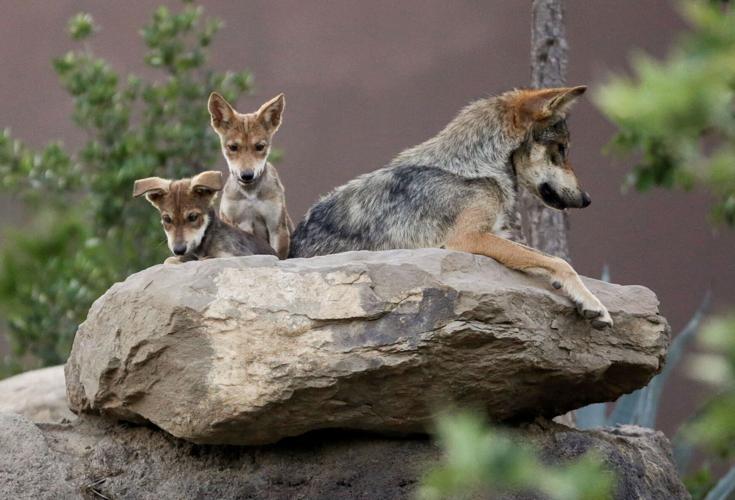
Mexican gray wolf cubs, an endangered native species, are seen July 2, 2020, in their enclosure at the Museo del Desierto in Saltillo, Mexico.
The administrations of Republican President Donald Trump and Democratic former President Joe Biden built a steel border wall west across New Mexico to stem the trafficking of migrants and drugs.
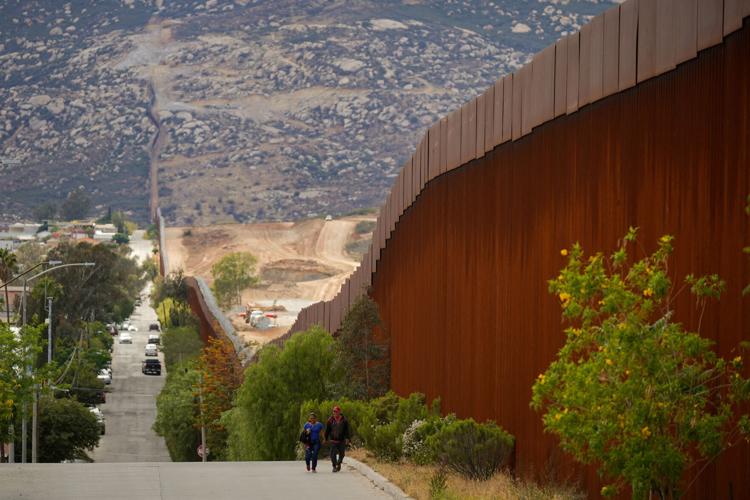
Current construction of the 18- to 30-foot-tall barrier in the area means the recent wolf border-crossing may be the last ever by the species, conservationist Michael Robinson said Friday.
That would exacerbate the wolf's chronic inbreeding, which led to lower survival rates for pups, as well as cancers and birth defects.
“Sealing off the Bootheel would isolate wolves and other rare mammals like jaguars and ultimately make them all less likely to survive,” Robinson, a senior conservation advocate at the Center for Biological Diversity, said in an interview.
The Department of Homeland Security and its U.S. Customs and Border Protection agency, which are responsible for border wall construction, did not immediately respond to a request for comment.

A construction area of the U.S. border fence is seen April 26 in Tecate, Baja California state, Mexico.
Conservation groups and some U.S. wildlife officials said expansion of the border wall will fragment habitats and disrupt migration routes in regions such as the Big Bend area of Texas, the San Rafael Valley of Arizona and the Otay Wilderness in California.
The Department of Homeland Security used legal authority to override environmental laws, leading to lawsuits against barriers.
U.S. administrations from both parties acknowledged environmental risks but argue the barrier is necessary for national security. Officials incorporated mitigation features like ground-level wildlife openings for small animals such as reptiles and rodents.
In the case of the Mexican wolf, mating between animals from the U.S. and Mexico could increase critically low genetic diversity, said Cyndi Tuell, Arizona and New Mexico director at Western Watersheds Project, a conservation group.
All modern Mexican wolves are descended from just seven wolves that were successfully bred after they were captured as part of a binational breeding program started in the late 1970s.
As of this year, there are at least 319 wild Mexican wolves in the U.S., about 36 in Mexico and about 380 in captive breeding programs, according to USFWS and conservation groups.