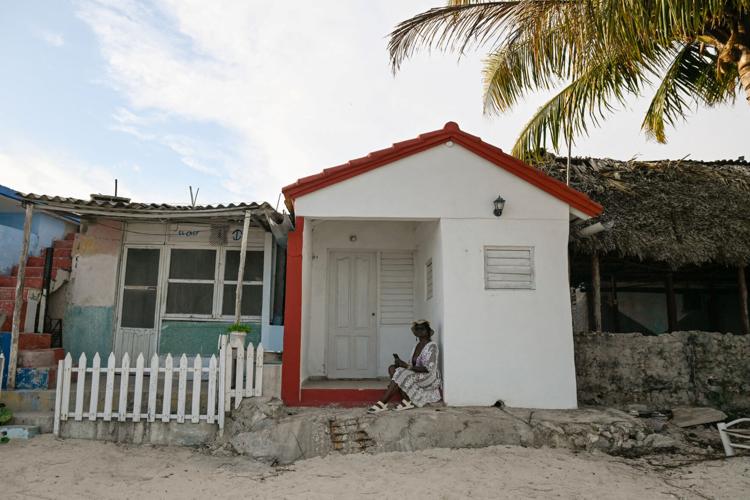

Maria Rosa Fernandes, 62, owner of a rental house, poses for a photograph outside her property as Cuba's top tourist destinations remain deserted amid power and fuel shortages under U.S. sanctions.
WASHINGTON — Military planning for a possible Pentagon-led operation in Cuba is quietly ramping up, in case President Donald Trump gives an order to intervene there, USA Today learned.
Two sources familiar with the order spoke to USA Today on condition of anonymity because they were not authorized to speak to media.
The directives appear to be an escalation of recent tensions between the U.S. and Cuba that began in January when the Trump administration curbed oil shipments to Cuba as part of a broader campaign to force sweeping political changes on the communist-run island.
In a statement to USA Today, the Pentagon said it plans for a range of contingencies and remains prepared to execute the president’s orders as directed.
Reports of the plans to escalate first appeared on Zeteo's Substack and made the rounds on Capitol Hill and across Washington.
People are also reading…
The United States and Cuba acknowledged they are in the early stages of trying to find a way out of the crisis, but it's not clear how much each side is willing to compromise. In March, USA Today reported the two countries were in discussions to sign a possible historic economic deal that would thaw relations.

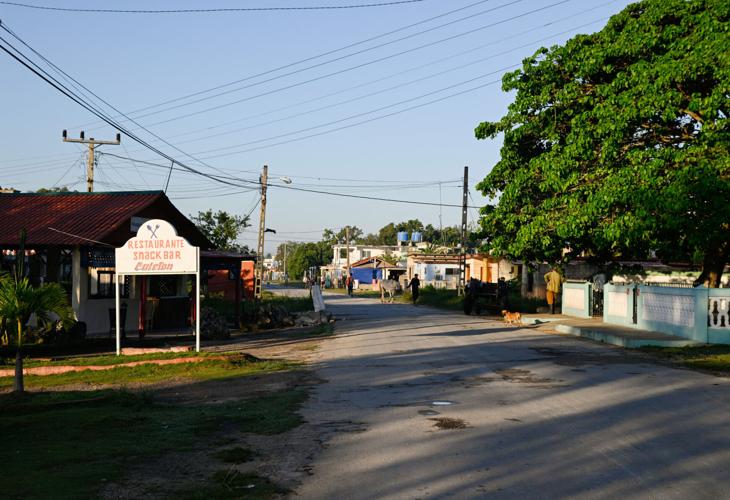
People walk past a closed restaurant as Cuba's top tourist destinations remain deserted amid power and fuel shortages under U.S. sanctions April 8 in Playa Larga, Cienaga de Zapata, Cuba.
Even as the Trump administration's attention has shifted to the Iran war, tensions between Washington and Havana have escalated in recent weeks. Trump suggested he expects soon to have the "honor" of "taking Cuba, in some form," adding, "Whether I free it, take it − I think I can do anything I want with it."
On April 13, Trump told USA Today at the White House, “We may stop by Cuba after we’re finished with this,” referring to the ongoing conflict with Iran.
In a recent interview with Newsweek, Cuban President Miguel Díaz-Canel vowed that his country would fight back if the United States launched a military attack.
"We will battle, we will defend ourselves, and should we fall in battle, to die for the homeland is to live," Díaz-Canel told the outlet.
The stealthy U.S. operation that extracted former Venezuelan president Nicolás Maduro from his Caracas compound on Jan. 3 sent shockwaves through Venezuela's and Cuba's exile communities in South Florida and sparked speculation that Cuba would be next. In the early morning attack on Maduro, 32 Cuban military personnel guarding the president were killed.
But unlike the lead-up to U.S. military operations in Venezuela and Iran, U.S. officials have not made a case for Cuba's "imminent threat" to the United States, said Brian Fonseca, director of the Jack D. Gordon Institute for Public Policy at Florida International University, who studied Cuba's military extensively.

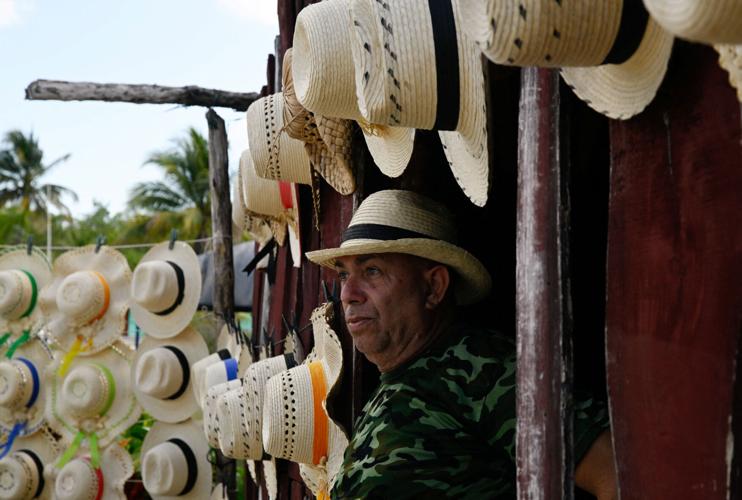
Jorge Alberto Brito, 57, stands at his hat stand "El Sombrerero" as Cuba's top tourist destinations remain deserted amid power and fuel shortages.
Fonseca said he thinks the talk of prepping military plans may be more military threat than actual strategy, adding: "Right now, this is a lot of signaling."
For decades, U.S. officials have discussed some form of military intervention in Cuba ever since Fidel Castro and his rebel forces stormed Havana in 1959 and later pledged allegiance to the Soviet Union and communism.
With Cuba's military equipment in deteriorated condition and its officers unlikely to adhere to an unpopular regime, a U.S. military operation in Cuba would likely be a fast, overwhelming success, Fonseca said.
What follows − instituting rule of law, propping up opposition leaders − would prove a much thornier task, he said.
"This will be a very easy military victory," Fonseca said, "but a far more difficult political victory."