In a pioneering step for groundwater regulation, the Arizona Department of Water Resources proposes to order most farmers in the Willcox Basin to cut their water use by 10% over the next 15 years.
That cut, contained in ADWR's first management plan aimed at restoring the basin's depleted aquifer, represents the first time the agency has even proposed to require farmers to reduce their water use by a specific amount since the Arizona Groundwater Management Act was enacted in 1980.
The proposal, released Tuesday, is part of a broader, long-term strategy by the department to slash the basin's chronic overuse of ancient groundwater by half between now and 2075.
Farmers can expect to face additional cuts in later management plans, which will cover 10-year periods, the new state proposal says. If the state adopts this plan following extensive public discussion at various government-run meetings, its requirements will take effect in 2029.
People are also reading…
The proposal will encompass the state-run Willcox Active Management Area in southeast Arizona, the seventh state groundwater management area that's been formed since the groundwater act passed.
The department makes it clear in the proposed plan why it believes such a cut is needed: to arrest the rapid decline of an aquifer, which has led to dramatic increases in the collapse of land and in earth fissuring over the past few decades and dried up numerous residents' wells.

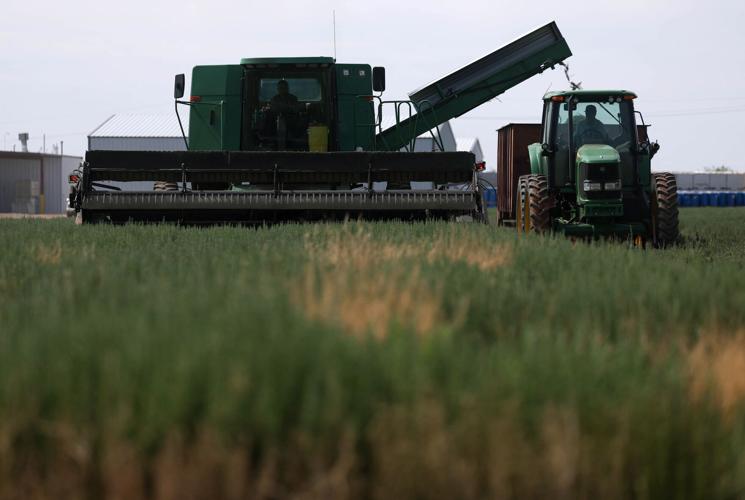
Farmers harvest a rosemary crop Friday at Curry Farms near Sunsites in the Willcox Basin of southeastern Arizona. Farmer Ed Curry supports the state's new proposal to have farms in the basin cut their water use by 10% over 15 years. "We all realize if we are not aggressive about how we go about this, we are not going to have any water to farm," Curry said.
The average annual average rate of groundwater level decline has accelerated over time, increasing from 2.28 feet per year between 1990 and 2021, to 3.28 feet per year between 2015 and 2021, the new plan says.
The Arizona Geological Society, a state agency, has mapped 55 miles of fissures in the basin since 2009. The first signs of fissuring there date back to 1978.
"Several earth fissures have impacted roads, a power generating facility, and a gas pipeline," the state's new management plan says.
The rate that land is sinking because groundwater pumping empties out the pores between the soils of aquifers — a process known as land subsidence — has increased dramatically, it says.
In 1996, the highest measured subsidence rate was 1.2 inches a year. In 2025 and 2026, rates of up to 6.3 inches a year were measured.
'We'll survive'
Two longtime basin farmers who sit on an advisory council to the ADWR for the Willcox Basin gave the new plan enthusiastic reviews.
The Arizona Farm Bureau president's reaction was much more guarded, but not as hostile as one might have expected, given the bureau's longtime opposition to active management areas such as the one in the Willcox Basin.
"It’s a landmark program, to cut water use and sustain the basin," said Ed Curry, a longtime grower of chile seeds in the basin who has pushed hard for new groundwater regulations for farms both statewide and in the basin for years. "It will mean more well stabilizing instead of wells going down."
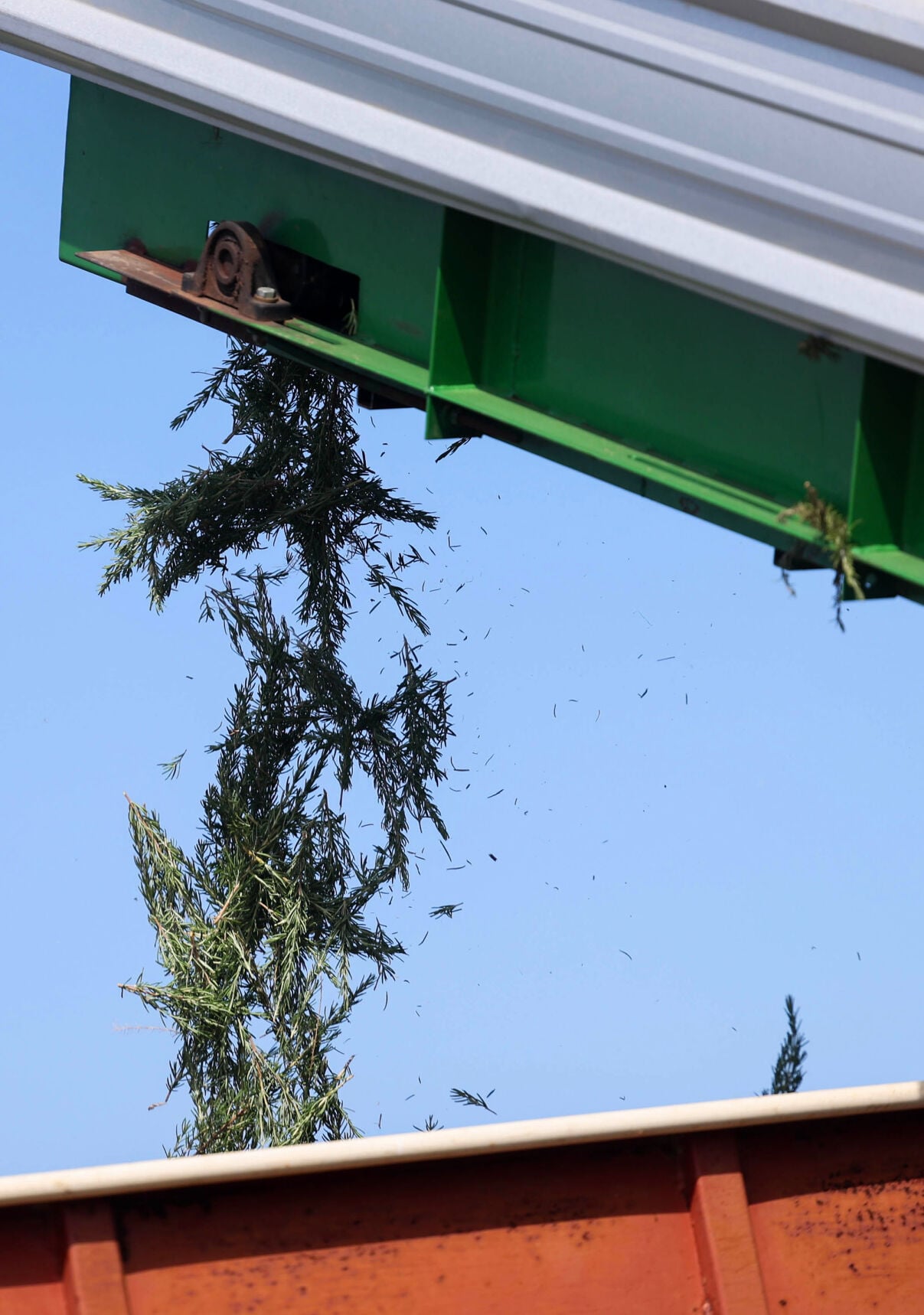
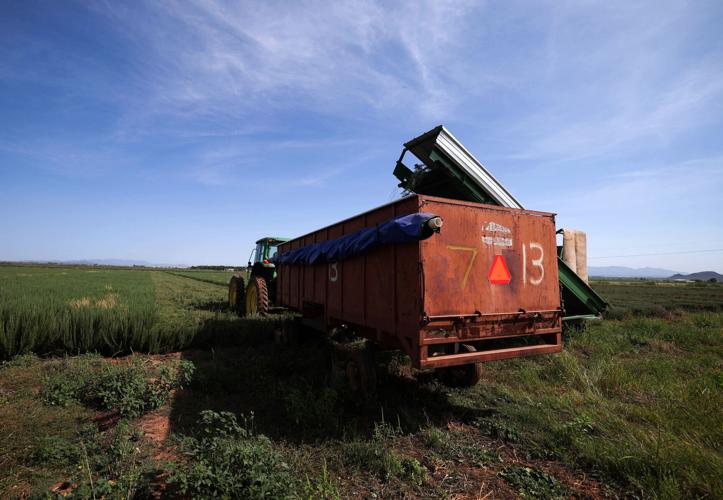
Farmers harvest a rosemary crop at Curry Farms in the Willcox Basin. Rosemary is among the low-water-use crops that farmer Ed Curry grows.
"We all realize if we are not aggressive about how we go about this, we are not going to have any water to farm," said Curry, who grows chiles and various other low-water-use cacti and herbs on 2,000 acres on the basin's western edge, just north of the unincorporated community of Sunsites. A fourth-generation farmer, he is president of Curry Seed and Chile Company.
"We are overdrafting and as growers, we recognize if we agree to substantial cuts, we will be OK," Curry said. "We can manage this."
He's enthusiastic enough about not only this plan, but about the state's efforts to promote agricultural water conservation, that he has made a TV ad for the re-election campaign of Democratic Gov. Katie Hobbs, who reappointed ADWR Director Tom Buschatzke upon taking office in 2023. Hobbs faces Republican U.S. Rep. Andy Biggs in the November election.
Farmer Tedd Haas, like Curry, is a member of the Willcox Basin's Groundwater Users Advisory Council. Long active in basin water issues, Haas said he attended numerous public meetings organized by ADWR since the department created the new AMA nearly 18 months ago. He and many other water users had helped shape ADWR's proposal at those meetings and they will now work to implement it, he said.
"I'm sure everyone on the council is supportive," said Haas, whose farm lies north of Willcox in the Bonita area.
"We want to extend the viability of agriculture as long as we can for future generations. We’re conservationists at heart," said Haas. "It’ll have its challenges, but we’re willing to accept those and time will tell. But we’ll have greater challenges if we don’t do this."
For nearly four decades, Haas has grown mainly cotton, pinto beans and various hay crops.
Looking ahead, he said he plans to consider growing other crops that use less water, and "fallowing land is another idea."
Further down the road, he will look for outside help, possibly from the U.S. Department of Agriculture, which has provided financial support for fallowing ecologically sensitive land in the Midwest through its conservation reserve program.
"Cotton uses less than alfalfa or corn. Pinto beans use less than corn and usually use less than cotton too. There’s options out there," Haas said.
"We’ll survive. I’m convinced agriculture will survive. It won’t look like it did today but today it doesn’t look like it did 50 years ago, either," he added.
Willcox area depends on groundwater
The Arizona Farm Bureau from the start of the discussions over the Willcox Basin has strongly opposed even the creation of an active management area there, partly on the grounds that its management structure and organization isn't suited for rural area such as Willcox.
Active management areas were created by the 1980 law for urban areas such as Tucson and Phoenix that had surface water supplies such as the Central Arizona Project canal system to supplement pumped groundwater, farm bureau president farm bureau president John Boelts said.
The Willcox area, by contrast, has virtually no surface water supplies and gets more than 90% of its water from pumped groundwater.
The Willcox Basin's is the first Active Management Area created solely by an order from ADWR. The others were established through the 1980 act and by a 2022 public vote that established an AMA in the neighboring Douglas Basin, lying directly south of the Willcox Basin.
A public vote to create a management area for the Willcox Basin failed the same year. ADWR created the Willcox Active Management Area administratively in January 2025.

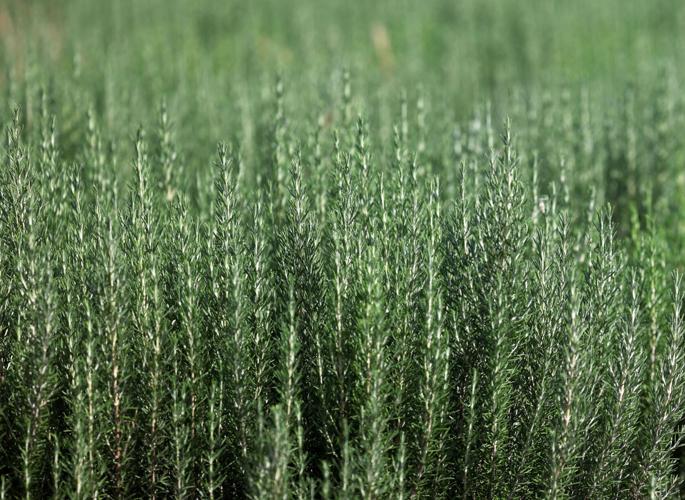
Rosemary grows at Curry Farms, one of numerous crops grown by farmer Ed Curry in the Willcox Basin. The state's new groundwater management proposal is "a landmark program, to cut water use and sustain the basin," he says.
But looking at ADWR's newly proposed plan, Boelts reserved judgment in an interview, saying he looks forward to commenting on it as the plan goes through more detailed discussions.
Asked if farmers in the basin can live with this proposal, he said, "That remains to be seen."
"Their needs change. The demands for agricultural products change. One of my biggest concerns for the Willcox Basin is, will people try to come in here and buy and dry?" he said. He was referring to the practice of having cities or businesses buy out and retire farms to get access to their water or just to reduce water use.
"One positive thing about this plan is that it refocuses water use," Boelts said. "It's not a mechanism to take water out of that basin."
There is a long horizon on ADWR's efforts to sustain the basin, which is also positive, he said, "if there's time for people to plan and adjust."
"It's not the outcome we wanted. There’s also no perfect way to fix a problem of declining resources. It threads the needle between avoiding heavy-handed reduction and trying to right-size water use to water availability," he said.
Officials of Riverview LLP, which owns two big dairies in the basin and grows cattle feed and other crops on tens of thousands of acres there, didn't respond to a request from the Star to comment on ADWR's management plan. But Curry said his understanding is that the mega-dairy company is supportive of it.
Early this year, Arizona Attorney General Kris Mayes signed an agreement with Riverview in which the company agreed to pay $11 million into a fund to pay for deepening or replacing area residents' wells that had dried up due to agricultural pumping. The company also agreed to fallow 2,000 acres of its farmland.
But Curry said Riverview has gone beyond the agreement's terms to reduce its water use further, including importing some of its cattle feed from out of state to reduce its water use in the basin.
'Imperative for making progress'
Overall, the 10% water use cut for farms in the basin is "imperative for making progress towards the (state's) management goal while providing sufficient water to irrigate crops historically grown," the new plan says.
ADWR said it commissioned a study that said a 10% cut in farm water use would still allow farmers in the basin to grow the same crops as now without suffering major economic consequences.
But the plan says the ideal solution to groundwater over-pumping — limiting the water pumped to the amount that's put back into the ground by rainfall and other sources of groundwater recharge — is a long way from being economically feasible. If that ever happened, the basin would be at "safe yield," in which pumping matches recharge — the 1980 law's goal for the state's active management areas, which most of them have never met.

Farmers harvest the rosemary crop at Curry Farms. Fourth-generation farmer Ed Curry grows various other low-water-use herbs, chile seeds and cacti on 2000 acres in the Willcox Basin, near the unincorporated community of Sunsites.
To slash pumping to the same level as groundwater recharge would mean lowering annual pumping in the basin by nearly 4 times to about 43,000 acre-feet a year, the new plan says.
But the basin, whose economy depends almost exclusively on farming, hasn't used that little water in one year since 1952, ADWR says.
While water use in the basin has boomed and busted over the decades since the 1950s, it today stands at about 207,000 acre-feet a year, the management plan says.
In 2024, the U.S. Geological Survey estimated that nearly 75,000 acres of land were irrigated for farming in the entire Willcox Basin. The basin's 1,911 square miles cover eastern Cochise County and southern Graham County.
It would be extremely challenging to irrigate the amount of land that the state expects to allow to be irrigated in the future after determining which farmers have historic groundwater rights, if they could only use the same amount of water that was used in 1952 to irrigate about 10,000 acres, ADWR says.
"However, there are also serious economic impacts associated with the status-quo scenario, in which overdraft continues at present rates and groundwater levels decline at current or accelerating rates absent meaningful groundwater use reduction," the management plan says.
Groundwater level declines make access to water more difficult and significantly more costly, requiring using more electricity to pump water to the surface and the deepening of wells because of the dropping water table, the plan notes.
"For those able to pay these increased costs, the impacts are financial. For those with more limited financial resources, the consequences are reduced access to water with attendant health and safety concerns."
"Additionally, under the status-quo scenario, land subsidence and earth fissuring would also be expected to continue at present or increasing rates and result in additional economic impacts," the plan says.
Contact Tony Davis at 520-349-0350 or tdavis@tucson.com. Follow Davis on Twitter@tonydavis987.

Tony Davis
Reporter


 Is Tucson's 47 years' worth of groundwater enough if CAP is slashed?