PHOENIX — After years in the minority, Democratic lawmakers see the Tuesday election results as a mandate to push forward with the proposals they could never get heard in the Republican-controlled Legislature.
Those include everything from more programs to help the needy to providing more funding for the state's public education system.
But they face a harsh reality that the state's revenue picture simply won't allow for everything on the wish list. And any plan to increase taxes or fees requires a two-thirds legislative majority, something that, even with the Democratic rout on Tuesday, they simply don't have.
There already are pressures to embrace and approve progressive causes that Democrats, while they were in the legislative minority, said were their priorities as they blamed Republicans for their inability to get them enacted.
People are also reading…
Some of these come from the Activate 48 Coalition, made up of groups including Living United for Change in Arizona, Chispa Arizona and Worker Power.
"Arizonans voted for leadership that puts working families first: lower costs, housing people can afford, and an economy that works for everyday people,'' they said in a written statement as election returns were coming in. "Now the work moves from winning to governing.''
The statement included a message of warning to the Democrats. "We are prepared to hold this new majority to the agenda voters chose,'' the coalition said.
House Minority Leader Oscar De Los Santos, who is now slated to become speaker of the House when the newly elected Legislature is seated in January, said these groups have nothing to worry about.

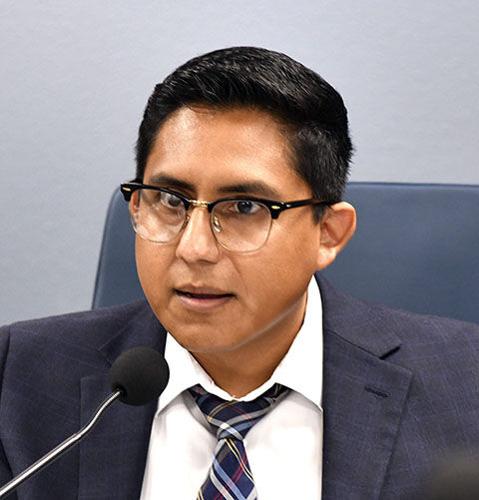
Rep. Oscar De Los Santos, a Laveen Democrat, is slated to become speaker of the House when the newly elected Legislature is seated in January.
He said Democrats plan to enact the issues they ran on, focusing on affordability for housing and health care, as well as new investments in public education and reforms in water laws.
"Those are the things that Arizonans want,'' said the Laveen Democrat. "And we look forward to delivering.''
Priya Sundareshan, who has been his counterpart in the Senate — and will now become Senate president — said Democrats recognize who put them in charge.
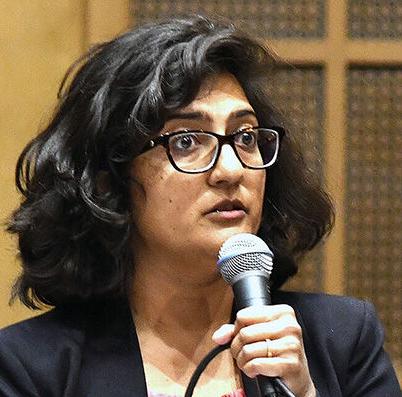
Sen. Priya Sundareshan, a Tucson Democrat, is set to become Senate president, now that voters have handed control of both of Arizona's legislative chambers to Democrats for the first time since 1966.
"What we do is we deliver everything we talked about that got us to this position,'' said the Tucson Democrat. "It is recognizing the voters were responding to what we were putting out there.''
There are issues that most immediately take priority, Sundareshan said.
"Utility costs are rising,'' she said. "Health care costs are rising, grocery costs, so many areas where we can help fight back, often against corporate greed.''
Funding for public schools
And De Los Santos said there is pressure to invest more in public education.
That took on added emphasis after a Maricopa County Superior Court judge ruled last year that state lawmakers aren't meeting their constitutional obligations to adequately fund public schools so that students can learn.
Judge Dewain Fox said many schools lack the resources to do everything from providing adequate educational equipment to repairing buildings. He also said the state has failed to provide funds for legally required improvements, including keeping schools safe from potential invasions by shooters.
The price tag for all of this is unclear, but attorneys for districts that sued say the state has shorted schools by more than $6 billion since the lawsuit was filed in 2017.
GOP lawmakers have filed an appeal.
There's also a separate lawsuit in federal court where a judge said the state is failing to meet constitutional standards for physical and mental health care for prison inmates. That judge has appointed a receiver who can demand state resources to fix the problems, though that remains on appeal.
First legislative majority since 1966
What is enabling Democrats to take a crack at all of this is the fact that voters Tuesday on the national and state levels put a large number of Republican lawmakers out to pasture.
Some of these changes came in Arizona districts that have been competitive and have had Democrats representing them in the past.
In Legislative District 17 in Pima County, for example, retiring Republican Sen. Vince Leach was replaced by Democrat Edgar Soto, who handily defeated GOP nominee Christopher King.
On the House side of that district, Democratic incumbent Kevin Volk kept his seat. But voters turned out Republican Rachel Keshel in favor of Democrat Holly Lyon.
But in some other cases, all-Republican districts were turned on their heads. In what had been all-GOP LD 13 in Chandler, Julie Willoughby, who had been in the House, lost her bid to move to the Senate to Democrat Kristie O'Brien.
And in the House in that district, Chandler Mayor Kevin Hartke and Janet Weninger, wife of incumbent Rep. Jeff Weninger, who left to run for mayor, were being outpolled by Democrats Rockee Armstrong and Jacob Weinberg.
There was also a shift in Pinal County's LD 16, a long-time GOP stronghold.
Most notable is that Sen. T.J. Shope, who had already lined up votes among Republicans to become the Senate president come January, found himself running behind Democrat Elaine Aldrete as he tried to hold on to his Senate seat.
And Democrat Julia Romero Gusse, running as a lone Democrat against the two GOP House incumbents in LD 16, managed to knock Rep. Chris Lopez out, though Rep. Teresa Martinez survived.
Even current House Speaker Steve Montenegro had to battle just to remain at the state Capitol. Democrat Christine Scianna outpolled him but, as the lone Democrat in the race for the two seats, managed instead to knock out Montenegro's seatmate James Taylor.
All of that blew up the Republicans' 17-13 edge in the Arizona Senate and their 33-27 margin in the House.
Democrats will have a working majority and a governor, Katie Hobbs, who has espoused many of the same causes as her Democratic counterparts, and will now control both chambers for the first time since 1966.
‘Don't have all of the revenue’ needed
Even so, "We recognize that we don't have all of the revenue that will be needed immediately to potentially fill all the gaps that we know exist,'' Sundareshan said.
One thing many Democrats would like to do is repeal the decision by Republicans to create a flat income tax rate, which did away with a "progressive'' rate where people earning more paid a higher percentage. Democrats have cited figures saying that it removed $2 billion a year in state revenues; Republicans said it stimulated the economy, noting that state budgets have continued to grow.
"That's not a fair structure,'' said Sundareshan.
But it's not likely to go away — and not just because of the need for a two-thirds vote of both the House and the Senate to repeal that law. Even if it's sent to the ballot, repeal would require 60% of voters to go along.
"We're going to have to get creative,'' said De Los Santos.
For example, he said the state could make housing more affordable by limiting the number of homes that could be bought up by any one corporation, whether to use as regular rentals or vacation rentals. That costs the state nothing.
"There's still tax breaks for data centers,'' Sundareshan added. While lawmakers earlier this year paused them and their estimated $40 million price tag for three years, the tax breaks will return in three years, absent legislative action.
And then there's the hot-button issue of Empowerment Scholarship Accounts.
Originally started in 2011 to help students who couldn't get their needs met in public schools, the program is now available to anyone. The cost has ballooned to more than $1 billion a year.
There is little public sentiment to scrap the entire "voucher'' program. But putting a family income cap on eligibility for children to get the scholarship accounts, depending on where that is set, could save the state between $90 million and $150 million a year.
One other option is extension of Proposition 123.
Approved by voters in 2016, it tapped money in a special trust fund to increase aid to schools, generating about $300 million a year. It expired, however, in 2025 without legislative action.
While there was no loss to schools — lawmakers have picked up the cost from other tax revenues — an extension could generate new money for K-12 funding without having to raise taxes or cut other state programs.


 Tim Steller’s column: Now in power, Arizona Dems must prioritize to-do list