The following is the opinion and analysis of the writer:
Kristen Hoggatt-Abader
As I’ve been reading about the old Bear Down story in these pages and elsewhere, I’ve started to wonder what the phrase means in our current context. Is it simply a rallying cry to support our sports teams, a way to unite the student body, or something larger – a philosophy, of sorts, for how we should live? And if it is the latter, should it be?
When I started college at the University of Arizona, I was recovering from a traumatic brain injury that primarily affected my brainstem and left frontal lobe. My right side was paralyzed, and my language skills took a significant hit. But all in all, the consensus among my friends and family was that it could have been worse. Much worse.
That was back in 1998, and when I found myself struggling on campus that fall – struggling to walk, struggling to read, struggling to write – I found a degree of comfort in that phrase: Bear Down. Which is what I did. During outpatient therapy, during classes I could barely comprehend, during the odd moments when a piece of glass would resurface from my skin, I would simply Bear Down.
People are also reading…

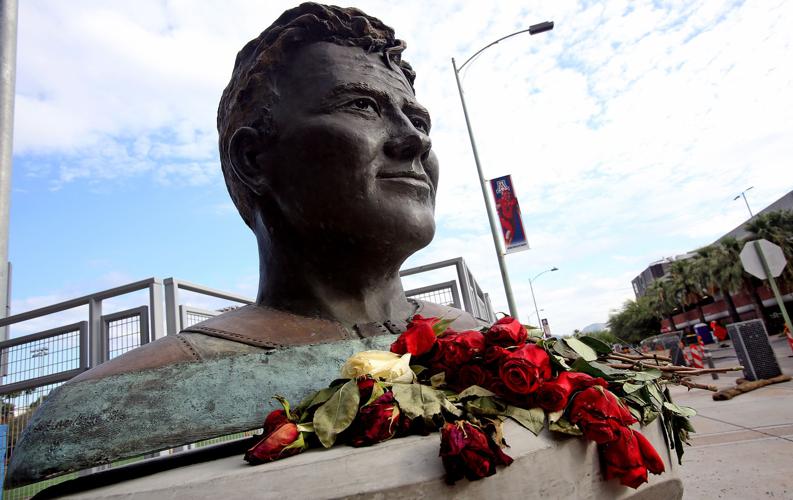
Roses rest at the base of the bust of John "Button" Salmon at the University of Arizona, possibly in memory of Zach Hemmila, a Wildcat football player who died in his sleep on Aug. 10, 2016, the week this photo was taken.
My academic advisor’s office was in Bear Down Gym my freshman year, and I would consult with her often. In those days, there was not even a handrail to facilitate going up and down that massive staircase. Going up wasn’t so bad, but going down, wow, going down was tough with my paralysis and double vision, and I used to have to sit on my bottom and scoot down the stairs, one by one. There must have been alternative access, as there is now, but I didn’t know where it was, or if one existed. The traumatic brain injury limited my perception, too. To me, there was only one way to get into Bear Down Gym: to charge up those stairs, then bruise my dignity with each scoot on the way down.
Did I Bear Down in that situation? Some people might think so.
I teach writing at the UA now. I’m very proud of that. I don’t have tenure. I don’t make much money. It’s still a great honor for me to teach on the campus that bore witness to some of my most difficult struggles. A recent in-class writing prompt asked my students “What does it mean to 'Bear Down' in our current context?”
Many of my students expressed how unifying the slogan was, how it captured UA pride. Many expressed something akin to what this student so eloquently did: “To me, Bear Down means having the courage to keep moving forward, even when life feels overwhelming. As a first-generation college student, I know that achieving your dreams is not always easy. Sometimes we face challenges, self-doubt, and moments when giving up seems easier than continuing. But I believe Bear Down reminds us that our struggles do not define our limits.”
What a terrific piece of writing. But if I may push back, I believe educators have a responsibility to create learning environments where students do not need to Bear Down in the traditional sense. My teaching philosophy is informed by what I call Imaginative Design: the practice of designing radically accessible learning environments that accommodate the widest possible range of learners – including learners whose needs we have yet to imagine. I want students to experience the intellectual challenges of learning without having to expend their energy navigating barriers that educators could have removed.
There is a difference between persevering through the difficult work of discovery and persevering through obstacles that should never have been there.
If Bear Down is to mean something beyond athletics, perhaps it should challenge us not only to push ourselves but also to change the conditions that make pushing so hard necessary in the first place.
Follow these steps to easily submit a letter to the editor or guest opinion to the Arizona Daily Star.
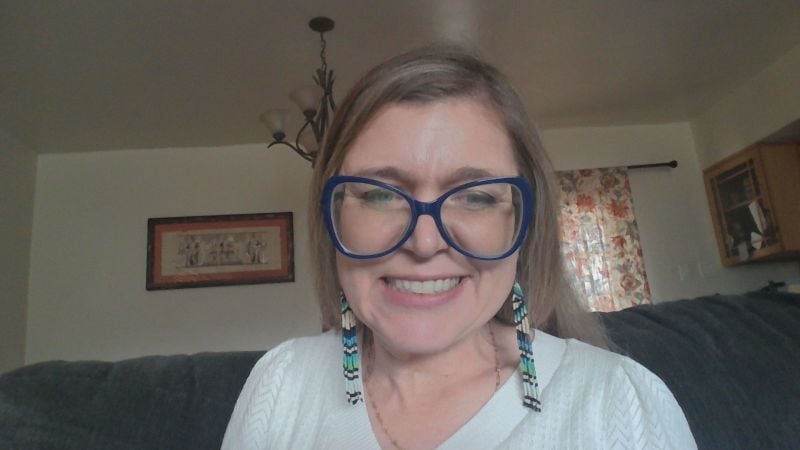
Kristen Hoggatt-Abader is a poet, writer and educator in Tucson. More of her work can be read at khoggattabader.com.