

Por Tom Beal
La Estrella de Tucsón
Santos
El lado espiritual de Tucsón se refleja en los muchos altares que hay al aire libre, desde cruces hasta “bicicletas fantasma” en las calles y altares en los patios dedicados a varios santos de la tradición católica hispana.
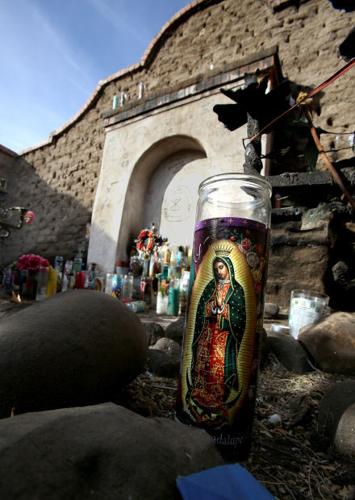
La veladora sobre la tierra que se ve en la foto retrata una de las imágenes más populares, la aparición de la Virgen de Guadalupe. Fue colocada en El Tiradito, quizá el más antiguo y famoso de los altares de Tucsón.
Ubicado en South Main Avenue, al sur de West Cushing Street, pretende ser el lugar de entierro de un pecador.
Eegee’s
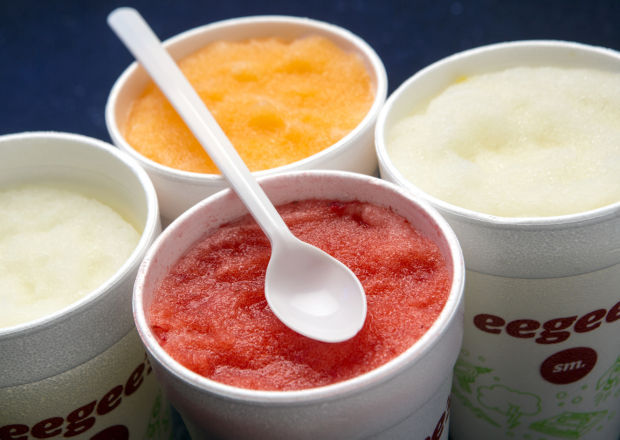
Los socios Ed Irving y Bob Greenberg empezaron a vender limonada congelada en un camión en 1971, y fue nombrada así por la “E” del nombre de Ed y la “G” de Greenberg.
People are also reading…
Después llegaron otros sabores, añadieron comida a su menú y abrieron puntos de venta a lo largo de Tucsón. Los sándwiches gigantes y las grandes cubetas de Eegee’e se volvieron omnipresentes en las fiestas infantiles y eventos deportivos.
Para cuando los dos empresarios raspaderos vendieron el negocio en el 2006, tenían 21 puntos de venta y una cafetería en la que se preparaba la comida.
Padre Kino
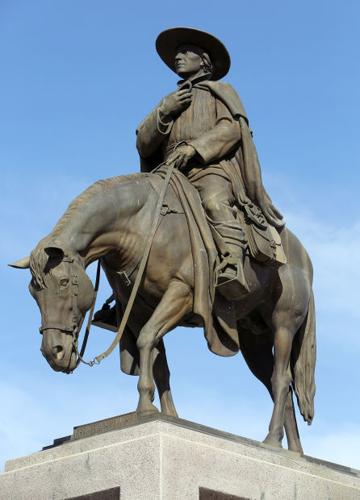
Padre Eusebio Francisco Kino quizá no sea un nombre muy conocido en otras partes, pero por estos rumbos es un héroe. Su nombre está en todas partes. Su estatua se ubica en la intersección de South Kino Avenue con East 15th Street.
Quizá tú has sido atendido alguna vez en el Hospital Kino o has jugado golf en Kino Spring, visitado Bahía de Kino, asistido a la Escuela Kino o visto un juego de beisbol en el Kino Sports Park.
Misionero jesuita nacido en Italia y quien arribó a la Nueva España en 1683, Kino fundó una serie de 24 misiones y visitas en lo que ahora se conoce como Baja California, Sonora y Arizona. En ella se incluyen la misiones cercanas de Tumacácori y San Xavier, y la visita a la que llamó San Cosme y Damián del Tucsón, que después derivó en Tucsón.
Fue reconocido por su compasión y sentido de justicia, oponiéndose, por ejemplo, al uso de la fuerza laboral de los esclavos indios en las minas de plata de la Corona.
Recientemente, los obispos de Tucsón, Hermosillo, y de la Diócesis de Trent, Italia, escribieron al Papa Francisco para pedir la veneración de Kino, el primer paso para la canonización de santos en la Iglesia Católica.
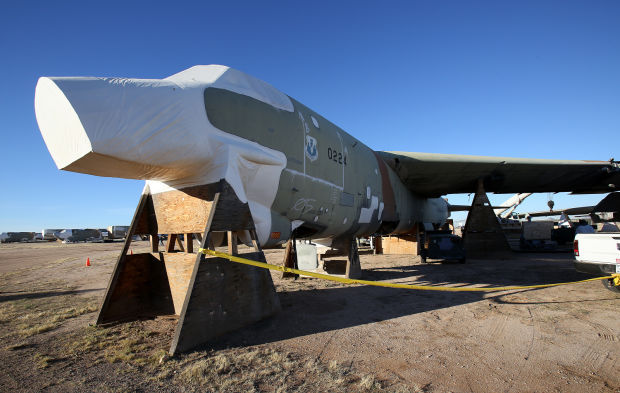
El panteón de aviones
El Grupo 309 de Mantenimiento y Regeneración Aeroespacial opera una instalación de almacenamiento en la Base de la Fuerza Aérea Davis-Monthan, a la que todo mundo llama “boneyard” o cementerio.
Aquí, más de cuatro mil 400 aviones son cubiertos con revestimientos de látex para proteger sus piezas del sol del desierto. Algunos volverán a volar y otro serán vendidos a museos. De algunos se reutilizarán las partes para otras aeronaves y otros serán desechados.
El sitio abarca más de 1,052 hectáreas (2,600 acres). La Davis-Monthan empezó a almacenar aviones B-29 y C-47 aquí después de la Segunda Guerra Mundial. Ahora almacena vehículos para todas las ramas del servicio y para la NASA.
El nopal
El nopal es uno de los cactus más fácilmente identificables en la región, aunque diferenciar una especie de otra puede ser muy complicado.
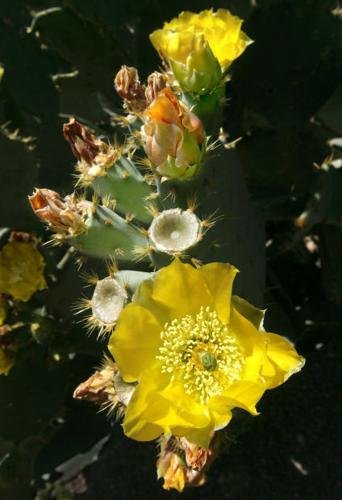
El nopal Engelmann, con sus segmentaciones, pencas planas, sus espinas, sus flores amarillas y su fruto rojo, es el más común.
El nopal le brinda cobijo y alimento a criaturas del desierto. La pulpa de la tuna es comida por ratas insurgentes, liebres, jabalíes y humanos.
Las pencas jóvenes, los nopales, son básicas en la cocina mexicana. La tuna se utiliza para jarabes y mermeladas, y también se encuentra en martinis y margaritas.
Santos
Tucson’s spiritual side is reflected in its many outdoor shrines — from crosses and “ghost bikes” along the highways to yard shrines devoted to various “santos” of the Hispanic Catholic tradition.
The candle in the foreground of the photo depicts one of the most popular — the apparition of the Virgen de Guadalupe. It has been placed at El Tiradito, probably the most enduring and famous of Tucson’s shrines.
Located on South Main Avenue just south of West Cushing Street, it purports to be the burial ground of a sinner.
Eegee’s
Partners Ed Irving and Bob Greenberg began selling a frozen lemonade concoction from a truck in 1971, naming the treat for the “E” in Ed’s name and the “G” in Greenberg’s.
Other flavors followed, food was added and stores were opened across Tucson. Giant sandwiches and big foam buckets of Eegee’s became omnipresent at kid’s birthdays and sporting events.
By the time the two slush entrepreneurs sold the business in 2006, they had 21 stores and a commissary where the food was prepared.
Padre Kino
Padre Eusebio Francisco Kino may not be a household name elsewhere, but hereabouts he’s a hero.
His name is everywhere. His statue is at the intersection of South Kino Avenue and East 15th Street.
You may have been treated at Kino Hospital, played golf at Kino Springs, sailed Kino Bay, attended Kino School or watched a ballgame at Kino Sports Park.
Kino, an Italian-born Jesuit missionary, who arrived in New Spain in 1683, founded a string of 24 missions and visitas in what is now Baja California, Sonora and Arizona. They include the nearby missions of Tumacácori and San Xavier and the visita he called San Cosme y Damián del Tucson, which later became Tucson.
Kino traveled the vast, empty stretches of most of New Spain on horseback. He was known for his compassion and sense of justice, opposing, for example, the use of Indian slave labor in the Crown’s silver mines.
He is still revered, and his final resting place in Magdalena, Son., where his bones are visible behind glass in the courtyard of the mission he founded, is a site for pilgrimage. Recently, the bishops of Tucson, Hermosillo and his home diocese of Trent, Italy, wrote to Pope Francis, requesting that Kino be venerated, the first step in the Catholic Church’s canonization process for saints.
El panteón de aviones
The 309th Aerospace Maintenance and Regeneration Group operates a storage facility at Davis-Monthan Air Force Base that everybody calls the “boneyard.”
Here, more than 4,400 aircraft are mothballed in latex coatings to keep their parts safe from the desert sun. Some will fly again and others will be sold to museums. Some will be reused as parts for other planes, and some will eventually be scrapped.
The site takes up 2,600 acres. Davis-Monthan started storing B-29 and C-47 aircraft here after World War II. It now stores vehicles for all branches of the service and for NASA as well.
El nopal
The prickly pear is one of the most easily identifiable cacti in the region, though telling one species from another can be a chore.
The Engelmann prickly pear, with its segmented, flat pads, spines, yellow flowers and red fruit, is the most common.
The prickly pear provides shelter and nourishment for a host of desert creatures. The flesh of the prickly pear is eaten by packrats, jackrabbits, javelinas and humans.
The young pads of prickly pear, nopales, are a staple of Mexican cuisine. The tuna, is used to make syrups and jellies, and it shows up in martinis and margaritas.