There was a noticeable divide in the audience at intermission.
"I didn't pay $300 to hear this," one concertgoer said after Paul Simon performed "Seven Psalms," his 2023 album.

Dr. Barton Goldsmith
I understood exactly what he meant. I just disagreed.
If you came looking for a nostalgia show, the first half probably felt like homework. But if you came willing to follow an 84-year-old artist wherever his mind has taken him, it was something else entirely.
Before the concert, I had listened to "Seven Psalms" several times and read through the lyrics. I still don't know whether Simon arrives at faith or skepticism. My guess is that he isn't trying to arrive anywhere. He's still searching, and there is something profoundly honest about a man in his ninth decade standing before thousands of people and admitting that life's biggest questions remain unanswered. One brief phrase — "the sacred harp" — stayed with me long after the lights came up, not because it explained anything, but because it didn't.
People are also reading…
Then came the songs that have lived with us for decades.
Some were the expected favorites, others were deep album cuts that longtime fans greeted like old friends. The appearance of one of the original "Graceland" musicians drew a deserved ovation and reminded everyone that these songs have histories of their own.
Paul Simon is 84. That fact matters, but not in the way people think.
His voice isn't what it was in 1975, nor should it be. It has become the voice of someone who lived the questions he spent a lifetime writing about. Listening to him now, I wasn't hearing diminished talent. I was hearing accumulated experience. Voices deepen with age. So do the songs, if you let them.
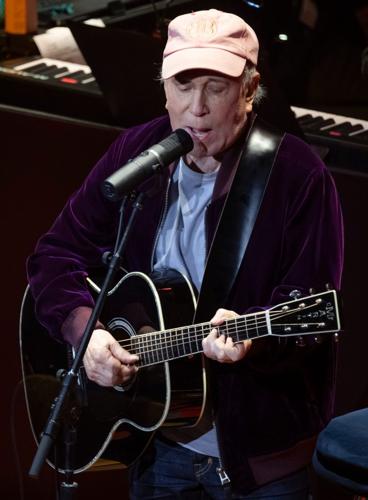
Simon spoke candidly about his neuropathy and spent much of the evening holding the guitar, playing only the occasional riff. When he finally settled in and gently played at the end, the moment felt almost ceremonial.
As a guitarist myself, I noticed something many people probably missed. The intricate parts Simon once played alone are now divided between two outstanding musicians. That isn't a criticism of age. It's a reminder of how extraordinarily difficult his playing always was. I spent years trying to figure out his chord voicings and fingerstyle patterns, and like so many players of my generation, I learned that what sounded effortless was anything but.
One song, though, landed differently than I had ever heard it before.

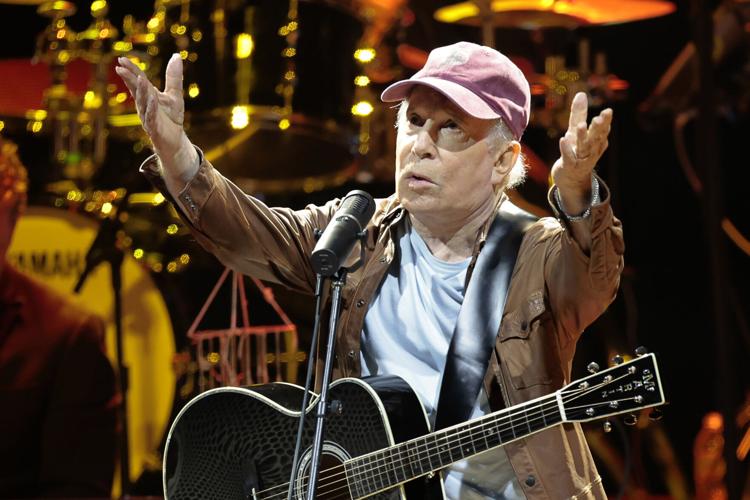
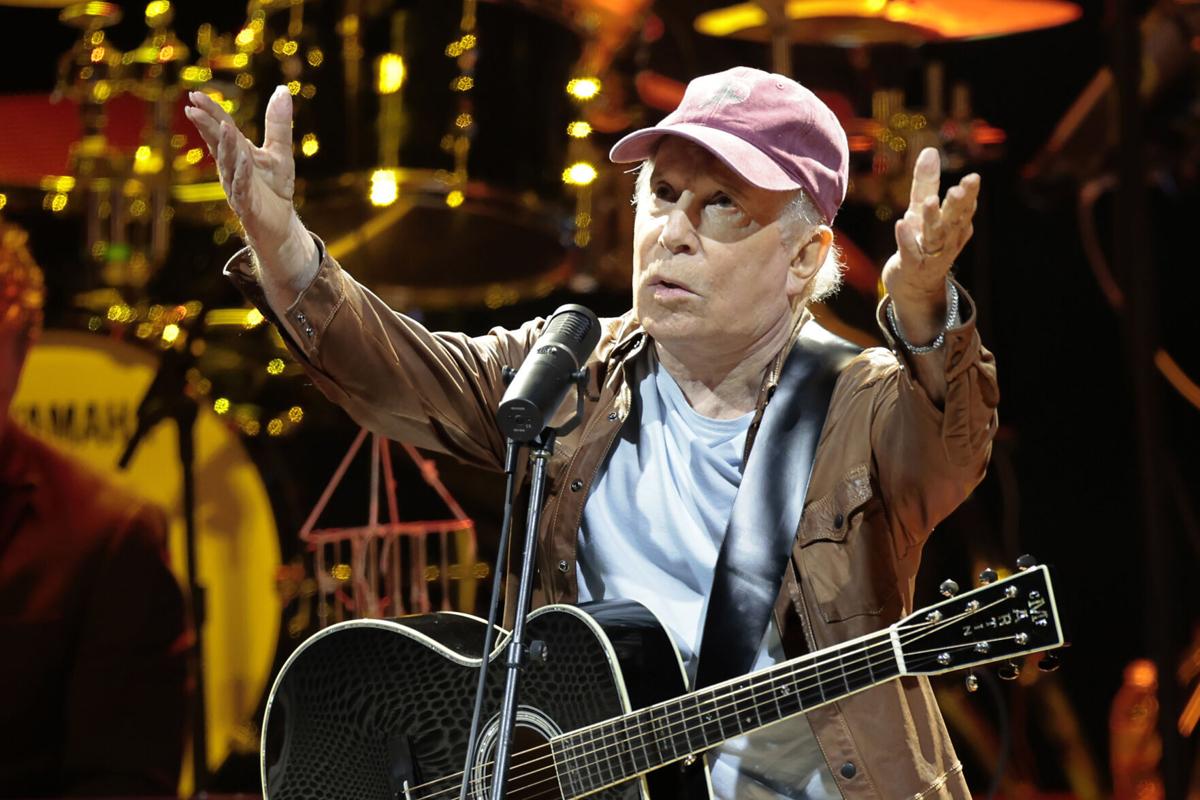
Paul Simon performs May 11, 2025, at the Ryman Auditorium in Nashville, Tenn.
When Simon sang "The Boxer," I no longer heard the story of a fictional fighter. I heard the story of the man standing in front of us. The reference to "every glove that cut him" suddenly felt less like poetry and more like autobiography. Every artist who survives six decades accumulates scars — critical failures, commercial disappointments, personal losses, physical limitations and the quiet realization that time eventually wins every contest.
Yet there he stood — not trying to recapture his youth or prove anything to anyone, but simply doing what he has always done: telling the truth through song.
The performance was moving not because it was flawless, but because it was honest.
As I looked around the Hollywood Bowl in Los Angeles, another thought occurred to me. These songs had long since outgrown their creator. They had become part of the emotional vocabulary of several generations.
The moment I'll remember happened in the audience.
Toward the end of the evening, I stopped singing.
I closed my eyes and listened.
The Bowl became a choir.
Thousands of people knew every word, every harmony, every pause. They belonged to all of us who had carried them through first loves, road trips, marriages, heartbreaks, losses and quiet Sunday mornings.
As a young musician, I spent countless hours trying to play like Paul Simon. I never got there, but the pursuit made me a better player. More importantly, his songwriting taught me that intelligence and melody could live comfortably together, that simplicity could hide astonishing complexity and that the questions are often more enduring than the answers.
Whether this is his final major tour really doesn't matter.
The standing ovations at the Hollywood Bowl felt less like applause for a concert than gratitude for a lifetime of work.
His hands may no longer play every intricate passage they once did.
But somewhere along the way, the songs stopped belonging to Paul Simon.
They became ours.
And for a few beautiful minutes, with my eyes closed, the finest instrument on the stage wasn't the guitar or the extraordinary band.
It was 12,000 people singing thank you.