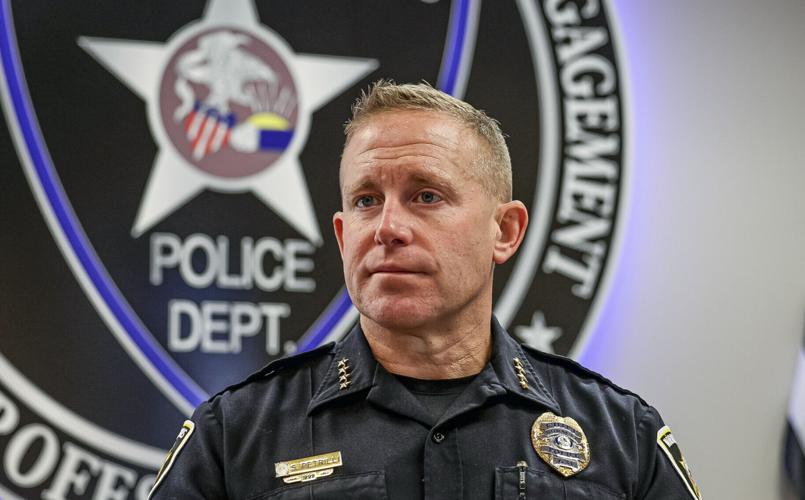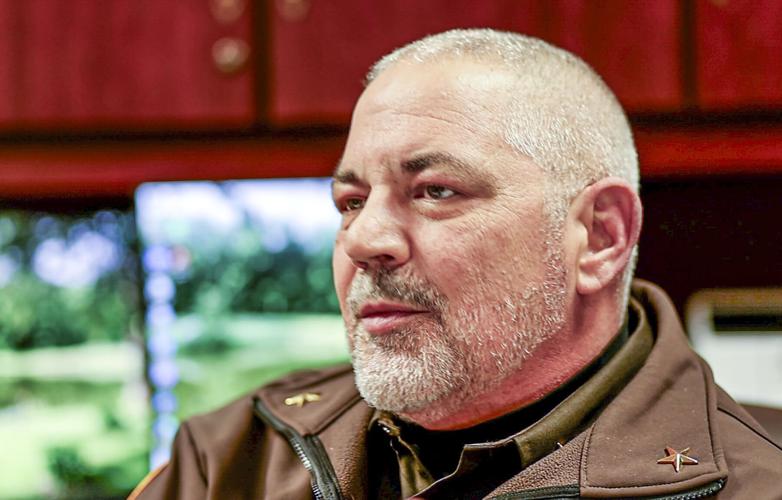
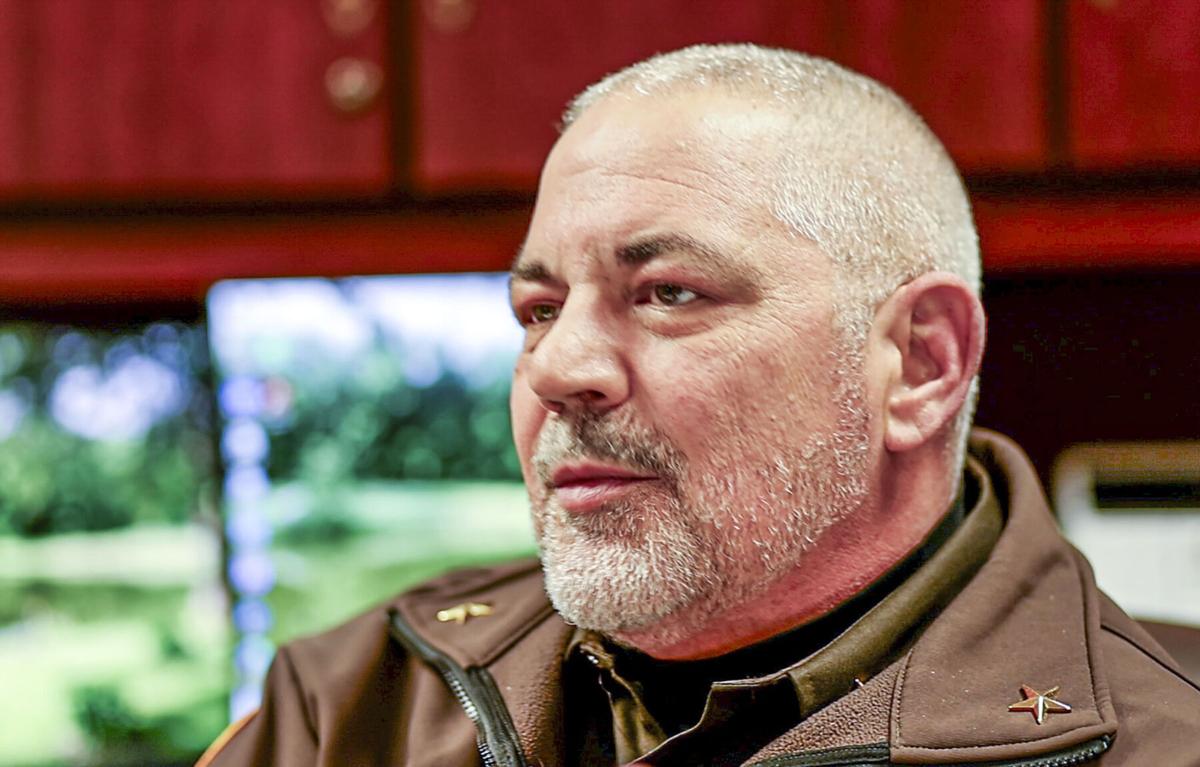
BLOOMINGTON — In his first week of training as a patrol officer, Normal Police Chief Steve Petrilli witnessed a fatal scene that has stuck with him in the 26 years since.
"It was a head-on collision on the interstate," Petrilli said of the 1999 incident. "There was no follow-up for those types of things. It was just, you went to the call and you handled it."
Since taking over as chief in 2022, Petrilli has made officer wellness — both mental and physical — a priority for his department. He and other police leaders in Bloomington-Normal acknowledged law enforcement officers historically have been expected to compartmentalize rather than address the traumas they are exposed to on the job. But that approach can take a toll.
People are also reading…
When it is coupled with a lack of resources to cope with what they've seen, officers and dispatchers have reported experiencing lasting effects to their mental health that can affect both their work and personal lives.
According to a 2024 survey conducted by Police 1, a platform focused on content, policy and training for first responders, 83% of police officers reported their mental health affects their work.
In the same survey, 16% of officers reported they had experienced thoughts of suicide within the last year.
And in a study published by the National Institutes of Health, officers reported experiencing depression at a rate almost twice as high as the general population, attributed to traumatic events encountered daily in their line of work.
As concerns for law enforcement wellness rise, local police leaders say they are working to break down the barriers and culture surrounding the mental health of officers and dispatchers and building support systems to help them cope with traumatic events.
Getting help
The Illinois Police Training Act, which was signed into law in 2019, amended police training procedures to include officer wellness in recognition of issues of mental health concerns and suicide prevention. Since then, sworn officers have been mandated to receive eight hours of mental health training every three years.
Law enforcement officials in Bloomington-Normal agreed the biggest challenge when implementing wellness into their departments was breaking the stigmas surrounding mental health in their profession.
"I explained to them, it's not a weakness, it's just, if you need to talk to somebody, we'll give you somebody," McLean County Sheriff Matt Lane said.
When identifying an employee who has been through a traumatic experience, local law enforcement agencies say they provide support in several ways, including debriefing, time off, peer support and therapy.
"We've both been here a long time, since the ’90s," Chief Deputy Hadley Welsch said, gesturing to Lane in a recent interview with The Pantagraph. "Needless to say, it's come leaps and bounds from three decades ago to where we are now, in terms of prioritizing mental health in criminal justice."
Bloomington Police Chief Jamal Simington agreed, reflecting on his years working in law enforcement.
"Back in the day, when I started, it was you dust off whatever you were exposed to, and you move on to the next call and the next day, and you put it behind you," Simington said.
Sarah Vitzthum, a licensed clinical professional counselor, has been staffed full-time at the Normal Police Department for two and a half years. Normal officers are required to see her annually for check-ins, during which she assesses if they need further counseling.
"There's a susceptibility to feel helpless in this field, and helping people to feel empowered to make changes ... that's hard to do," Vitzthum said.
Vitzthum said she pays attention to the types of calls for service officers are responding to, as well as volume and frequency — which she said can also be overwhelming — to determine when an additional check-in is due.
If officers want to use her services, Vizthum said she is flexible with her hours to be available whenever the officer is, providing a person to talk to or just a quiet safe space to breathe for a moment.
Both Bloomington and Normal police departments, as well as the McLean County Sheriff's Office, have also introduced peer support teams, which is a group of officers who undergo a three-day certification course through the National Suicide Awareness for Law Enforcement Officers Program, to provide confidential crisis intervention.
Normal police officers also train through the International Critical Incident Stress Foundation.
"Everybody in this police department knows that confidentiality is there, and it's adhered to," said Sgt. Tim Power of the Bloomington Police Department.
The support officers are trusted resources for the officers to be able to debrief their emotions when dealing with a traumatic event or general stress in their work or personal lives.
Additionally, each department has lists of about a dozen vetted mental health professionals to whom officers can be referred, the law enforcement agencies said.
Simington also noted a local chaplain volunteer program that began two years ago works with the police department as needed.
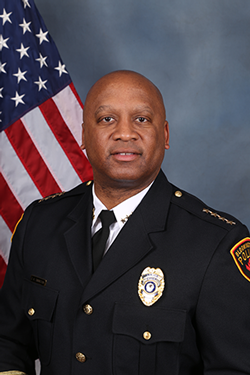
Simington
"The more trust (officers) have in the system that it won't harm their ability to serve in public safety, opens the door for them to be more realistic, to be more forthright, with whatever their struggles are in life and on the job," Simington said.
On top of the peer support officers, Bloomington police and the McLean County Sheriff's Office utilize an app, which allows all employees to see the peer support members, vetted clinicians and chaplains, with personal phone numbers to reach out.
In addition to helping law enforcement, these platforms are also available to the families of law enforcement, giving them the ability to reach out for help on behalf of themselves or their loved one.
The McLean County Sheriff's Office also added a gym in their facility about two years ago.
"(Exercise will) surely bleed into your mental health, too," Lane said.
On the horizon
In the Illinois State University Police Department, Lt. Jeff Klepec is initiating a new peer support program this summer as a part of his graduate program, in which he studies social work.
"This is something we have not had here at ISU. It gives officers an opportunity to seek help if they're having mental health issues, coping with various things in their lives. ... It provides them with an avenue more or less," Klepec said.
Though the program is in its beginning stages, Klepec said he has been researching and talking to colleagues from other departments — including Power, who helped lead the wellness unit at BPD — to get the program off the ground.
"We have an employee assistance program through the university, we have a health promotion and wellness program here at the university, so (we are) trying to encourage officers to participate," ISUPD Chief Aaron Woodruff said.
Bloomington and Normal police departments and the McLean County Sheriff's Office also offer an employee assistance program.
Retiring healthy
Local law enforcement officials said advocacy has led to more mental health resources and more attention on the prevalence of suicide among first responders and cops living short lives after retirement.
When bringing awareness and resources to mental health at Bloomington Police, Power and Assistant Chief Chad Wamsley said healthy retirements have been at the forefront of their program initiatives.
Wamsley, who is a fourth-generation officer, spoke about how he watched his father's and grandfather's wellness post-retirement from law enforcement.
"I've been really able to see the toll that this career did have on them," Wamsley said. "... You want to live the last portion of your life like the first portion was before you became a police officer. You don't want this job to affect it — and it's going to affect it at some point, don't get me wrong — but we want to keep that balance as close as possible from beginning to end so that you have that full life."
The ISUPD chief also talked about issues involving retirement.
"We in policing kind of get into this role, and we lose our own self identity and become, you know, 'I am a cop,' not 'I work as a cop,'" Woodruff said. "Unfortunately, it is such a tight environment that sometimes we lose that sense of self."
Woodruff said this can lead to overall wellness concerns.
Focus on wellness
Petrilli also discussed, what he calls, the "four pillars of wellness" — nutrition, exercise, sleep and stress management — all of which he said are not kept up with as their careers progress in law enforcement.
The Normal chief, who has taught officer wellness at a local, state and federal level with the FBI, said he has incorporated what he knows into the department's core values.

Normal Police Chief Steve Petrilli talks about gun violence on Tuesday, Jan. 28, 2025, at the Normal Police Department.
"My job as a chief is to hire healthy people and help them navigate this 20- to 30-year career," Petrilli said. "Because you get better employees that ultimately prove a better service. It's a win, win for the employee and the community."
Simington echoed his words, "We have to have a healthy officer, healthy dispatcher, in order for them to thrive and to be able to provide a high level of services to our community. That's our obligation. Our duty as an administration and as a city, we know it's important to keep our folks healthy."
Vitzthum and Klepec are a part of a group of local providers who aim to educate first responders about resources available to help them cope with their demanding, and sometimes traumatizing, careers.
In February, Vitzthum and Klepec were part of a group of providers who participated in an event aiming to spread mental health awareness in law enforcement, they welcomed first responders to share their experiences.
In a recent interview, Vitzthum said through her advocacy, she hopes to give perspective to first responders so they can better aid the communities in which they serve.
"Officers aren't just officers. They're partners, potentially. Maybe they're parents. They're certainly friends or a son or a daughter. There's a lot of different roles that we all play ... and being an officer is just one part of that," Vitzthum said.
Editor's note: Jeff Klepec, lieutenant for the ISU Police Department, is the father of reporter Kaitlyn Klepec.
Contact Kaitlyn Klepec at (309) 820-3345.