The Issue
Minority leaders are upset by a University of Arizona plan to consolidate six minority student centers on campus to save $1 million.
The centers provide mentoring, advising and life-skills support for black, Asian, Hispanic and American Indian students.
The merger would combine those four centers, the women's resource center and another program that supports lesbian, gay, bisexual and transgender students with the social-justice center.
UA officials say that on top of the budget savings, research shows that entering students no longer think of themselves in older racial terms, with many identifying themselves as multiracial.
But minority groups on campus say the change will rob students of individualized attention and decrease retention and graduation rates.
People are also reading…
Officials maintain that effective programs that help students stay in school will remain.
On Monday
Members of the Hispanic community met with UA President Robert Shelton and Melissa Vito, vice president of student affairs, asking that the plan to consolidate the centers be halted.
The meeting came in response to a letter from several Hispanics suggesting top UA officials aren't committed to minority students.
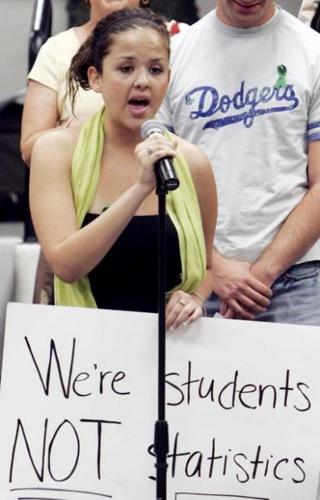
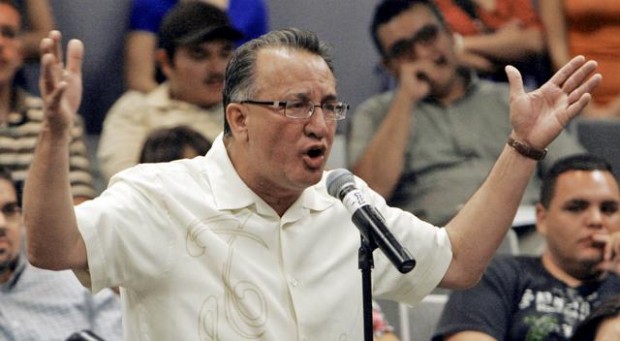
Most spoke passionately of keeping the centers, which they say constitute a home away from home on campus.
"It is a place where students can go and find their sanity amongst all this insanity at the university," said UA graduate student Lorenzo Gamboa, chair of the Mexican-American Student Association.
Others outlined their concerns of a possible decline in student retention as a result of the merger. "The center is the reason I stayed and was able to cope on campus," said student Michelle Rascon.
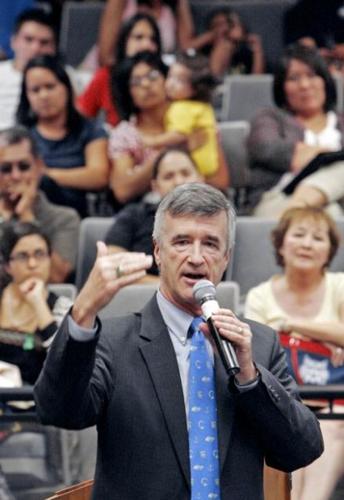
When asked if there was any way to keep the centers, Shelton responded, "I am not saying that there is no way to keep the center — that is what we are here to figure out."
All ideas and arguments will be taken into consideration, Shelton said.
"We need to absorb this, take it all in and figure out what path we should follow from this point forward," Shelton said.
What Now
This month will be used to meet with leaders of each group involved and collect data, said Vito.
"I want to make sure we got all the information we need and we're getting the input that we need to go forward in the best possible way," Vito said.
Unity among the different centers and figuring out what the next plan of action to keep the centers intact is necessary, said Gamboa.
"The only reason we have that center is because students in the '60s and '70s organized to get it," said UA graduate student Zotero Amavizca. "What kind of legacy do we (students) want to leave?"
Aaron Mackey and Stephen Ceasar