
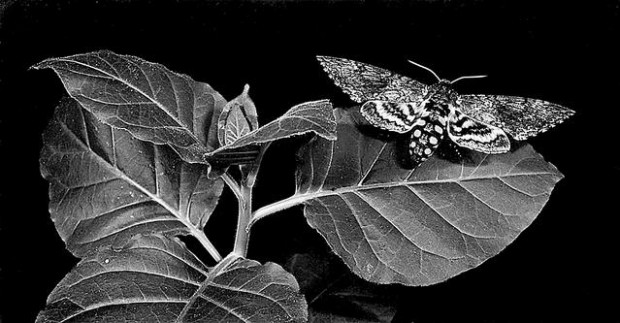
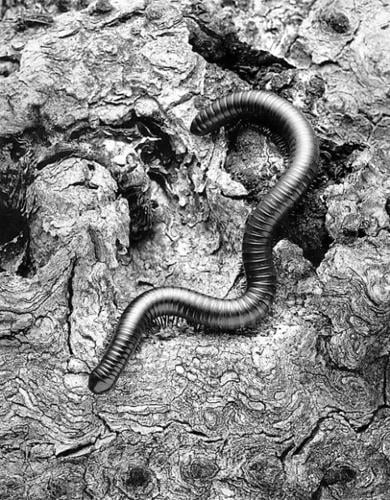
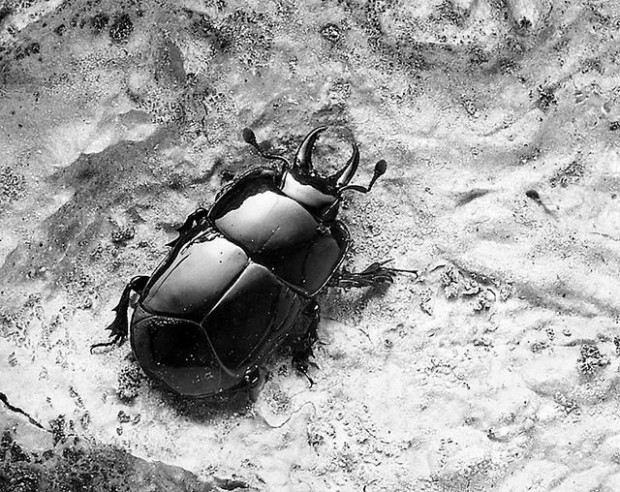
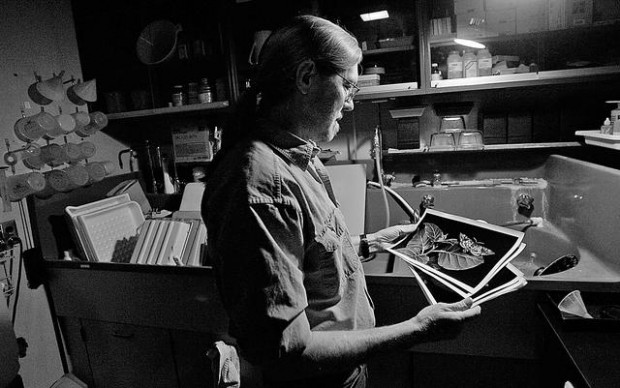
Photographer Charles Hedgcock's subjects are beautiful models in exoskeletal armor and patterned fuzz, not something you'd want to stomp into goo.
At least that's what he hopes to leave viewers feeling with his elegant, but stark, black-and-white studies of insects and the occasional handsome desert reptile.
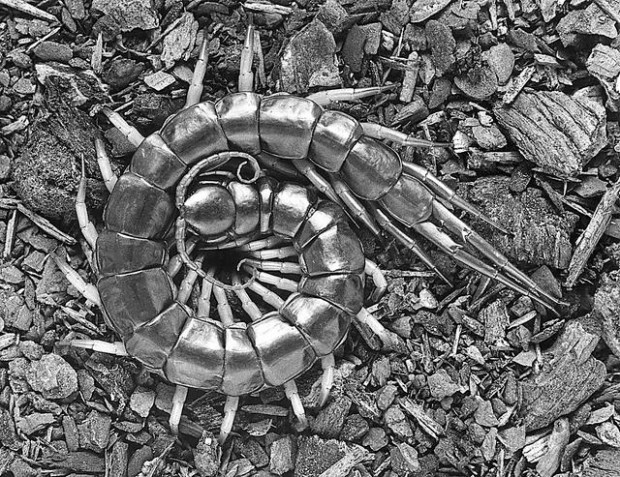
Hedgcock, it is clear, likes his subjects — big moths, industrious leaf cutter ants, millipedes large and small, shiny beetles and even, to a degree, poisonous centipedes. "I'm not squeamish about insects, but I've got to say centipedes creep me out."
There's something almost tender about the pictures he makes of what many screaming people consider hideous little monsters.
In some of his photos, the insects look almost metallic but never menacing. Not even the Vietnamese blue-legged centipede, which appears to be napping.
People are also reading…
He rarely works in color and doesn't make large prints, either, saying large prints in black and white, like color, would make his subjects "too fantastic, too weird for people."
"By making prints in black-and-white, they become more line, shape and form, more sculptural. I hope people will appreciate them for the wonderful little animals they are," he says.
"I'm really fond of the metallic look some of the animals get. The key is finding shiny animals," Hedgcock said.
A triptych of little black ants laying siege to a halved apple is playful. First there is the stark white apple face with seeds for eyes, then a few ants, and finally the apple's eyes "looking out" through a beard of ants.
His "Centipede" (Scolopendra subspinipes) is reminiscent of Edward Weston's "Chambered Nautilus — Halved."
He takes it as a great compliment that a photo magazine editor compared his work to Weston's.
"Chip is to bugs what Weston was to peppers," says the editor of LensWork, a photo magazine.
Some of the animals he photographs as art come to him through his profession. By job title, Hedgcock is a University of Arizona senior research specialist in the Division of Neurobiology at the Arizona Research Laboratories.
The Tucson native went from photo student at Palo Verde High School to Brooks Institute to study commercial photography. He returned to Tucson and worked as a photographer at the UA's University Medical Center, later moving to Arizona Research Laboratories.
His interest in photographing insects was a natural at the neurobiology unit, where researchers often use insects as they investigate the workings of the human brain and nervous system. Scientists there will tell you that insects' brains are not that different, in many ways, from humans' brains.
These days, Hedgcock is more often a webmaster than a master photographer, at least in his capacity at Arizona Research Laboratories. Much of his media work at the lab involves print publications or designing, building and maintaining Web sites for researchers.
Hedgcock's photos have been exhibited at the Oakland (Calif.) Zoo, the Los Angeles County Natural History Museum, Northeastern Nevada Museum in Elko, Nev.; Coyote Point Museum in San Mateo, Calif.; Discovery Museum in Bridgeport, Conn.; and El Mirador Gallery in Tucson.
On the web
Visit photographer Charles Hedgcock's Web site: www. charleshedgcock. com/
Check out the Arizona Research Laboratories' Web site: arl.arizona.edu/