The San Carlos Apache Tribe and two conservation groups are suing federal regulators over a proposed copper mine in a desert riparian area favored by endangered birds near Mammoth.
The lawsuit, filed Monday in U.S. District Court in Tucson, accuses the U.S. Fish and Wildlife Service and the Bureau of Land Management of ignoring the presence of endangered Mexican spotted owls in the project area when signing off on a Canadian mining company’s exploratory drilling campaign there.
The tribe was joined in the suit by the Tucson-based Center for Biological Diversity and the Mammoth-based Lower San Pedro Watershed Alliance.
“Federal officials knew that Mexican spotted owls were in the project area and still approved more than 1,300 acres of industrial drilling on our public lands,” said Russ McSpadden, Southwest conservation advocate for the Center for Biological Diversity. “We’re asking the court to stop this drilling and give these imperiled owls the protections they deserve and that the law requires.”
People are also reading…

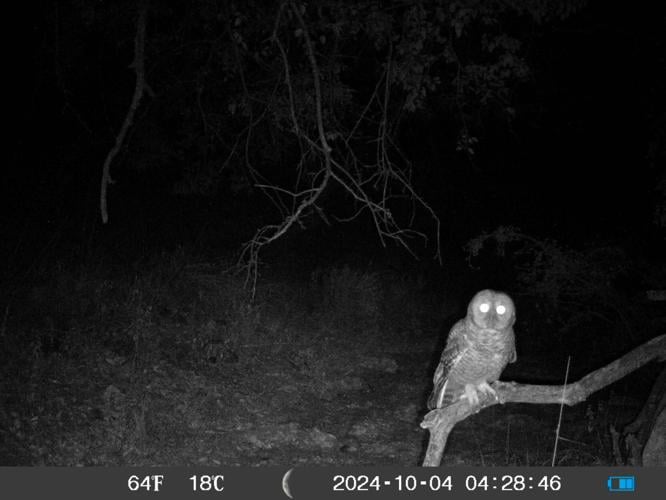
A remote wildlife camera image shows a Mexican spotted owl perched in the Copper Creek area in 2024.
The proposed Copper Creek Project by British Columbia-based Faraday Copper includes as many as six open pits and a massive, underground block-cave mining operation on roughly 25 square miles of public and private land in the Galiuro Mountains, about 55 miles northeast of Tucson.
Faraday has been cutting roads and clearing pads for its sampling drills, as it seeks to characterize what it has called “one of the largest undeveloped copper resources in North America,” with an estimated yield of 4.2 billion pounds of the metal.
The BLM approved the company’s plans for as many as 67 drill sites on federal land in July of 2025.
According to the lawsuit, that decision violated the Endangered Species Act.
“We provided trail camera photographs documenting Mexican spotted owls in the project area, but the agencies dismissed that evidence and approved the project anyway,” said Melissa Crytzer Fry, chairwoman for the Lower San Pedro Watershed Alliance. “This lawsuit seeks to stop further harm while ensuring these agencies finally follow the law.”

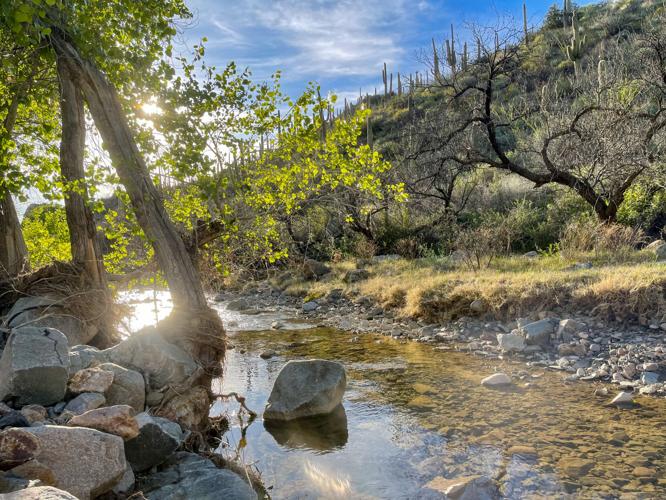
Bright green cottonwood trees grow along the waters of Copper Creek east of Mammoth in 2023.
The plaintiffs also accuse federal officials of failing to consult with the San Carlos Apaches as required under the National Historic Preservation Act, despite several attempts by the tribe to engage with the BLM.
“Copper Creek Canyon and the broader Galiuro Mountains are a vital part of the ancestral territory of the Apache people,” said San Carlos Apache Chairman Terry Rambler. “Once again, however, the Bureau of Land Management has failed to consult with the Tribe before allowing harmful activities that will degrade and destroy our cherished lands and the species occurring within them.”
The Mexican spotted owl has been listed as threatened since 1993, mostly due to logging and wildfires in its forest and canyonland habitat in the southwestern U.S. and northern Mexico.

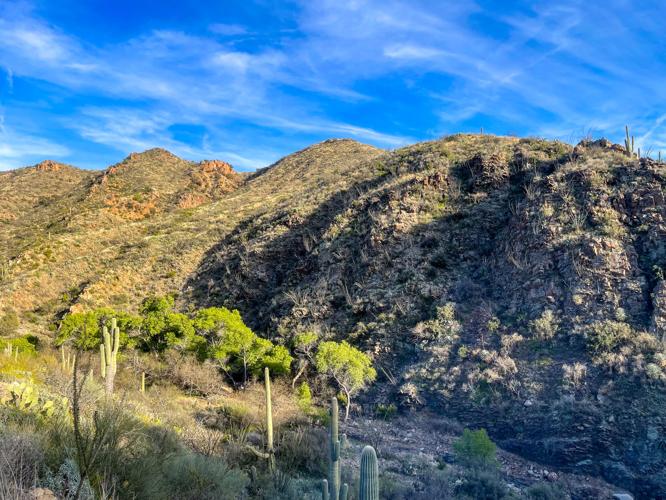
A photo from 2023 shows Copper Creek Canyon, in the Galiuro Mountains about 55 miles northeast of Tucson.
The nocturnal bird has a rounded face and distinctive, dark black eyes. It is one of the largest owl species in North America, standing at about a foot and a half tall with a wingspan of almost 4 feet.
Threatened yellow-billed cuckoos also have been documented in the riparian area created by Copper Creek, as have a host of other desert animals.
The BLM, the Fish and Wildlife Service and Faraday Copper all declined to comment on the litigation.
The mining company is not listed as a defendant in the lawsuit.
To build on its Copper Creek Project, Faraday entered into an agreement early last month to purchase the shuttered San Manuel Mine from Australia-based metals giant BHP.

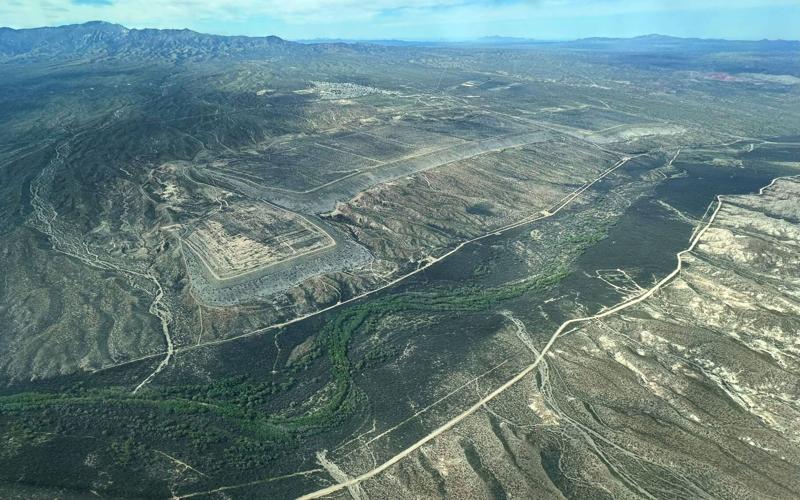
The San Pedro River snakes past tailings piles left over from the San Manuel Mine in an aerial photo taken March 4. The town of San Manuel can be seen in the background. British Columbia-based Faraday Copper is now exploring the possibility of reopening the mine in San Manuel, where previous operations shut down in 1999.

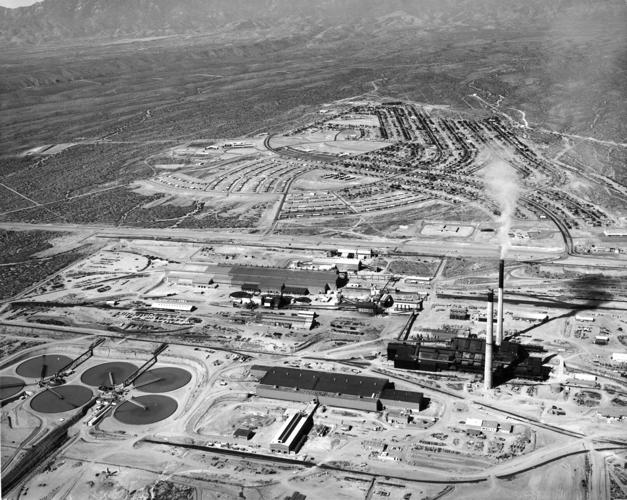
The crusher, concentrator and smelter at San Manuel as it looked in 1971, after a $200 million expansion of the facility. The smelter got a second smoke stack. In the background, the company town of San Manuel got another 200 houses.
The deal takes in about 27,000 acres surrounding the town of San Manuel, including the mine’s former pit and underground shafts, its tailings piles near the San Pedro River and the reclaimed property where its processing plant and smelter once stood.
Faraday plans to use some of the private land to support its proposed mining venture in the Galiuros, though officials for the company and BHP have said the purchase could lead to the eventual reopening of the San Manuel Mine as part of a new “a multi-generational copper district” in Pinal County.
More than 2,500 people lost their jobs when the mine ceased operations in 1999 and closed permanently in 2003, seven years after BHP acquired it.



 Female jaguar confirmed in Sonora near US border, researchers say