It was encouraging to look around the new Pima Family Advocacy Center in midtown Tucson at the celebration of its opening Friday.

Salazar
It has spaces for police interviews of victims, for social worker appointments, for legal consultations and other services. In the future, if they can raise the money, there will be a forensic medical suite where sexual assault victims can be examined.
It's a place eight years in the making that brings together services for people affected by domestic violence, sexual assault, human trafficking and elder abuse.
If only Julissa Salazar had ended up somewhere like it. The 19-year-old University of Arizona student was in a precarious moment and should have had the chance to get help from those who know about the kind of situation she was in, as an alleged victim of repeated domestic violence on the part of her U of A boyfriend.
People are also reading…
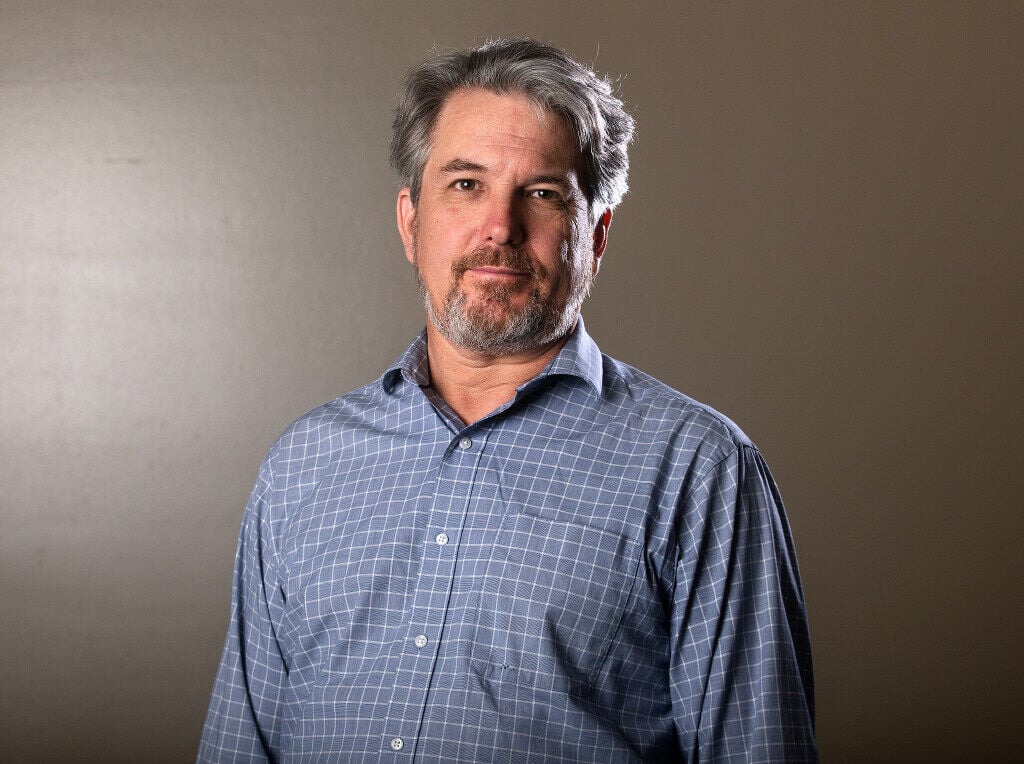
Arizona Daily Star columnist Tim Steller
Expertise and assistance abounds in Tucson, among local organizations and government agencies, as well as on campus, and some of it is now grouped at the family advocacy center.
It’s hard to avoid the feeling this was avoidable, that she should be alive. Julie, as she was known to friends and family, was even a peer mentor who cared about domestic-violence awareness and wanted to be a child psychologist, according to the family’s statement.
Apparently neither Salazar herself, nor her friends and roommates, reported that she had been victimized by her boyfriend last year, as alleged in a Tucson police affidavit. It appears that no one with the experience to grasp the significance heard that she had allegedly been strangled by him before, as stated in the affidavit, citing the accounts of friends and roommates. Nor did experienced people know that he had been kicked out of school and lost his job, which are flashing warning signs.
As a result, the Tucson systems in place, imperfect but able, did not kick into gear to help and protect her.
Boyfriend was to be kicked out
That boyfriend, Varun Batchigari, is accused of killing Salazar Aug. 5, the day she planned to kick him out of the home she shared with roommates. In fact, the affidavit specifies that, according to her roommates, Salazar was expecting him to leave by the time she got home from work at 5 p.m. that day, on her way to visit her mother in Yuma.
Another person, whose name is redacted in the affidavit, said they would come over if Batchigari was still there when Salazar got home and would call police. Apparently, Batchigari had not left. It was only an hour or so later that a roommate heard screams but texted Julissa and was told in a text response it was just an argument. That text may have been written by the person who had just killed her, using Julissa’s phone.
The next day, Batchigari, who came to Tucson as an international student from India, hopped on a flight from here to Houston, and another flight to Munich, on the way back to India, police said in the affidavit. But Pima County authorities got an arrest warrant, and U.S. and German authorities managed to coordinate while he was in the air and get him arrested when he landed in Munich.
It was an encouraging law enforcement performance.
“This detention demonstrates what is possible when law enforcement partners act with urgency, share information and work toward a common objective,” said United States Marshal for the District of Arizona Van Bayless, in a news release.
But it was, of course, too late to meet the most important challenge — protecting Salazar.
Leaving 'not necessarily a safe option'
It’s easy to look in from the outside, or use hindsight, and point out what should have happened. It’s a lot harder to be the person afraid of an angry boyfriend or spouse or partner.
“Many times … the fear that a victim has of what will happen if they report them is much greater than their trust that help will come if they report,” said Anna Harper, CEO of Emerge Center Against Domestic Abuse.
Kendrick Wilson, who heads the Pima County Attorney’s Office’s section on domestic violence, echoed Harper’s comments when I spoke with him at the family advocacy center.
“Sometimes reporting is not the safest thing to do,” he said. “We tend to assume that for survivors, leaving their abuser is something they should do. And that might be a good option for many of them. But it’s not necessarily a safe option.”
There are, though, able people on campus and off who can help in a dangerous situation, not just the police.
In the case of Batchigari, there were several strong warning signs, according to the Tucson police affidavit, court records and the University of Arizona. One is the alleged strangulation. Strangulation is a leading indicator of escalating violence and a warning sign of homicide.
Batchigari also is accused of getting into a fight outside the relationship. University of Arizona police cited him for an assault they said occurred on May 26. This charge led to the university expelling him July 22, which would likely have led to the cancellation of his visa and expulsion from the country. He had also lost his job, and that day, his girlfriend was kicking him out.
This sort of crisis can lead to worse violence for someone already predisposed to it, Harper said.
Reporting concerns critical
These are difficult situations for the victim and her friends and roommates, but the first call doesn’t have to be a 911 call to police. UA students have resources, including Survivor Support Services and the Threat Assessment and Management Team.
The team is a consortium of university officials and providers founded after the on-campus killing of Prof. Thomas Meixner, chair of the department of hydrology and atmospheric sciences, in 2022. It takes reports on a variety of behaviors to assess whether they amount to threats or danger. They don’t take emergency reports, which should go to 911.
“We exist to help with assessing risk and assessing threats, concerns that oftentimes may be a little vague to people,” said Jessie Semmann, the psychologist who directs the center. “We want people coming forward who aren’t sure if there is a safety threat or a concern.”
More apparent threats such as intimate partner violence and stalking also can be reported to the team, which will refer people to appropriate services.
Outside campus, Emerge has a full set of services, including emergency shelter. And now there’s the Pima Family Advocacy Center.
The situation leaves Harper questioning how to intervene even earlier, without someone like Salazar having to raise the alarm.
“I don’t think the burden should be on the victim alone to figure out how to get help,” she said. "There are probably creative ways as a community to think about how to intervene with people who are at risk of harming someone.”
Until then, though, we need people to report. To Emerge, to the Pima County Family Advocacy Center, to the U of A, to police. That’s the surest way to activate the help that’s out there.
Contact columnist Tim Steller at tsteller@tucson.com or 520-807-7789. On Bluesky: @timsteller.bsky.social

Tim Steller
Columnist


 Tim Steller’s column: Tucson voters trapped by misbehaving constable, candidate