As the Trump administration plows ahead with plans to wall off the southern border, a small army of scientists and amateur ecologists is busy cataloging the wide variety of wildlife found along both sides of the international boundary.
The two-month Border BioBlitz got underway at the beginning of April and has already racked up more than 22,000 observations of more than 2,700 different species — American crows to Mexican fan palms, sea lions to saguaros — at scattered locations from the Pacific Ocean to the Rio Grande.
During an overnight outing in Mexico last weekend, just south of the border from San Bernardino National Wildlife Refuge in Cochise County, a team of observers recorded dozens of different plants and animals, including butterflies, snakes, birds, a skunk, a raccoon and a bobcat.
People are also reading…
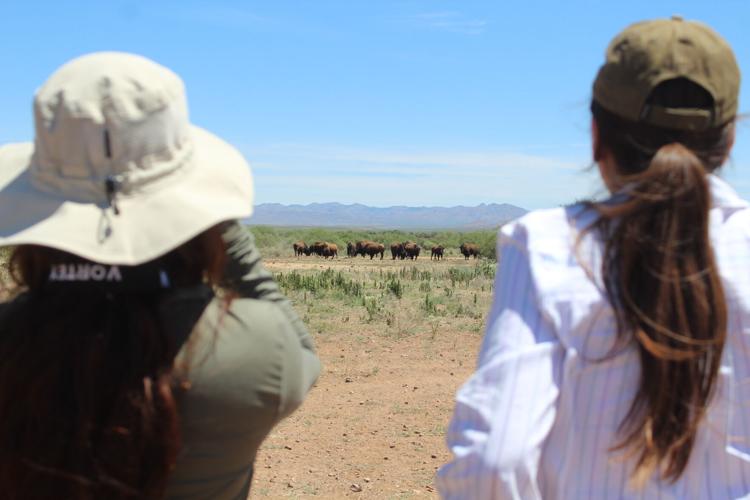
They even encountered a herd of American bison that was recently introduced to the 121,000-acre Cuenca los Ojos preserve in northern Sonora.

Border BioBlitz participants watch a herd of bison at the Cuenca Los Ojos preserve in northern Sonora on April 24.
“There's a general perception, I believe, that the borderlands is this area between two countries that’s dangerous and there's not a lot there. It's a site that needs to be divided or can be divided,” said Tucson ecologist Ben Wilder. “But I would challenge anyone to draw a line on a map that bisects a more diverse number of ecosystems and habitats. I mean, as you go east to west, you're crossing almost every type of ecosystem that occurs in North America.”
Wilder is director of the Next Generation of Sonoran Desert Researchers, a multinational community of scientists he helped found in 2012. Known as N-Gen for short, the group organizes the annual bioblitz with two partners from Southern California: Oceanside-based Botanical Community Development Initiatives and the San Diego Natural History Museum.
This year’s edition of the annual border biodiversity assessment is being conducted with the help of hundreds of individuals and more than 40 organizations in the U.S. and Mexico.

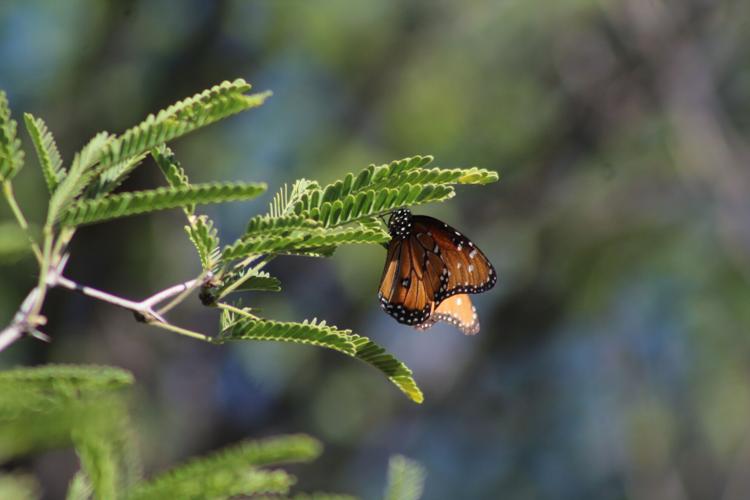
A queen butterfly hangs from a mesquite tree in a photo taken in northern Sonora on April 24 during the Border BioBlitz.
With a few notable exceptions, the blitz is confined to within 15 kilometers — or a little over 9 miles — of the southern border. But when stretched out across almost 2,000 miles, that relatively narrow strip of land crosses through a surprising array of habitats, including seashores, coastal scrublands, riparian corridors, grasslands, spring-fed desert oases, sky island forests of oak and pine, and bone-dry dune fields dotted with the husks of volcanoes.
“It's really an area that's filled with remarkable biodiversity,” Wilder said.
And pretty much anyone can contribute to the ongoing effort to document that diversity. All it takes is access to the borderlands and the ability to log on to the popular online citizen science platform iNaturalist to record plant and animal observations.
Deeper 'division'
The bioblitz was launched in 2018 in response to what Wilder called the “very active, aggressive lead-up to building the wall” during the first Trump administration.
“That issue is just so central to everything we do,” he said. “The whole focus of Next-Gen is creating linkages across borders.”
They considered writing a position paper in opposition to the proposed border barriers, but Wilder said they decided to lean into what they do best instead: a multinational, science-based collaboration aimed at bringing people together to highlight and celebrate the natural richness of the borderlands.

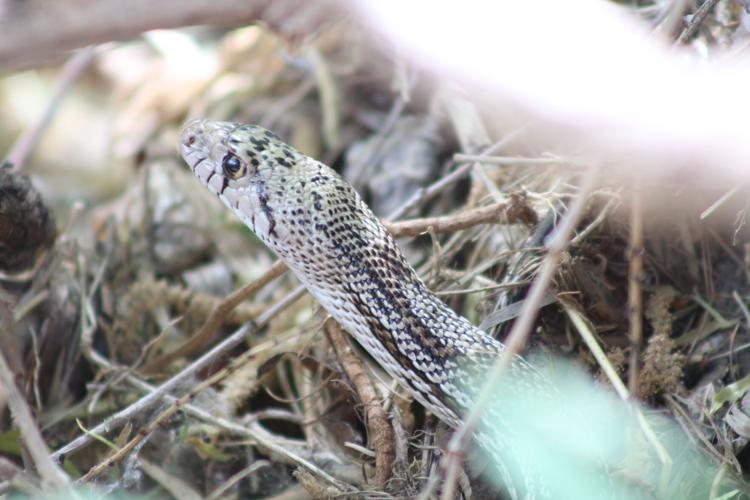
A gopher snake slithers through the brush — and gets counted as part of this year's Border BioBlitz — in northern Sonora on April 25.
Since then, the yearly campaign has amassed over 143,000 observations and 6,600 species on both sides of the border. Some 3,051 different plants and animals were recorded in 2025 alone, including 216 threatened and endangered species such as American black bear, Western burrowing owl, lowland leopard frog and Chihuahuan mountain kingsnake.
Now the borderland and its wildlife are facing a new obstacle from the Trump administration: a $46.6 billion plan to rush construction of two parallel walls across the entire southern border.
Wilder said the double-wall proposal will only result in “further scarring, further division and further impediments to the natural flow of biodiversity and waters and cultures in this region.”
As recently as last week, U.S. Customs and Border Protection’s interactive online “Smart Wall Map” showed secondary barriers planned for almost all of Arizona’s 373-mile boundary with Mexico. The immediate status of those plans is unclear. The agency recently removed the map from its website without explanation, amid growing opposition to the proposed border wall through the Big Bend region of Texas.

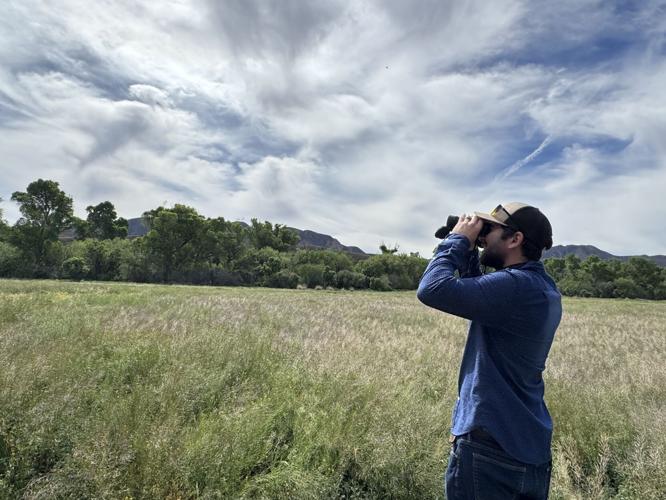
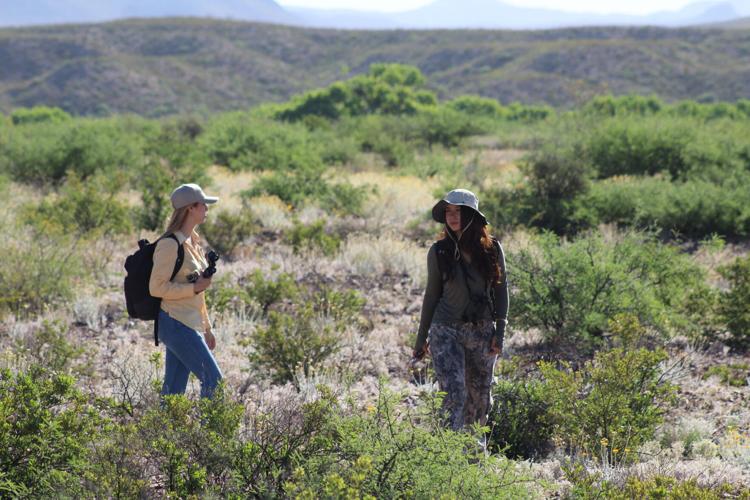
A Border BioBlitz participant scans the landscape near Patagonia on April 4.
In a written statement to the Star on Friday, CPB said: “The smart wall interactive map is being updated and will go live again shortly. Due to the ongoing DHS shutdown and the resulting strain on resources, some updates may take slightly longer than usual.”
As far as Wilder is concerned, the underlying purpose of the bioblitz has never been more important.
“This is a really hard time for those of us that value the biocultural diversity of the borderlands,” he said. “That we’re able to create this event that is so celebratory in the face of such destruction I think is really meaningful.”
Rare wanderers
This year’s bioblitz is unfolding amid a flurry of news about rare borderlands wildlife.
In March, the Phoenix Zoo and the Tucson-based conservation group Sky Island Alliance published a study documenting the movements of a male ocelot that was caught on camera in four different Arizona mountain ranges between June 2024 and July 2025.

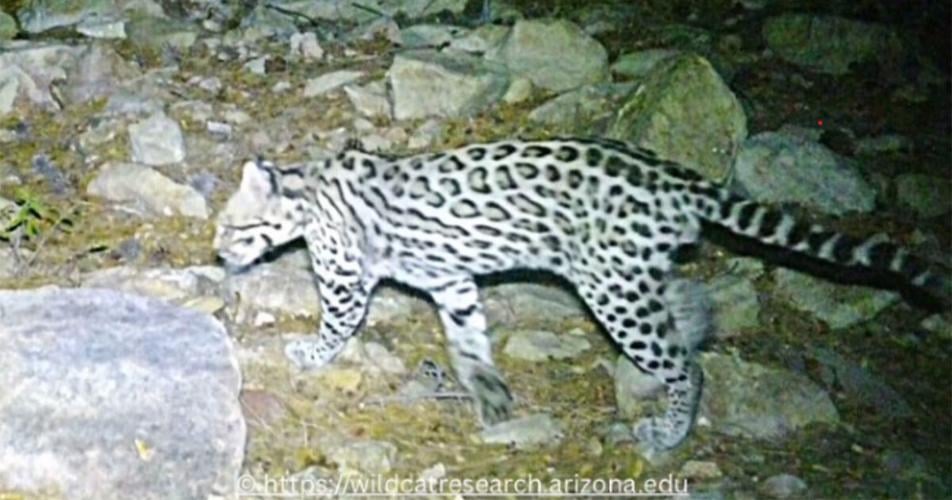
A well-traveled ocelot nicknamed Himdam, O'odham for Traveler, walks past a motion-activated trail camera in the Santa Rita Mountains south of Tucson in March 2025.
The spotted cat most likely from Mexico was recently nicknamed “Himdam” — or “Wanderer” in English — by students in the San Xavier District of the Tohono O’odham Nation, and why not? His 13-month trek through the Atascosa Highlands, Whetstone Mountains, Patagonia Mountains and Santa Rita Mountains covered at least 111 miles and took him across Interstate 19 and two state highways.
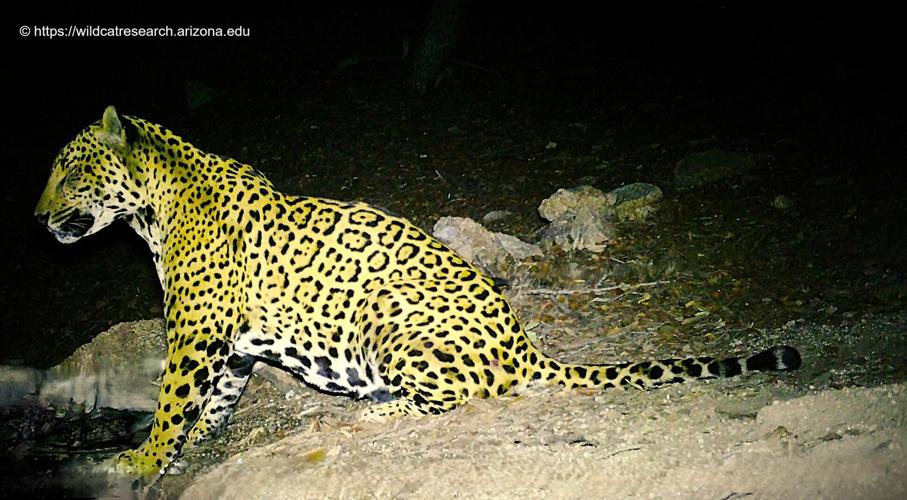
Meanwhile, the University of Arizona Wild Cat Research and Conservation Center is reporting new sightings of Cinco, a jaguar first caught on camera in Southern Arizona in November 2025. The most recent images were captured on March 27 at an undisclosed location where the endangered cat was documented before, suggesting the animal has taken up residence in the area.
“This is not random movement,” said researcher Susan Malusa, director of the center. “This is a pattern, one that reflects a functioning landscape.”

In a remote-camera image captured in March, a jaguar nicknamed Cinco revisits a Southern Arizona water source where it has been documented before, suggesting the endangered cat has taken up residence in the area.
Cinco is the fifth different jaguar to be recorded in the U.S. since 2011 and the second since 2023.
And on Thursday, conservation advocates announced that an endangered Mexican gray wolf wearing a radio-tracking collar had crossed on his own from the U.S. into Mexico through one of the last remaining stretches of unwalled border in New Mexico’s remote Bootheel.
According to Western Watersheds Project and Tucson’s own Center for Biological Diversity, the international journey last month by the male wolf nicknamed Cedar marked the first such border crossing in decades.
“His adventures highlight the need to maintain connectivity between the United States and Mexican populations of lobos and the need for all of us to push back on the devastating plans of the current administration to cut the North American continent in half with more border walls and barriers,” said Cyndi Tuell, the Arizona and New Mexico director for Western Watersheds Project.
Added Michael Robinson, a senior conservation advocate for the Center for Biological Diversity: “Cedar could be the last lobo to truly roam freely if Trump completes his destructive border wall.”
Growth potential
There is a chance that one of those rare creatures could soon be counted in the Border Bioblitz for the first time.
Sky Island Alliance is one of their long-time partners, Wilder said, and this year they plan to supplement the blitz’s results with any footage the conservation group collects with its extensive remote-camera network in April and May. “It’s possible some of that footage may include jaguar or ocelot,” he said.
Wilder already did his part for the bioblitz in mid-April, when he traveled with his wife and son to a place near Ensenada, Mexico, to help catalog wildlife across an intact swath of coastal chaparral at the edge of Valle de Guadalupe, northern Baja’s popular winemaking and tourism destination.

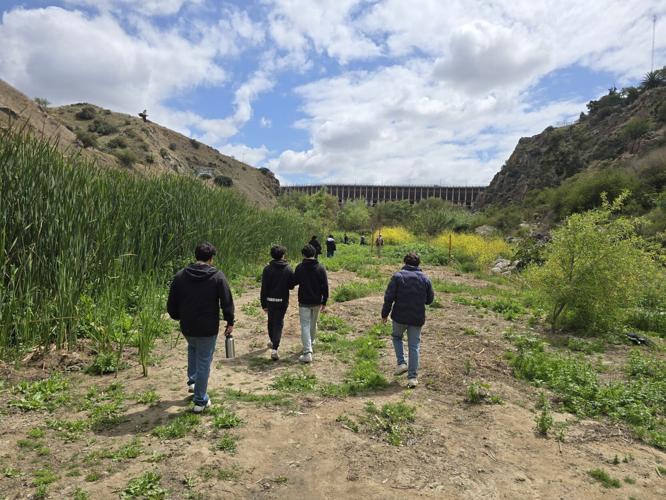
Participants in Baja California, Mexico, walk toward to the border wall near the Tijuana River during the 2025 Border BioBlitz.
He said the multi-day outing was organized by two students in the Ensenada area and drew more than 70 participants, including several subject-area experts in local ecology. The students are hoping that documenting the biodiversity there will bolster efforts to set aside some chaparral for conservation, Wilder said.
The area is a lot more than 15 km from the border, but it was included in the blitz to “engage coastal habitats that run along the Pacific,” he said. “It's really cool because it incorporates a marine area, so it's extending the definition of a shared boundary along the Pacific coast.”
To survey that so-called “marine node,” participants went out on a whale-watching boat last month to document sea life off the coast of San Diego, and there are plans to explore even farther from shore in another vessel in the coming weeks.
The Border BioBlitz includes similar outlying areas along the northern coast of the Gulf of California, and even a few islands off the eastern shore of the Baja Peninsula.

Participants in the 2026 Border BioBlitz walk through the brush at the Cuenca Los Ojos preserve in northern Sonora, just across the border from San Bernardino National Wildlife Refuge, on April 24.
Though the effort is now in its ninth year, Wilder said they still haven’t been collecting data long enough or in a sufficiently targeted way to draw any conclusions about how border wall construction might be impacting wildlife populations on either side. But they do hope to be able to do that one day, he said. “That's the next phase, to really dig deeper and try to see what may exist within the data.”
Wilder is also hoping to secure some additional funding to bring on a coordinator for future blitzes, particularly in Arizona and Northern Sonora, where they hope to see the annual event added to the field-trip schedule and the science curriculum at schools in the area.
“One of the things I love about it is it's really exponential in its growth capacity. The model allows for every school in the borderlands and every class to go out and participate,” Wilder said. “There's no limit in terms of the amount of data and participation that we can have on this.”



 Second wall planned across Arizona as Trump administration doubles down on border