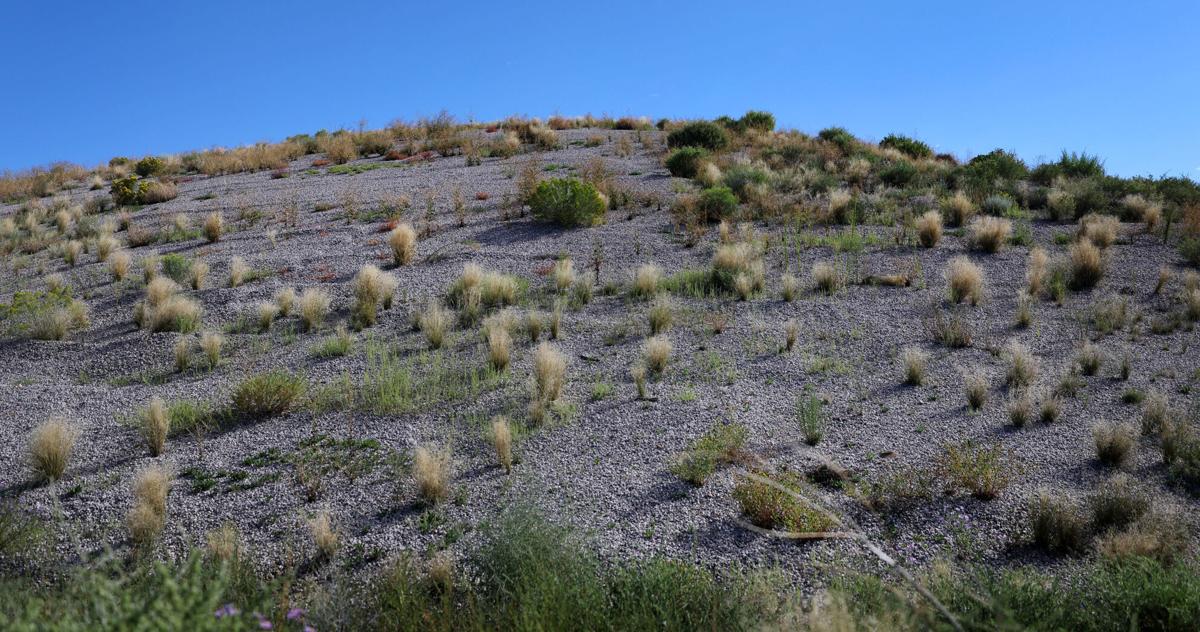
Many Navajos have incorporated the tragic legacy of uranium mining into their philosophy.
They believe that the heavy metal was in the earth as a guardian to prevent harm.
But once it was disturbed and extracted, its powers were turned on the people — a perversion of “hozho,” the foundational Navajo concept of balance and harmony with nature.
Hozho encompasses a philosophy of wellness and self-determination through thoughtful decision-making, bridging the spiritual, environmental and physical.
But uranium is disrupting that wellness, and many Navajos face long odds to be able to “walk in beauty.”
Staggering list of diseases
The facts are stark and undeniable: Exposure to uranium and other metals in mine waste significantly increases risks of a staggering list of chronic diseases.
People are also reading…
Important research on the Navajo Nation over the past three decades has documented just how long that list is:
Chronic kidney disease. Cardiovascular diseases. Autoimmune diseases. A combination of metabolic diseases, including diabetes.

While the miners didn’t know anything about the unseen dangers of uranium mining, the mining companies certainly did.
Always, the threat of cancer looms.
Then there is perhaps the most difficult health concern of all: the mental strain of living with all of those risks every day -- of seeing a gigantic pile of poison next to where you live or work. It's the realization that the dust on the wind can be toxic and that the water from hundreds of sources across those tribal lands is contaminated.
Such has been life across the Navajo Nation for decades.
But it’s impossible to overstate the value of the health science conducted on the Navajo Nation over that time.
Even as there has been negligible progress on a permanent cleanup to remove the health threat, there has been enormous progress on research to understand its dimensions -- and, perhaps equally important, to make the Navajo population aware of the risks and ways to minimize them.
Partnerships for a solution
Much of this work has been the product of partnerships led by the University of New Mexico, with a multidisciplinary team of academics and other organizations, including the Southwest Research and Information Center, affected communities and Navajo Nation Department of Health.
Work has been funded through the National Institutes of Health and the Centers for Disease Control, often with collaboration of colleagues from Indian Health Service and other federal and state agencies.
Of the 523 abandoned uranium sites on and adjacent to the Navajo Nation, the Environmental Protection Agency says that 14 percent of them have people living within a quarter of a mile. That’s 73 sites where contaminated uranium mining waste is in close proximity to residents. Many more sites are encountered frequently.
Living among danger
Studies in recent years have shown that proximity to mine waste sites means significant increases in risk of chronic kidney disease, high blood pressure and an increase in antinuclear antibodies, which are potential markers of immune dysfunction such as autoimmune disease. Such markers of autoimmunity are significantly elevated in women.
Dr. Johnnye Lewis, now an emerita professor at the University of New Mexico College of Pharmacy and founder of the Community Environmental Health Program, has been at the forefront of much of this research for more than 25 years.
She started working with Navajos as a consultant for the Department of Energy Uranium Mill Tailings Remedial Action, developing methods for assessing health risks from uranium exposure in tribal populations.

Dr. Johnnye Lewis, professor emerita at the University of New Mexico
As she learned more about the communities and what they faced, and when representatives of 20 chapters in the eastern part of the Navajo Nation asked her to work with them to understand the health effects of uranium mine waste exposures, research with tribes became much of her life’s work.
Three major study initiatives have produced and are continuing to produce voluminous data on metals exposure and health:
• The Navajo Birth Cohort Study, started in 2010 and continuing: The goal of the study is to gather data on how uranium exposures affect birth outcomes and development through the lifespan.
• The DiNEH project, a study conducted in the eastern region of the Navajo Nation from 2002-2012, examined the relationship of uranium in drinking water to kidney disease, and the multi-pathway exposures (dust, soil, water) to metals in mine waste and the incidence of chronic disease in general.
• The METALS Superfund Research Program (Metals Exposure and Toxicity Assessment on Tribal Lands in the Southwest), works with four indigenous communities — three Navajo areas impacted by uranium mining and Laguna Pueblo, which includes the 8,000-acre Jackpile open-pit abandoned uranium mine, once the largest such mine in the world.
Since 2016, the Navajo Birth Cohort Study has been a part of a much larger National Institutes of Health program, ECHO (Environmental Influences on Child Health Outcomes), which brings cohorts from across the nation together for comparative study.
The Navajo Birth Cohort Study includes more than 1,000 mother-child pairs, recruited during the mothers’ pregnancies. Since 2013, mothers have had baseline health assessments and children have been assessed at birth and annually. Recruitment continues, and the work is funded through age 18 of the oldest children in the study.
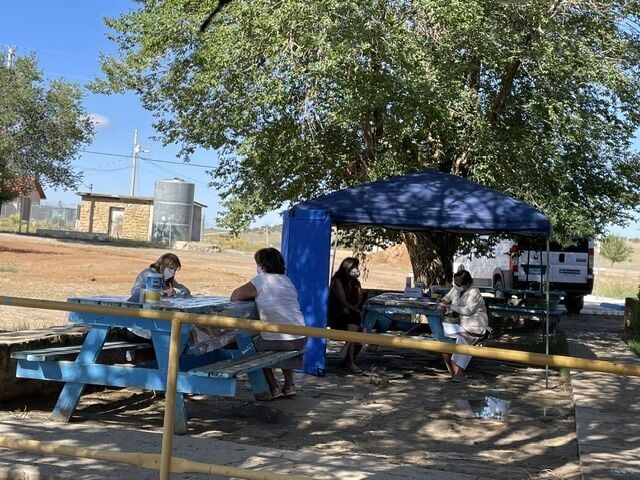
The METALS program conducted outreach sessions on the Navajo Nation after the Covid shutdown to work on a dietary clinical trial in 2021.
“This work allows for the collection of a much broader data set, with solid comparison to lots of populations around the country,” Lewis says. “We can really look at these developmental trajectories. We have a much clearer picture of childhood development.”
The study has exposed a significant fact: In some infants with uranium-exposed mothers, the metal crossed the placental barrier, as evidenced by uranium in newborns’ urine -- previously not thought to be possible. In some, the levels were greater than found in 95 percent of U.S. adults. (“A tremendous shock,” said Lewis.)
The oldest child currently in the cohort is 13. Much more data must still be analyzed. One of the most important aspects of the study is seeing the way that uranium has bioaccumulated in some study subjects. “Because exposures are ongoing, the amount of uranium over the first five years of life has continued to increase,” Lewis says.
The METALS research began in 2014. Funded by the National Institutes of Health's Institute of Environmental Health Sciences, it is studying the Cameron, Blue Gap/Tachee and Red Water Pond Road communities as well as Laguna Pueblo.
Research has advanced to the point of providing new, surprising insights into the various exposure pathways and the onset of chronic disease – not just from uranium but from a combination of metals in the waste material.
“For a long time it’s been known that cells lining the gut control central immune function,” Lewis says. “We’re seeing fundamental changes … that could underlie a lot of other things, like immune dysfunction,” she adds. “We’re starting to put things together. It’s not just a straightforward toxicity issue, it’s much more complicated. The more you dig, the more fundamental changes you see.”
She adds that such changes could create multiple issues in the same patient – chronic kidney disease, diabetes, cardiovascular problems.
“We’re beginning to see patterns within constant low-level exposures,” she said. “From one point to the next, the different metals spike at different times. Instead of a steady path it’s multiple episodic changes – differently timed spikes and valleys of different metals leading to changes in the mixtures and doses over time.

Almost 40 years after mining stopped and about 20 years after a sustained multiagency cleanup initiative began, almost no actual cleaning has occurred.
“We’re gaining a better understanding. The metals don’t all move together,” she said. “That could be due to something meteorological — exposure from wind — or differences in behavior and activities that lead to differences in exposures over time.”
Lewis added, “We know more now about how metals have worn down to nanoparticle size over time, and those nanoparticles ride on clays in the soil. How nano-sized particles are handled in the body once inhaled becomes another question.”
The original DINeH Project provided valuable insights into best practices for community-based research.
In order for participation to be robust and answers accurate, health surveys have a major hurdle in the Navajo Nation: They must be culturally sensitive and therefore acceptable to most respondents. “We knew we had to ask questions is a way that people felt comfortable giving us answers,” Lewis said. “We worked together with the communities on how questions were worded.”
But the scientists found that communities’ overriding concern was getting valid scientific answers to their health questions.
She said scientists had been told not to take biological samples because it was a cultural taboo, but people told us, “We want this to be strong science that will be accepted, and if you need samples to do that, you should take them.”
Cultural realities have limited one key aspect of health research.
“We have not done research about exposure and cancer because of cultural concerns,” Lewis said. “We’ve learned that in indigenous cultures, cancer is something you don’t talk about. There is a belief that when you talk about things, you let them into your life.”
“We are confident in the quality of our data,” she says, “because we respect such cultural concerns.”
Another roadblock to cancer research, says Chris Shuey of the Southwest Research and Information Center, is that “most tumor registries won’t release data down to the county level or even the tribal level because of fear of disclosing confidential health information.”
All of the studies have been created out of deep concern in the communities about exposure and health effects. One benefit is that the process has involved training community health workers, providing lasting local benefits. Some of the indigenous staff have worked with the projects for more than 20 years, helping to build the strong trust with communities necessary to accomplish goals.
Also, having such clear clinical evidence of the dangers of living close to waste sites provides information for the EPA, Navajo Nation EPA and other agencies to consider when making decisions about how to prioritize site cleanups.
Awareness has grown not just among Navajo communities but in the public health community as a whole. Shuey remembers attending a National Institute for Environmental Health Sciences meeting. “It was, I don’t know, like 2005 or something, and during the course of the meeting we were talking about uranium mines and exposure, and they were looking at us like we were crazy.” Exposure to uranium, up to that point, had been viewed by most people in public health as an occupational hazard — you had to work with the stuff to risk being exposed. But now, Shuey says, the scientific community recognizes that it’s an environmental problem, not just an occupational problem.
Nevertheless, as people like Shuey and Lewis who have worked in this field for decades understand, despite all of the great research and the community work, the core risk remains. Because the contaminated soil remains. And as more years pass with the hazards still in place, community awareness risks running into resignation or fatalism.
“These communities have been trying to get something done for decades,” Lewis said. “Nothing basically has happened until now, and that makes people suspicious. I would probably feel exactly the same way.”
So her overriding goal has been to provide communities the tools they need to make sure their health is as protected as possible.
“Communities need data to decide what’s best going forward,” she said.
In the meantime — and the meantime in this situation is a long, long time — the research continues.