DETROIT — The once-blighted monolithic Michigan Central train station — for decades a symbol of Detroit’s decline — has new life following a massive six-year, multimillion-dollar renovation to create a hub for mobility projects in the rebirth of the Motor City.
The hulking, scavenger-ravaged structure that ominously shadowed the city's Corktown neighborhood is now home to Ford Motor Co. and the centerpiece of a sprawling 30-acre mobility innovation district.
The building's first tenant, Google’s Code Next Detroit computer science education program, is expected to move in by late June. Grand opening ceremonies include an outdoor concert on Thursday, with tours for the public starting Friday.

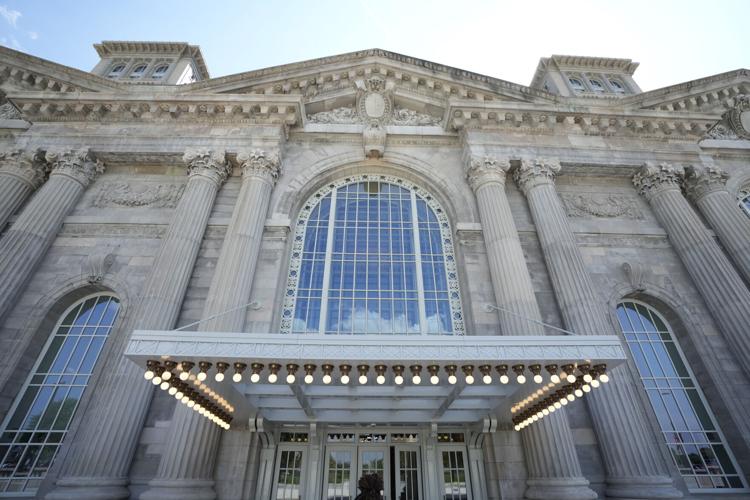
The entrance to Michigan Central Station is seen May 13 in Detroit. The once scavenger-ravaged monolith that symbolized Detroit's decline reopens this week after a massive six-year, multimillion-dollar renovation by Ford Motor Co.
“The train station … it is perhaps the most powerful story in Michigan of the power of historic renovation,” Detroit Regional Chamber President and Chief Executive Sandy Baruah said. “To turn something that was blight into something that is hugely attractive and is an anchor as opposed to a deficit is huge.”
People are also reading…
The restoration effort — part of the automaker’s more than $900 million project to create a place where new transportation and mobility ideas are nurtured and developed — was just as massive as the size of the more than century-old, 500,000-square-foot building.

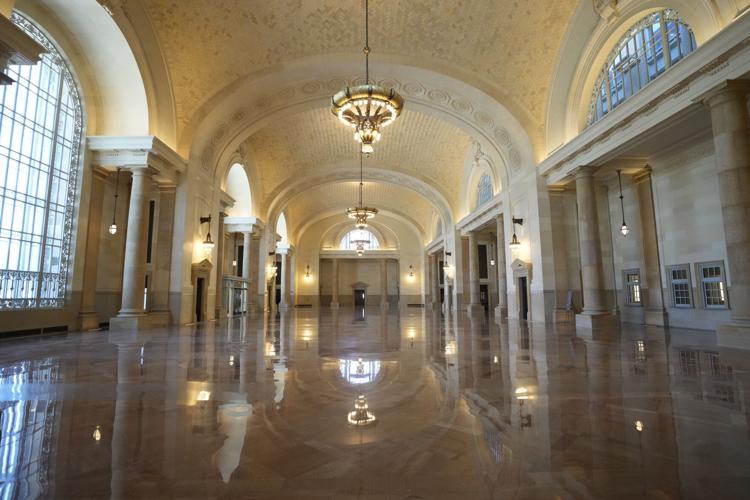
The newly renovated interior of the Michigan Central Station is seen May 13 in Detroit. The project is expected to bring with it thousands of tech-related jobs. Restaurants, new hotels and other service-industry businesses already are moving into and near Corktown.
In numbers:
- More than 3,100 workers spent about 1.7 million hours of labor on the station and its surrounding public spaces.
- 29,000 Gustavino tiles were restored in its Grand Hall.
- 8.6 million miles of new grout was laid across the 21,000-square-foot ceiling.
- 8 million bricks, 23,000 square feet of marble flooring and 90,000 square feet of decorative plaster were restored or replicated.
- 3.5 million gallons of water was pumped from the basement.
- Installation of 300 miles of electrical cable and wiring and 5.6 miles of plumbing.
“It was always my hope that this project would be a catalyst for moving the city and our industry together into the future,” Bill Ford, the automaker’s executive chair and great-grandson of its legendary founder, Henry Ford, told The Associated Press last week. “It’s always the future. We’re just getting started, now. Took a long time for us to get here and a lot of hard work and a lot of blood, sweat and tears to get to this point.”
The train station’s history reflects the city's fortunes during its heyday as the world's car capital and later misfortunes as thousands of auto workers and other residents fled Detroit for life in the suburbs.

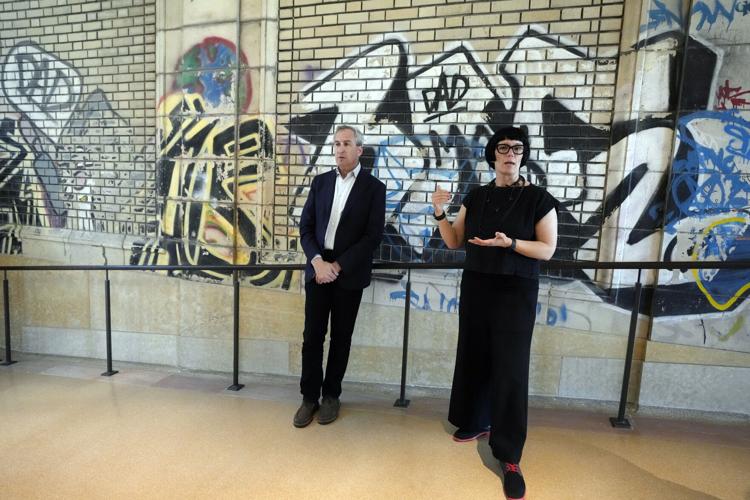
Michigan Central Station Head of Place Melissa Dittmer, right, and CEO Josh Sirefman give a tour of the train station May 13 in Detroit. The train station's history reflects the city's fortunes during its heyday as the world's car capital and later misfortunes as thousands fled.
Michigan Central Railroad started purchasing land around 1908 in Corktown, the city's oldest neighborhood, for the new train station, according to HistoricDetroit.org. The depot opened in late 1913. But as traveling by train gave way to commuter air travel and as more Americans chose to use the nation's interstates, the numbers of people coming through Michigan Central steadily dropped.
The last train pulled out in 1988 and for years after the building fell into disrepair, neglect and abandonment. It became a destination for the curious and urban adventurers seeking out such places. Other buildings in Detroit, particularly factories, suffered the same or similar fate, but due to Michigan Central's size it became a symbol of the city's decline.
Redevelopment by its former owner never materialized. Then in 2018, Ford announced it was buying the 18-story building and adjacent structures as part of its plans for a more than 1 million square foot campus focusing on autonomous vehicles.
“There's a lot of innovation going on here,” said Jim Farley, Ford chief executive. "Very much the future of the company is going to be housed here and on the campus. It represents our future revenues."

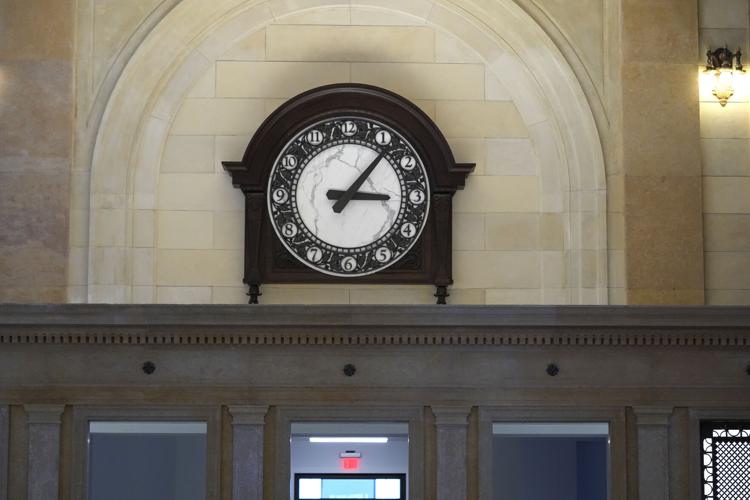
A newly crafted clock hangs above the former ticket windows May 13 at the century-old, 500,000-square-foot Michigan Central Station in Detroit.
The project is expected to bring with it thousands of tech-related jobs. Restaurants, new hotels and other service-industry businesses already are moving into and near Corktown.
In December, state officials announced three proposed housing development efforts intended to meet housing needs around Michigan Central and the innovation district.
Michigan Central and several other efforts around Detroit are expected to accelerate southeastern Michigan’s innovation economy, said Baruah, who added that the building and the surrounding campus will help draw the best and most innovative minds to the area.
“It's really an attraction play. It's about talent,” he said.
The reopening of the train station also comes as Detroit apparently has turned the corner from national joke to national attraction. Nearly a decade from exiting its embarrassing bankruptcy, the motor city has stabilized its finances, improved city services, staunched the population losses that saw more than a million people leave since the 1950s, and made inroads in cleaning up blight across its 139 square miles.

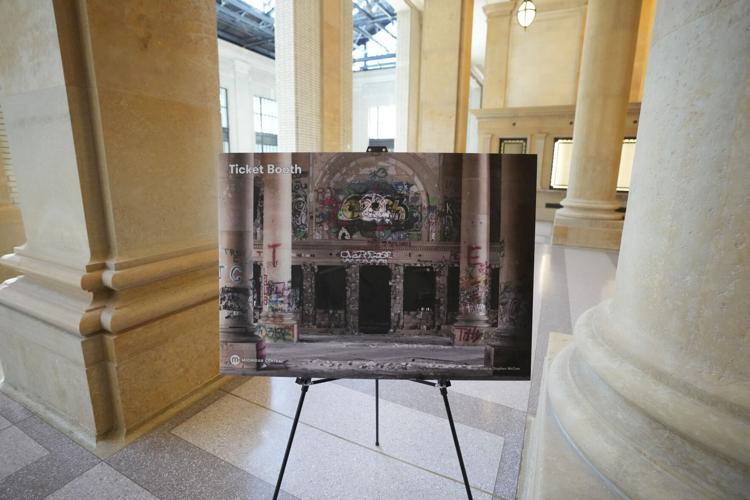
A photograph showing the scavenger-ravaged ticket booth area is displayed May 13 at the Michigan Central Station in Detroit.
Detroit now is a destination for conventions and meetings. Last month, Detroit set an attendance record for the NFL draft after more than 775,000 fans poured into downtown last month for the three-day event.
The buzz about Detroit “is very different nationally,” Bill Ford said.
The significance of Michigan Central's rebirth is not lost on Mayor Mike Duggan, whose administration has guided Detroit back to respectability since the city's 2014 exit from the largest municipal bankruptcy in U.S. history.
“I’ve been waiting 40 years for this day and so have all long-time to Detroiters, so it’s going to be very special," Duggan said last week. "It’ll be a very emotional day.”