The following is the opinion and analysis of the writer:
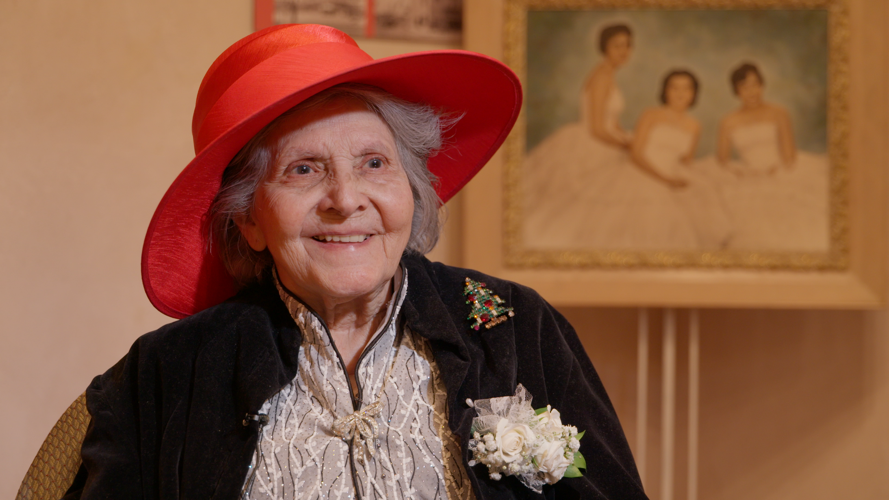
Alva Bustamante Torres, who championed Tucson’s Mexican-American history and culture beginning in the late 1960s in opposition to the City of Tucson’s eradication of the old downtown barrio, and as a newspaper columnist chronicled Tucson’s Mexican-American community, died peacefully Sunday in her home surrounded by family. The Tucson native who proudly called herself a “Tucsonense” was 94.
While her preservation efforts against urban renewal — the City’s displacement of hundreds of families in the ethnically diverse barrio to make room for the Tucson Convention Center — did not save the barrio from the bulldozers, she dramatically increased public awareness of the importance of retaining and celebrating Mexican-American contributions to Tucson’s history.

Alva Bustamante Torres, 94, fought to preserve Tucson’s Mexican-American heritage, championed immigrant rights and inspired generations to protect the city’s history and culture.
This led Tucson to establish a city commission to focus on historical preservation, which evolved into the Tucson-Pima County Historical Commission. Torres served on both bodies. In addition, her pioneering work laid the groundwork for the creation of the City’s Historic Preservation Office, and adoption of historical zoning and regulations.
People are also reading…
Betty J. Villegas, a longtime historical preservationist and friend of Torres, said her mentor inspired generations of Tucsonenses to elevate the histories of their families and communities.
“Alva’s greatest legacy is the influence she had on so many of us. She was a mentor, a teacher and an example to people throughout our community. She understood that preserving our heritage meant more than saving places. It meant passing our stories, our culture and our responsibility to the next generation,” Villegas said.
Torres’ resolute efforts did result in preserving downtown’s Plaza de la Mesilla and its gazebo, commonly known as La Placita. The site’s historical significance stretches back to the territorial era. She also spearheaded the opposition to the Butterfield Route, a proposed downtown parkway that would have torn through the barrios Viejo and El Hoyo, eliminating El Tiradito, a culturally historical site on South Main Avenue. Her work helped in getting the shrine placed on the National Register of Historic Places.
Torres said that in 1967, when she realized the extent of the City’s plans to demolish 80 acres of the barrio, she called friends to come to her Miles neighborhood home to meet and organize. People did, and they established La Placita Committee.
In the book, “La Calle,” Tucson historian and author Lydia Otero wrote that Torres challenged “the cultural elitism and politics that drove the destruction of downtown.”
In December 2022, the Tucson Convention Center plaza was named the Alva Bustamante Torres Plaza.
Otero also published “Notitas: Select Columns from The Tucson Citizen” in 2021, a sampling of Torres’ weekly newspaper columns she wrote from 1984 to 1993. Her 362 columns largely focused on Tucson’s Mexican-American culture and community, with snippets of her childhood memories, her family’s life, and favorite recipes.
Torres turned her energies and focused on another kind of preservation: assisting immigrant families and single mothers.
Torres served as the Legalization-Amnesty Coordinator for Catholic Community Services of Southern Arizona in which she assisted immigrants to register for citizenship in the wake of the 1986 Immigration Reform and Control Act. She also served as executive director of Women in Community Service, a volunteer group that assisted and encouraged women in two-year training programs with Job Corps.
For promoting the rights of immigrants and assisting immigrants seeking legalization, the Southern Arizona Chapter of the Arizona Civil Liberties Union recognized Torres for her work in 1988.
She was previously honored in 1976 as Woman of the Year by the Tucson Advertising Club for her “active support of community projects, humanitarianism and other qualities that inspire affection, respect and admiration.” The year before, Torres helped coordinate the city's bicentennial celebration. In 2002, she received the YWCA’s Lifetime Achievement Award for Women Who Make Tucson Better.
Torres was born on May 11, 1932, at the old Stork’s Nest, a maternity ward on North Court Avenue in the Presidio Neighborhood. She was the first child of Miguel Navarro and Carmen Macías Bustamante, immigrants from Northern Mexico.
She attended Safford Elementary and Junior High schools and graduated from Tucson High School in 1950. She is included in the Badger Hall of Fame.

Torres
She is preceded in death by her parents, her husband Arthur “Alberto” Torres and her son Albert Alexander Torres.
She is survived by her sisters Julieta Bustamante Portillo, Esther Carmela Bustamante and Monica Luna; son Michael Torres and daughter Esther Beya Torres; granddaughters Shenoa Linda Torres, Jacquay Torres George, Sorrel Beya Fivecoat; grandson Albert Torres; 10 great-grandchildren and three great-great-grandchildren
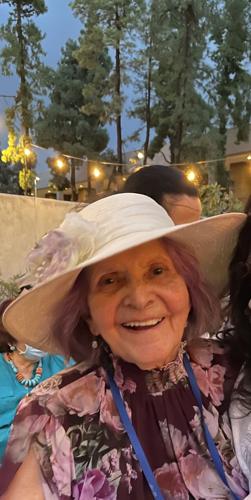
She was feisty and funny. She loved being surrounded by family. She loved life. She loved telling and hearing stories. She loved to dance. She was a warrior with a smile.
Private services will be held, followed by a public celebration of life to be announced later.
The Torres family asks that contributions be made in the name of Alva Bustamante Torres to Saint Andrew’s Episcopal Church, 545 S. Fifth Ave., Tucson, AZ, 85701.
Ernesto Portillo Jr. was a columnist for the Arizona Daily Star from 2000-19. He is the nephew of Alva B. Torres. She called him "the apple of my eye."