New books by Southern Arizona authors:
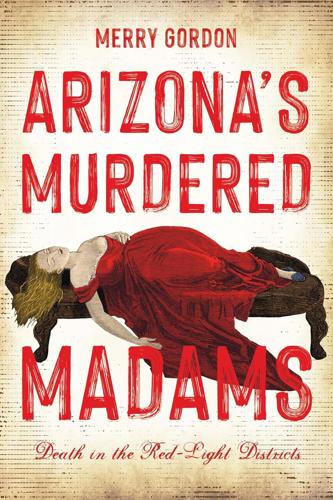
- “Arizona’s Murdered Madams: Death in the Red-Light Districts” by Merry Gordon (History Press), 141 pp. $23.45.

If you ever questioned how wild and woolly our territorial state was, you should check out this history by writer, editor and teacher Merry Gordon. “Arizona’s Murdered Madams” focuses on three brothel-keepers murdered in their prime, but it also throws light on our young society’s raw edges.
The three madams are Minnie Powers, killed in Phoenix in 1898; “Belgian Jennie” Bauters, killed in Goldroad, Arizona Territory, in 1905; and “Dutch May” Prescott, killed in Flagstaff in 1916. Their lives were eventful, and their deaths were grizzly.
Gordon opens her book with a discussion of the sex trade of the period and how women fell into it. Some became prostitutes after a perceived or actual moral misstep — societal disapprobation or divorce — and many had alcohol or drug problems. Some became soiled doves for purely economic reasons, as there were few occupational options for unmarried women in the developing West. Prostitution was a living, if a dangerous one.
People are also reading…
Minnie Powers was an English-born former Mormon who serviced the booming mining trade in California and Tucson before settling in Phoenix, where she got wealthy peddling liquor and ladies. (On one memorable occasion, five of her “horsewomen of the moral apocalypse” rode the length of Van Buren Avenue in their flimsy Mother Hubbard gowns.) She became the victim of a murder-suicide by her partner and lover “The Cockney.”
“Belgian Jennie” Bauters supported her son in a good school in Chicago with her thriving business on “Husband’s Alley” in Jerome. She became the only real estate property owner in Goldroad, where she went to escape former lover Clem Leigh. But she didn’t escape far enough.
“Dutch May” Prescott introduced the scandalous — and very lucrative — shimmy to her striptease shows for the loggers in Flagstaff, but she and her promoter husband ended up a bloody, ash-strewn mess. A hostel now sits on the site of her brothel just south of the railroad tracks on Flagstaff’s San Francisco Street.
Replete with newspaper accounts, other prostitutes’ tales, details of the lives of the murdered three, and period photographs, “Arizona’s Murdered Madams” is a lively and intriguing history of our turn-of-the-20th-century territory.
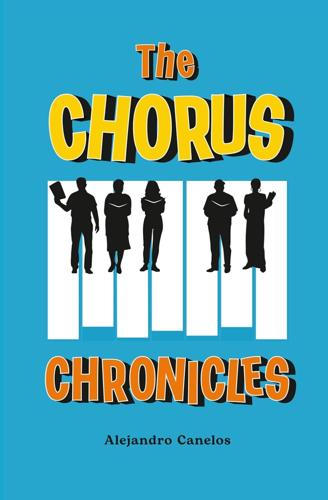
- “The Chorus Chronicles” by Alejandro Canelos. Neotenic Press. 229 pp. $16.95.
If you’re a tenor new to a choir, and suddenly feel animus directed at you from the bass section, how do you read it? If you ask questions, and you hear vague references to something called The Code, but no one explains The Code to you or even how you broke it or how to avoid repeating it, what do you do? If you’re lucky — and are a much-needed tenor with a stand-out voice — some crusty old section leader might take you aside and explain it.

Such is the plight of Howard, one in the cast of 30 singers in Alejandro Canelos’s new fiction about a community choir. In 23 short narratives, Canelos plays out musical disputes, personality frictions, marital collapses, on-stage disasters, and more than one mortification suffered by poor Howard.
The loose, overarching narrative of the book follows the pains a choir experiences when a beloved, long-time director is suddenly replaced by a younger, less sympathetic one. Arranged like a concert program (List of Singers, Part I, Intermission, Part II, Encore), “The Chorus Chronicles” offers easy, light reading with appeal especially to anyone who’s been part of a performance group.
This is the sixth publication by Tucson-raised, Harvard-educated Canelos, who is currently writing plays. A professional drummer, Canelos also sings in two local choirs. (His bio neglects to identify his voice range.)
- “A Fatal Club” by Andre Charles (Konstellation Press). 299 pp. $14.95 paperback; $8.99 e-book.
Green Valley couple Dorothy Leonard and Walter Swap, who write together under the pen name Andre Charles, have brought back sleuthy retirees Molly Levin and Mike Landry to weigh in on another murder in fictional retirement community Sunrise Acres.

As the book opens, respected but recently forgetful retired computer science professor Don Neven is found bludgeoned to death by his own 7-iron on Sunrise Acres’ golf course. County sheriff Jose Villegas and his team get right to work seeking motivations and interviewing locals.
Meanwhile, Molly and Mike are doing their things — the gym, drinks at sunset, pickleball, lunches, Molly’s real estate pursuits — and don’t enter the investigative action until Villegas and Co. have narrowed down murder suspects. And they’ve identified two: the first, a loud-mouthed racist who had railed against Neven’s involvement in sanctuary for asylum-seekers; the second, Neven’s estranged younger brother, Buddy, who came to Sunrise Acres to dissuade him from selling the family farm. Mike and Molly actually stumble into the investigation separately — Mike, through checking on a close friend of the victim; Molly, through a real estate search on behalf of handsome Buddy. Each of those relationships, in addition, provides some interesting narrative complications.
When they begin digging into the potentially lucrative project Neven was consulting on, Molly and Mike put themselves in danger.
A retirement community being its own little world, it serves up a menu of human conditions — issues of aging, ambition, competition, prejudice, temptation and jealousy (what? Molly doesn’t tell Mike about her out-of-town lunch with that young Mr. Neven?). Andre Charles has developed his characters here with more depth and detail than in his previous cozies. Glimpses into characters’ minds (retired English professor Mike’s, for example, where he resists correcting folks’ grammar mistakes) are a nice touch. And solving the murder mystery? Charles teases us with several viable solutions, but successfully springs a surprise in the end.
- “Fetish” by Jamey Gittings (Attila Press). 311 p. $32.99 hardcover, $18.99 paperback, $7.99 e-book.
Jamey Gittings takes deep dives in this notable new novel: into magic, into spirituality, Native American mythology, the nature of evil, the challenges of disability, and the power of metaphor.
Twenty-something Tasha Grabil is successfully negotiating high-risk finance in New York when she’s sent a wooden cigar box containing five stone animal fetishes and an obsidian knife. She’s also sent word that her archaeologist father has died in New Mexico. As his only child, it’s up to her to see to his affairs, so she plans a short trip to Socorro.
Tasha was born with cerebral palsy, so “short trips” require some organizing. She has a full complement of work-arounds to deal with its unexpected twitches (carrying a straw to avoid smashing glasses into her teeth, for example; velcroing a spoon to her hand to avoid restaurant fork mishaps), and she manages.
She is, however, unprepared for what awaits her in New Mexico. Her father was found stabbed with an obsidian knife in the ruins of a kiva, so ritual murder or suicide are suspected. Her mother, who abandoned her as a baby and whom she never knew, turns out to be full-blooded Zuni and shows up to oversee a Zuni funeral for her father. Although he was white, he’s somehow being granted services suited to a Native American priest. And those animal fetishes? Apparently they were Tasha’s toys when she was a young child accompanying her father to archaeological sites around the world.
Tasha needs to keep the fetishes close, her mother tells her: there is evil afoot now, and the fetishes are powerful protection. And she will need that protection. Just like her father, Tasha learns, she was born a shaman, and she’s being called upon to address that evil.
Gittings incorporates the Zuni creation story, with its four caves in the underworld, to set the stage for the battle between good — balance — and evil — imbalance — in the novel. He also uses Wendigo, the malignant, cannibalistic pan-Native American spirit to whom Tasha will prove nemesis.
In the course of Tasha’s shamanic training, Gittings explores manifestations of religion and spirituality. His Tasha, smart and independent, although somewhat hobbled by her disability, is heroic, fearless, and witty (she smears and amplifies food spills on her white blouse and calls them a Jackson Pollock).
This is a rich, multi-leveled book. If you’re ready to suspend rational disbelief, it can take you for a memorable ride.
- “Robbie Roadrunner’s New Friends” by Janet McCormick. Illustrated by Anderson Atlas. (Lyric Power). 40 pp. $12.95.
Education curriculum developer Janet McCormick applies her experience in this appealing interactive preschool book, brightly illustrated by Anderson Atlas. In it, young Robbie Roadrunner is dealing with fears about starting school. Through prompts to children (“What would you tell Robbie about how to make friends?”), suggestions to parents (“Let’s say that together”), and advice from his old friends Connie Cottontail and Stingy Scorpion, Robbie learns the sage, “Be kind, take turns, and share.”

- “Rusty the Ringtail” by Thomas Lopez (Hootlum). 45 pp. $9.99.
Although not exactly Southern Arizona, this enchanting picture book deserves a nod: Set in “magical” Jerome, Arizona, “Rusty the Ringtail” features ringtail cat Rusty and ghost burro Jimmy, who live in Jerome’s Little Daisy mine. Incorporating Jerome history and some nature and language notes, the book “flies” the reader over beautifully depicted geological features of Northern Arizona — Sedona, the Mogollon Rim, the Grand Canyon and Montezuma Castle — as Rusty and Jimmy help save a stranded little girl.

Former high school and college English instructor Christine Wald-Hopkins is an essayist and longtime regional and local book critic.
If you are a Southern Arizona author and would like your book to be considered for this column, send a copy to: Elaine Encinas, P.O. Box 26887, Tucson, AZ, 85726-6887. Give the price and contact name. Books must have been published within a year. Authors may submit no more than one book per calendar year.