As the American revolutionaries fought to preserve their freshly inked Declaration of Independence, they got a little boost from a remote Spanish outpost called the Presidio San Agustín del Tucson.
By royal decree on Aug. 17, 1780, Spain’s King Charles III called on each of his loyal subjects in America to donate to the war effort against “the insulting tyranny of the English nation.” The requested “donativo” was one to two pesos, depending on a person’s ancestry and social class.
That might not sound like much, but it was no small gift in the late 18th century, when a side of beef cost about four pesos and a high-quality riding horse cost about seven.

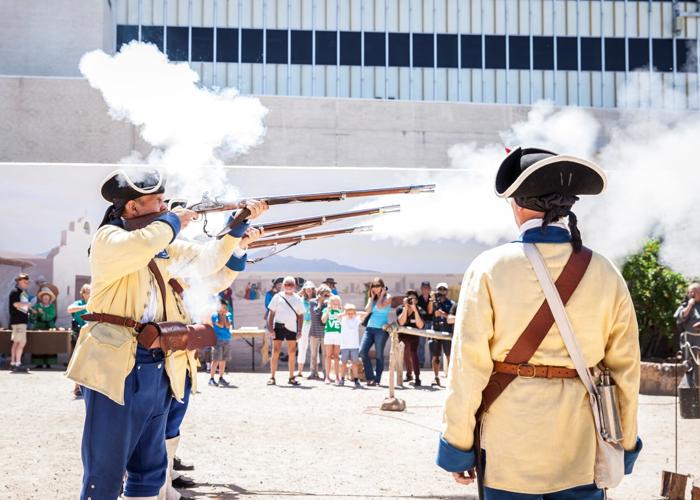
Costumed “soldados” hold a musket demonstration at the Presidio Museum downtown. Spanish soldiers stationed at the Presidio chipped in to raise 459 silver pesos to support the American colonists during the Revolutionary War.
The modest garrison at the Presidio in Tucson ended up shelling out a total of 459 silver pesos to the cause of American independence.
“Tucson’s contribution was remarkably high, considering that it was an infant settlement,” according to “Desert Documentary,” the 1976 book by Catholic priest and University of Arizona historian Kieran McCarty.
People are also reading…
The Old Pueblo’s 459-peso gift “more than doubled what was taken up in the wealthy capital at Arizbe,” McCarty wrote.
The Tucson Presidio was founded on Aug. 20, 1775, four months after Paul Revere’s famous midnight ride on the other side of the continent. The adobe walls were still being built around the fortress overlooking the Santa Cruz River when the Spanish king issued his call for donations five years later.
There’s some debate about how voluntary those donativos might have been.
McCarty wrote that those collecting for the king were under strict instructions not to order or coerce soldiers to contribute. But other historians have framed the fundraiser as more like a tax.
Spain had its reasons for helping the upstart American colonists, but the cause of independence and democracy had nothing to do with it.
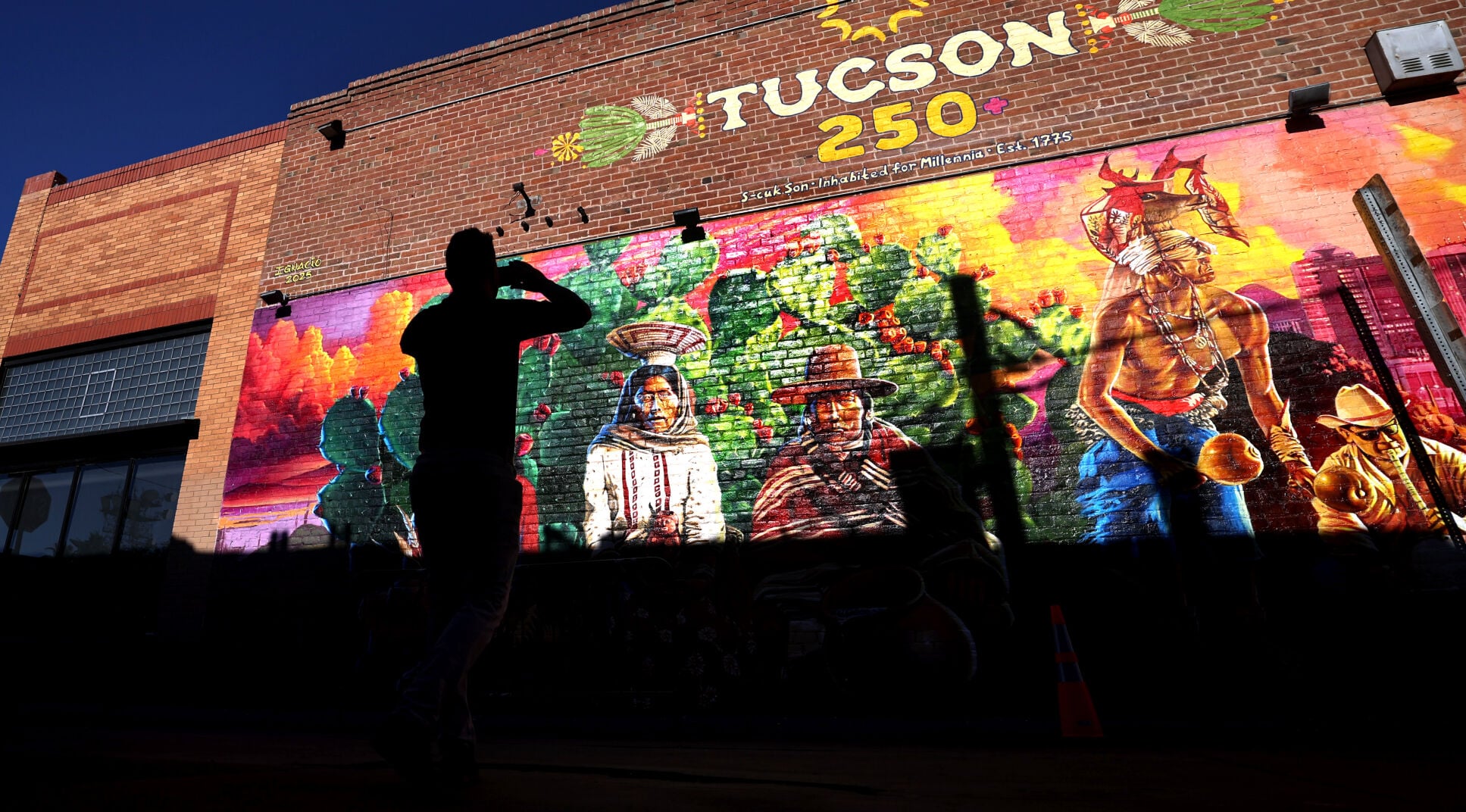
An admirer takes some cell phone images of Ignacio Garcia’s downtown mural in Arizona Alley at Congress Street, one of four murals commissioned in 2025 to celebrate the 250th anniversary of the Tucson presidio’s founding.
Charles III wanted to weaken his empire’s biggest rival in North America and regain territory lost to the British during the recent Seven Years’ War and related conflicts, which cost Spain control of Florida among other places.
At first, Spanish aid to the colonies was made in secret, using shell companies and clandestine diplomatic meetings. According to the Museum of the American Revolution, some of the first imported weapons purchased by New Englanders came from Spain in 1775.
The Spanish officially sided with France and entered the war against Great Britain in 1779, though Spain refused to recognize the United States as an independent nation for fear of inspiring similar revolutions in its own far-flung colonies.
The war’s most famous hero from Spain was military officer Bernardo Vicente de Gálvez, who served as governor of Spanish Louisiana and led several successful campaigns against British forces along the Gulf Coast. But Spain made its biggest impact by engaging Great Britain elsewhere around the globe and providing the Continental Army with much-needed supplies, some of them purchased with silver pesos from Tucson.
Last year, the Daughters of the American Revolution officially declared the men posted at the Presidio during the “donativo” days as “Spanish patriots,” making their female descendants eligible for membership in the lineage-based organization.
The Sons of the American Revolution, which is its own separate nonprofit, has also opened its membership rolls to the descendants of Presidio soldiers who contributed to the colonial cause.
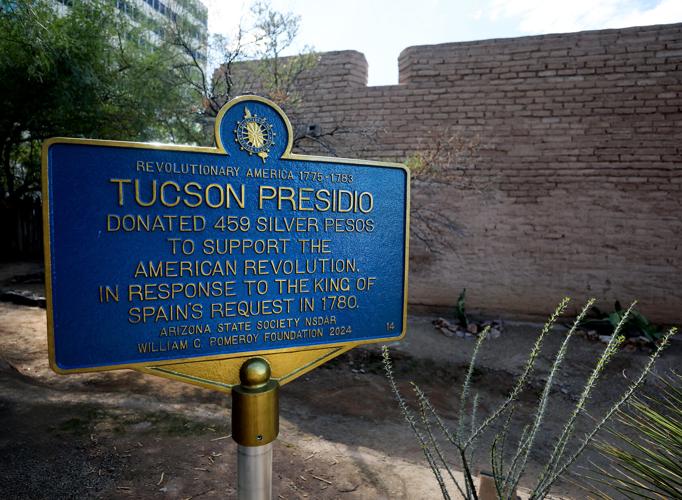
To mark the occasion, the Arizona State Society of the Daughters of the American Revolution dedicated a new historical marker on Oct. 25 just outside the Tucson Presidio Museum downtown in honor of the 459 pesos.

A Daughters of the American Revolution plaque at the Presidio San Agustín del Tucsón at 196 N. Court Ave. in downtown Tucson.
“I think it's amazing that Arizona has this small part of the American Revolution,” said Sarah Ziker, state regent for the DAR in Arizona, before the dedication ceremony. “It's exciting to celebrate it.”