PHOENIX — Gov. Katie Hobbs wanted the Legislature to fund 615 more prison healthcare workers in the budget year that begins July 1 to comply with a federal judge's order requiring Arizona to dramatically boost staffing so it could provide constitutionally adequate care to inmates.
But the Democratic governor got less than half the money needed to fund those new posts in a state budget deal she cut with Republicans who control the state House and Senate.
Instead of the $108.2 million for new staff she sought in her budget proposal, lawmakers only agreed to provide $45.1 million — enough to pay for slightly less than 42% of the workers the judge said in a 2025 order are needed.
Hobbs also sought — and did get — another $9.5 million for health operating costs at the Arizona Department of Corrections, Rehabilitation and Reentry.
People are also reading…
Lawmakers passed the state budget on Thursday, setting the stage for them to adjourn for the year.
That's significant, because U.S. District Judge Roslyn Silver ordered the increased staffing after years of litigation by prisoners and failures by the corrections department to provide decent care. Twice this year, she's shown her patience with the state is running out.
Receiver to take control of system
Earlier this year, Silver decided the state was not capable of fixing the broken prisoner healthcare system and said she will appoint an outside receiver to run it — with the power to require the state to provide more funding and hire the new workers.
Last month, she said in an order that she wanted that receiver in place soon, in part so that person could negotiate with Hobbs and the Legislature to provide more funding in the new budget.
That didn't happen.
An order formally appointing the receiver hadn't been issued as of Thursday. The tentative choice, whom lawyers for the corrections department and the prisoners who sued have agreed to put in the powerful post, is former Ohio corrections director Annette Chambers-Smith.
But with the budget now formally adopted — and without the money the judge said was necessary to comply with her order — it's an open question what comes next in the lawsuit, which has been going on since 2012.
'We are playing catch-up'
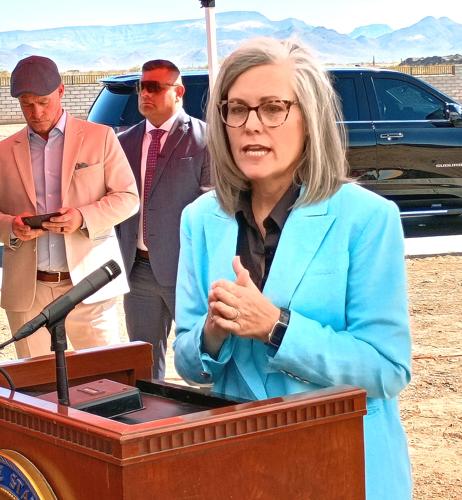
Hobbs acknowledged Thursday that she was frustrated the GOP-controlled Legislature didn't provide the money she wanted for the new doctors, nurses and other healthcare workers the judge's order says are needed. She said she got all the money she could persuade GOP lawmakers to provide in the budget deal but will continue to work to meet the judge's terms.
Hobbs pointed out she's only been in office since 2023 and said it was previous Republican governors and majority GOP lawmakers who control the Legislature who got the state prison system in its current spot.
"I want to just remind you, we inherited this lawsuit that had been ignored for years and years. And we're trying to fix overnight what should have been in the works, in progress already,'' Hobbs told Capitol Media Services. "We are playing catch-up to try to meet the needs of the court on this and to treat prisoners according to the Constitution.''
The case was filed on behalf of Arizona inmates by the American Civil Liberties Union, the Prison Law Office and other prisoner rights groups. It alleged grossly inadequate care that harmed and even killed inmates and violated the U.S. Constitution.

Gov. Katie Hobbs answers questions Thursday about the new state budget's failure to provide the money a judge said is necessary to improve healthcare for inmates.
The state agreed to a settlement in 2014, but federal judges overseeing the case repeatedly found the state wasn't living up to that deal. That agreement required major improvements in inmate mental and physical healthcare to meet constitutional standards. The state twice was found in contempt and issued multi-million-dollar fines.
There's $2.2 million in fines left unspent, and state officials are asking Silver to let them use it to pay for the receiver. Lawyers for state inmates aren't opposed to that.
The state is strongly opposed to the appointment of a receiver, telling Silver that as soon as she issues a final order appointing one, they will appeal.
'Deliberate indifference' to risk of harm
Five years ago, Silver threw out the settlement because of the ADCCR's "pervasive material breaches'' of the agreement. During a 15-day trial she oversaw in late 2021, attorneys for prisoners presented evidence of repeated and horrific consequences inmates suffered due to poor or inadequate healthcare.
In a sweeping 2022 ruling, the judge said care provided by the state at prisons is "plainly grossly inadequate'' and state officials were acting "with deliberate indifference'' to the substantial risk of harm to inmates.
The following year, Silver issued an injunction requiring vast improvements in prisoner healthcare, but the state still failed to provide adequate care, according to a monitor and the judge.
Last year, attorneys for the inmates sought a court takeover of the system, and Silver agreed in February to appoint a receiver to run the system. In that order taking away control of the prison healthcare system from the corrections department, the judge detailed complaints about continued inadequate physical and mental healthcare at the nine prison complexes across the state.
"But now, after nearly 14 years of litigation with defendants having not gained compliance, or even a semblance of compliance with the injunction and the Constitution, this approach has not only failed completely but, if continued, would be nothing short of judicial indulgence of deeply entrenched unconstitutional conduct,'' the judge wrote.
There are about 25,000 inmates in state-run prisons, plus nearly 10,000 in private prisons not covered by the lawsuit.
Although she hasn't yet laid out in detail the receiver's powers and responsibilities, the judge said in a May 11 order that they will be sweeping.
The most important task for the receiver will be "correcting the systemic constitutional failures that have plagued defendants' healthcare delivery for over a decade,'' Silver wrote.
They include fixing chronic understaffing and the state's failure to enforce its contract with the private company overseeing inmate care; ensuring inmates are treated by physicians instead of nurses; and addressing persistent failures in the system of patient referrals, data collection and reporting.
Silver also said the receiver must ensure there's enough state funding and facilities to care for ill inmates. That can include requiring the Legislature to spend more money.
GOP lawmakers say judge overstepped authority
But legislative Republicans say Silver has overstepped her authority, although all appeals they filed in the years-old case have been rebuffed.
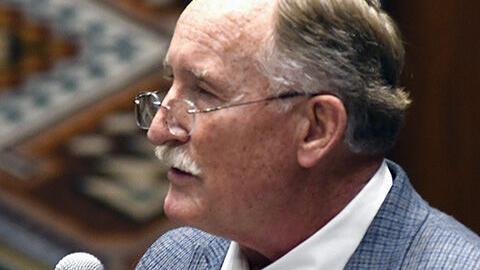
"From my point of view, the judge has overextended herself into our territory, overextended the boundaries,'' said Rep. David Livingston, R-Peoria, the House appropriations committee chair and a key budget negotiator. He said the Legislature is responsible for appropriating money, not Judge Silver.
"If she wants to negotiate with us, or any judge does, they're allowed to,'' Livingston said. "They're not doing that because they don't think they need to.''
But he made it clear this is a decision not for her but for lawmakers.
"We don't need to fund what she's asking for, either,'' Livingston said. "So, in a way, we're in a stalemate. I'm not quite sure what happens next.''

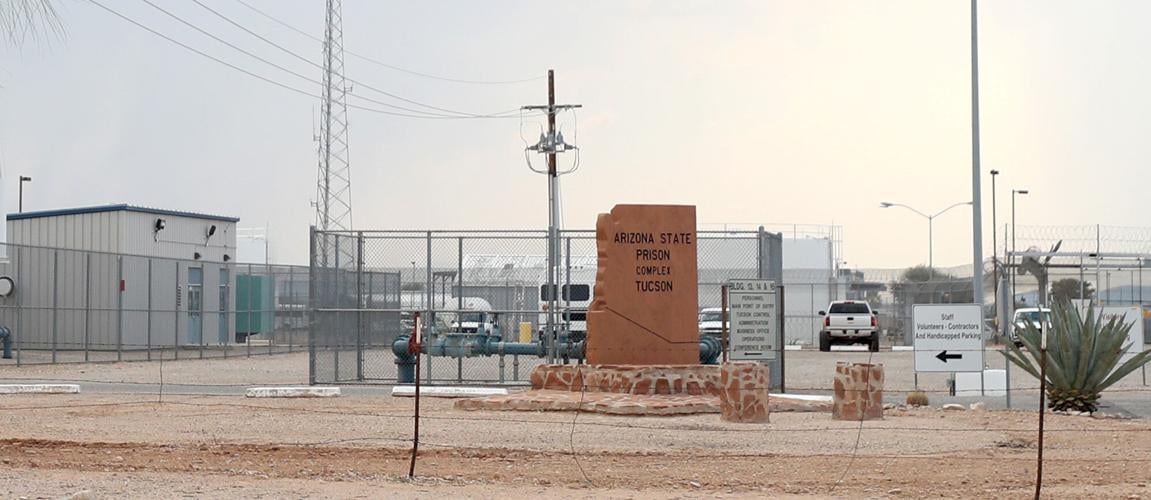
The Arizona Department of Corrections, Rehabilitation and Reentry.
An appeals court recently sided with the state on its appeal of the way Silver wrote the 2025 staffing order.
That finding, however, only requires the judge to rewrite part of her ruling to comply with a federal law requiring such orders be narrowly drawn and go only as far as needed to remedy the violation. Silver had included proper language saying she had followed that law in multiple previous rulings, but did not include it in the final 2025 staffing plan.
Fixing that should be fairly easy, and Silver was given 30 days to address the issue.
Corene Kendrick, an attorney for the American Civil Liberties Union who has worked on the case for more than a decade, said the judge will now have to decide if the new money included in the just-approved state budget is enough.
She noted that Republicans passed their own budget last month, one not in cooperation with Hobbs, which the governor promptly vetoed. It included no new money at all for prisoner healthcare.
"Obviously 42% of the funding versus 0% of the funding is better, but that's still a failing grade to only potentially be able to implement 40% of the court's order,'' Kendrick said in an interview Thursday, as the Legislature was voting on the budget.
"As Judge Silver has written in the past, the woefully inadequate healthcare staffing is the Achilles heel of the department, and frankly is the reason why, after 15 years of litigation, the department has not come anywhere near meeting the constitutional requirements for a minimally adequate healthcare system," she said.
Whether that new money will satisfy Silver is a wild card, Kendrick said, and the state could push for more delays. "They could drag it out,'' Kendrick said.
"But she could also order the defendants to come up with the money," she added. "And if that results in a situation where there has to be a special session of the Legislature called by the governor, while I don't want to speculate on how it might play out, the federal court does have the power to do these things and to compel compliance with the orders.''
The state has other problems with its prison healthcare system, including lack of leadership.
The chief medical officer position sat vacant for a year and a half before finally being filled in January. But that person — Dr. Cameron Khor, an internist who has worked in multiple states but never before in corrections medicine — left the post after just four months, according to a May 19 notice that corrections department lawyers filed with the court.
The job is important because it chiefly involves overseeing the private contractor who oversees prison medical care, currently a company called NaphCare, Kendrick said.
Republicans who control the Legislature enacted a law in 2012 to privatize inmate healthcare, and it was signed by then-Gov. Jan Brewer, also a Republican. It was opposed by Democrats in the Legislature.
The director of the corrections department, Ryan Thornell, "is not a doctor, he doesn't have medical training, so the chief medical officer is the highest-ranking person in the department who has medical training,'' Kendrick said. "They're supposed to be the one really interacting with the contractors.''
The corrections department confirmed on Thursday that the position remains unfilled and that a search is underway for a replacement for Dr. Khor.
The spokesman did not respond to questions about how or if the department has a plan in the works to hire the 615 new healthcare staff Hobbs sought to reach minimum staffing levels as ordered by Silver in 2025.