PHOENIX — Just a year ago, state lawmakers and Gov. Katie Hobbs agreed that people who were wrongfully convicted deserve some compensation from the state.
Now that program is gone.
Strictly speaking, a provision tucked into the new state budget does not repeal the 2025 law that established the state's first-ever Erroneous Convictions Fund. Instead, it says that the only money that can be made available to anyone who qualifies must come from that fund and nowhere else.
The problem: $3 million put into the fund last year is gone or already spoken for.
In fact, the 11 people who were the first to apply already have put in requests for more than the $3 million in the fund.
Arizona's new budget puts no more dollars into the account. So, for all intents and purposes, it's broke.
People are also reading…
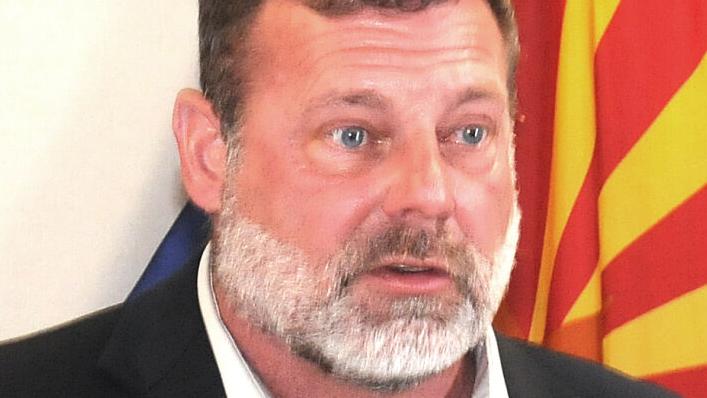
All that left Rep. Khyl Powell, who got unanimous support for the plan a year ago, bitter.
The Gilbert Republican reminded colleagues that the whole purpose of the fund was to provide some financial relief "for people whose lives were destroyed and people who were pardoned because they were put in prison illegally, they were put in prison innocently.''
Powell said that it's important for lawmakers to get their priorities straight.
"We just voted on a bill to give $500,000 for helping those who have problems with gambling,'' he said.

Powell
"Yet we cannot find monies ... to help somebodies whose lives have been destroyed,'' Powell said. "To me, it's incomprehensible.''
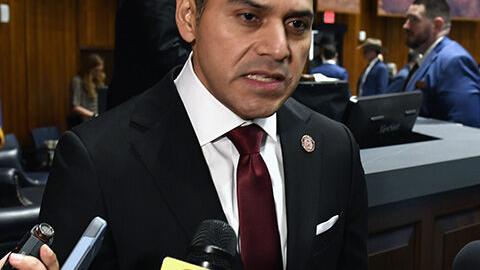
But Senate Majority Leader John Kavanagh said it was never the intent of lawmakers to put more money into the account.
The Fountain Hills Republican said it was meant only to provide seed money to allow people to start to seek recovery without having to go to court. But he said that any harm to people who were wrongfully convicted and incarcerated is not the state's fault.
"We're paying off wrongs committed by county prosecutors,'' Kavanagh said. "The counties (are) responsible for compensating them.''
But that leaves those affected with only the option of having to file suit, something that Powell said creation of the fund — and its expedited review — was designed to avoid.
As approved last year, the measure entitles those who were ultimately released after being found to be factually innocent to seek financial relief equal to twice the median income for each of the 12 years he was locked up.
But the measure does more than simply write out a check. It also provides counseling and job training.
And it even precluded the state from seeking to reduce the payments by what was paid to house and feed him.
It wasn't just Powell's arguments that helped put Arizona among the more than three dozen states that have enacted similar programs. During hearings last year, lawmakers heard from those whose lives were changed by wrongful convictions.
That included Drayton Witt, who said he was stabbed 73 times and nearly killed while imprisoned by the state in Winslow.
Witt had been convicted in 2002 of second-degree murder after being accused of shaking his nearly 5-month-old baby to death. But he was released after the county medical examiner reexamined the evidence and concluded that the death was the result of the child's medical history and neurological problems.
Witt told lawmakers last year that he said he started a small painting company since being freed in 2012. But he said it hasn't been easy to rebuild his life.
"I would lose numerous jobs on a daily basis just simply from a Google search'' which turned up his conviction, Witt said. Still, he said, it's not simply about compensation.
"It's more about integrity, holding people accountable,'' Witt continued.
"At one point in time I voted for somebody to be put in a position of power to look out for my best interests,'' he said. "And, instead, those people sent me up the river to die.''
Since its inception, the program has gotten the attention of several individuals.
As of February — the most recent data available — 11 individuals wrongly convicted of crimes have applied for millions of dollars in compensation from the state, swamping a state fund that has only $3 million.
In some ways, that was expected, as the legislation was crafted to be retroactive, affecting not just new cases but those going back years.
Legislative analysts had said there have been 24 exonerations in Arizona since 1989, with an average time behind bars of 5.6 years. Assuming just 20% of those exonerated in that time period submit claims, that's penciled out to a one-time cost of $4.5 million.
But that report also concluded that, based on historical averages, the annual cost going forward would be in the neighborhood of about $641,000.
What drives that cost goes beyond that 200% of median household income for each year incarcerated.
The bill also allows individuals to get reasonable attorney fees and costs of up to $25,000 and up to $100,000 for "reintegrative services and mental and physical health care costs incurred between the time of release and the entry of a court judgment.
The law also includes up to 52 hours of mental health treatment within 12 months of a court order at a rate of $250 an hour.
There's also up to 120 credit hours at any college, vocational school or trade school. Powell, in pushing the bill last year, said that in particular is justified.
"Their absence of being in the community for 15 or 20 years may have injured their ability to provide for themselves,'' he said. "So now they need additional training.''
And the bill provides for up to four financial planning or literacy classes within the first year.
"We provide outlets for them to be fully restituted and be able to recover so that they then can become a productive member of society,'' Powell said.
All that leads back to Powell this year proposing legislation to put another $3 million a year into the fund, at least through 2027.
Not only did his bill never get a hearing, but then his colleagues, through the budget process, decided there would be no more cash.
Powell decried that decision on Thursday.
"We need to help people whose lives have been destroyed because we destroyed it through our criminal justice system,'' he told colleagues.
Rep. Alexander Kolodin agreed.
"It's a travesty that we have messed with what I view as one of the greatest achievements during my time in the legislature,'' said the Scottsdale Republican. And he pointed out that Powell pushed through the provision in his first year as a representative "which is no small feat.''
But Kolodin said the provision gutting the fund is only one part of the overall budget, which he supports. So, unlike Powell, he ended up voting for the measure.
Howard Fischer is a veteran journalist who has been reporting since 1970 and covering state politics and the Legislature since 1982. Follow him on X, formerly known as Twitter, Bluesky, and Threads at @azcapmedia or email azcapmedia@gmail.com.