

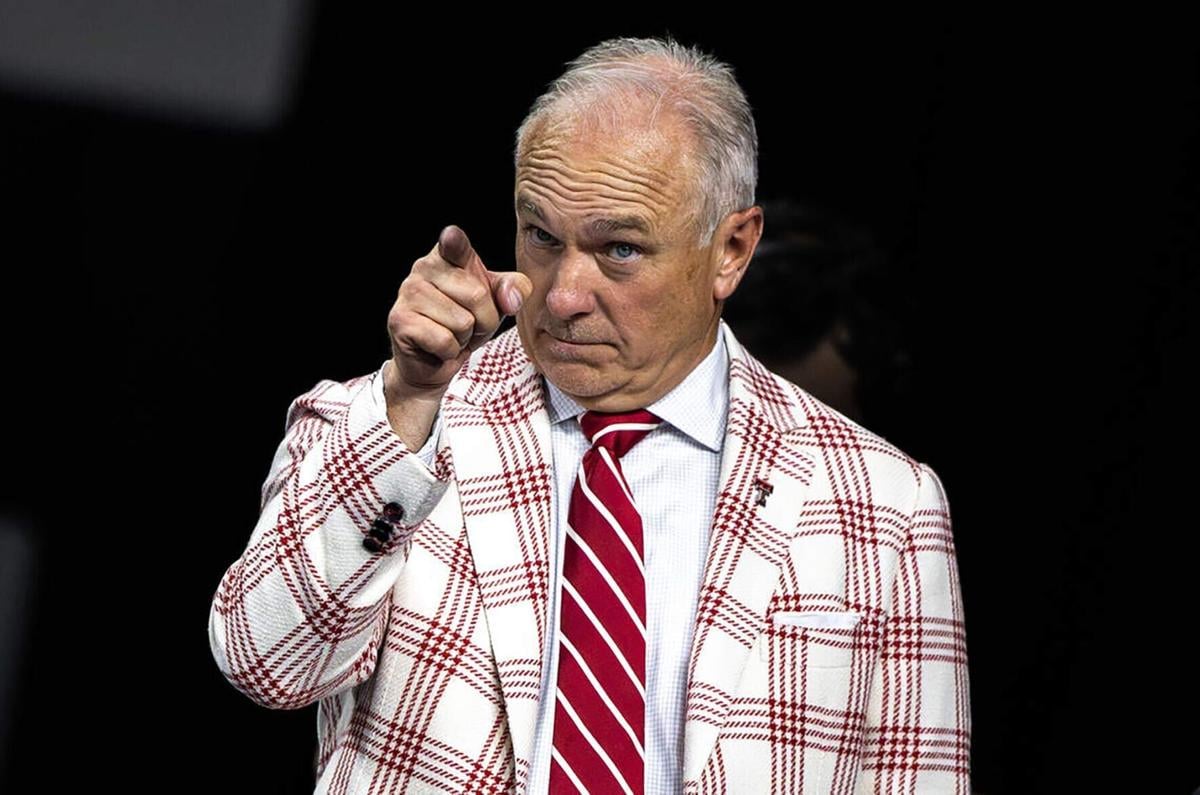
FORT WORTH, Texas — Say whatever you want about Texas Tech’s “behaviors” this offseason, but this week the university on the Plains announced a school-record enrollment of 45,812.
This is an increase of 3,859 from last year’s class.
The incoming class, and or student applicants, apparently were OK with how Texas Tech handled the Brendan Sorsby situation in the summer.
Because football works. Check that; winning football works.
Until America’s four-year colleges create a better way to market themselves to high school kids, the power of a major winning football team is second only to the clout of the word, “Ivy.”
One of college football’s ugliest offseasons of wretched headlines is nearly over. Rather than focus on lawyers, local judges, NFL players who return to school, the White House and a fleet of attention-seeking U.S. Senators, fans can bathe in TheBigSECTen’s unobstructed, Fox/ESPN-enabled monopolization of major college football.
People are also reading…
Trying to keep up in this race are schools in the ACC and Big 12, which includes Texas universities TCU, SMU, Houston, Texas Tech and Baylor. The unwritten priority of college football is to be in the relevant race, but it has never been this difficult, nor has the game ever felt so rigged.
Texas Tech and SMU jumped the line
The state of Texas has five teams ranked in the Associated Press Top 25 poll; No. 5 Texas, No. 8 Texas A&M, No. 12 Texas Tech, No. 19 SMU and No. 23 Houston.
(WRITER’S NOTE: The preseason AP Top 25 poll has always been a flawed metric. It’s also always been a fun toy. In the era of the transfer portal, preseason predictions are increasingly impossible. The use now of this poll is as a barometer for the national relevance of a program.)
That both the Red Raiders and Mustangs are here, and a program like TCU is not, speaks to the power of money well spent.
Thanks to hundreds of millions of dollars invested into their respective football teams by eager boosters, both SMU and Texas Tech have jumped ahead of everyone else in this state for the best view of UT and A&M’s backsides.
SMU may have “bought” its way into Power Four NCAA sports to join the ACC, and the decision has been an unmitigated success. The private school in Dallas that for more than two decades fell behind TCU, specifically because of football, is now at least on the same level as most of their former rivals from the dead Southwest Conference.
The Red Raiders didn’t have to buy its way into the P4, but no program in America has capitalized more on the current state of the NCAA like Texas Tech. Having the ability, and willingness, to spray money at players helps.
For the first time since the days of head coach Mike Leach, the Red Raiders are relevant with a national identity. The type of brand its built, and the identity its created, may not appeal to you, but their current record enrollment figure suggests their plan is working.
Suspend any thought that the defense of quarterback Brendan Sorsby would damage the program’s reputation; Tech has embraced its image, and people are always drawn to “rebel” programs that win.
That philosophy built the University of Miami in the ‘80s, the same for UNLV men’s basketball under coach Jerry Tarkanian.
Meanwhile, in the previous two years both TCU and Houston have enjoyed some solid moments; TCU finished last season ranked 25th in the final AP poll. It’s the first time it finished ranked since 2022.
Houston’s second season under head coach Willie Fritz ended with a 10-3 record, and a top-25 ranking.
Baylor, however, has become the state’s forgotten big program. Coach Dave Aranda is coaching for his job, supported by an administration that wants to see him succeed because they like him, and they don’t want to eat his buyout.
Texas’ natural fault line
When Texas joined the SEC, in 2024, the width of the gap between UT and Texas A&M from the rest of the major schools in this state expanded to the size of Big Bend National Park. This was the same year the Big Ten added Oregon, USC, Washington and UCLA.
The effect of the wealth consolidation carefully, and secretly, orchestrated by the SEC and Big Ten has been not catastrophic to those not in these respective leagues, but at least cataclysmic. Everyone else is looking up.
As much as Big 12 commissioner Brett Yormark sells that his league is a “monster,” and deserves to be treated the same as the Big Ten and SEC, no one feels that energy.
And it’s not like the schools in this state have owned college football. In the playoff-era format, teams from this football-drunk state are 3-6 in playoff games. Texas has two playoff wins, and TCU one; that TCU playoff win is the only playoff ‘W’ for the Big 12 conference.
The last time we celebrated a national title winner in major college football was 2005, when Vince Young defeated USC. It should be mentioned TCU reached the national title game in the 2022 season, and lost to Georgia by a field goal ... plus another 20 or so field goals.
The current state of college football revolves around the Big Ten and the SEC, and the closest to either in Texas is Texas Tech, which didn’t score a point in its playoff loss last season to Oregon.
But in the race to be relevant, Texas Tech is winning.


