

The litigious world of college sports got even more confusing with another major court ruling two weeks before the college football season begins.
On Friday, the United States Tenth Circuit Court of Appeals granted the NCAA a stay in an order that reverses a Colorado judge’s recent decision granting players from the class of 2022 one last season of eligibility in the upcoming academic year.
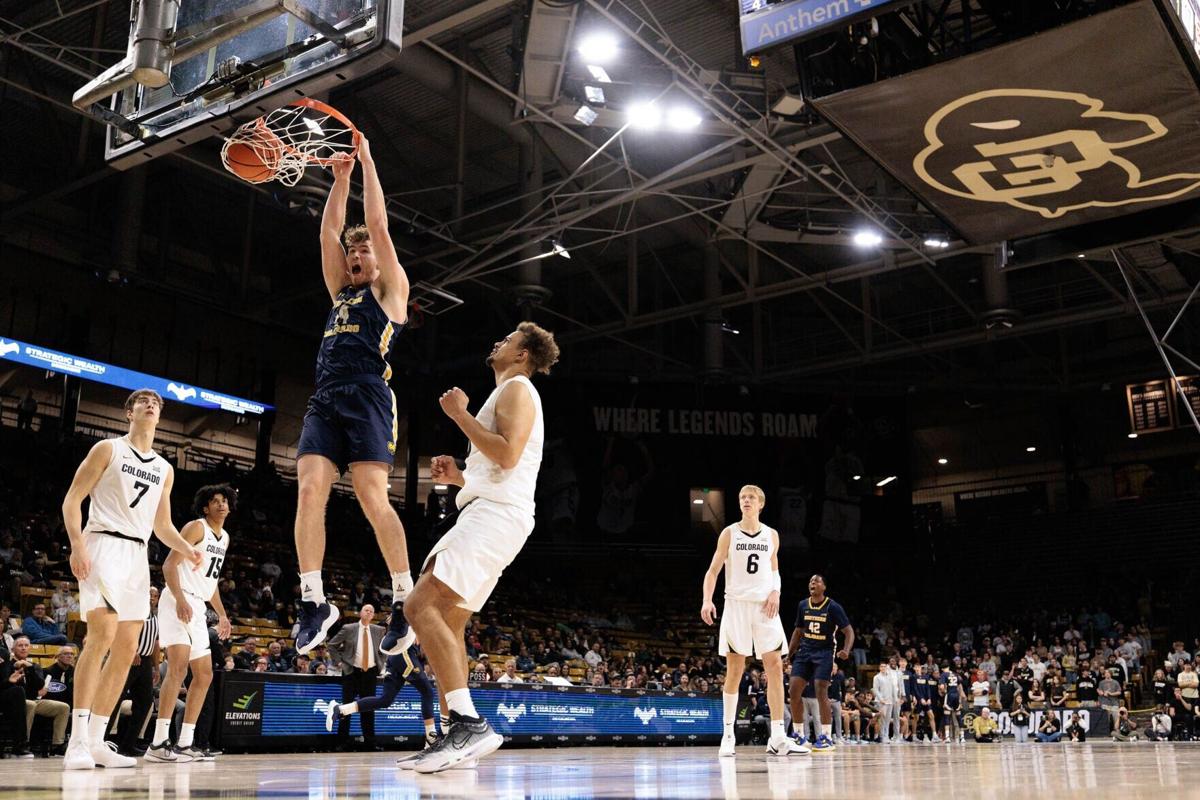
The decision is related to a federal class-action lawsuit led by Northern Colorado men’s basketball player Brock Wisne. Wisne’s case, in which former Missouri Tigers basketball player Aidan Shaw is also listed as a plaintiff, argued that the NCAA is violating antitrust law by preventing him from playing a fifth season. Because it’s the only eligibility case that’s a class-action suit, the decision applies to all athletes who had just completed their fourth season in the last four years.
People are also reading…
On July 31, a U.S. District Court of Colorado Judge Caroline Sweeney granted a temporary injunction that was a blanket order allowing outgoing seniors to play in the upcoming season. Friday’s order overturns that ruling.
The stay has been made at the federal level, and doesn’t affect local orders in state courts.
The NCAA recently changed its eligibility rules to allow all college athletes to play five seasons during a five-year window that opens the year after they finish high school or turn 19. The previous rules allowed athletes to play four seasons during a five-year window.
The NCAA deemed student-athletes from the 2022 class ineligible and created a group of outgoing seniors who would be eligible for another season if the new rule applied to them. The NCAA’s Division I Cabinet stated in June that an extra year for outgoing seniors would take opportunities away from incoming freshmen who signed before the changes were made in April.
Many of those outgoing seniors, across multiple sports, are winning temporary injunctions and restraining orders from county and state judges, giving them that extra year. At least a dozen different groups comprising more than 100 total outgoing seniors have sued the NCAA in federal and state courts, ESPN reports.
That means athletes like Missouri defensive tackle Sterling Webb and former Mizzou basketball player Mark Mitchell — who were granted TROs at the state level — are seemingly eligible to play, for the time being. Mitchell was granted an order in the state of Kentucky, where reports have linked him to playing for the University of Kentucky this coming season.
Kansas Jayhawks guard Melvin Council is suing the NCAA on different grounds, disputing the organization’s stance that his junior-college years should count toward his NCAA eligibility.
The issue that the NCAA created has now extended to players returning to campus from the professional ranks.
On Wednesday, 33 athletes across several sports received an extra year when a judge in Louisiana issued a restraining order. The group included several players who had signed NFL contracts, and even some who have already played in a preseason NFL game, according to reports.


